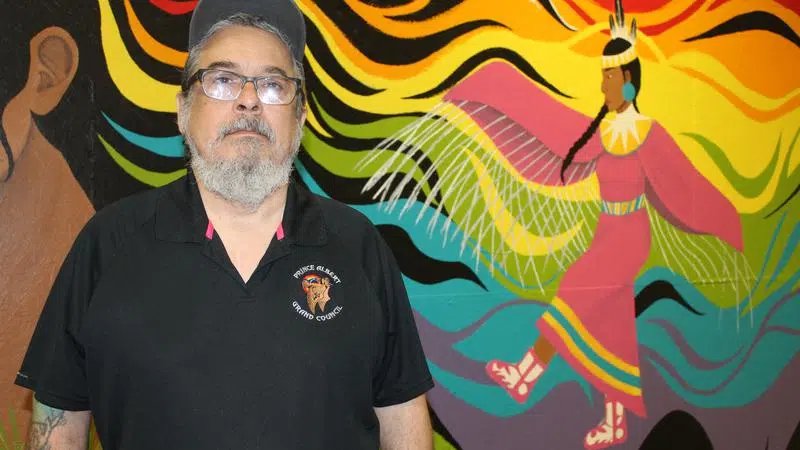
John Hanikenne, president of the Coalition of Aboriginal Peoples of Saskatchewan (CAPS), shown at the Friendship Centre in North Battleford at Saturday's conference. (Angela Brown/battlefordsNOW Staff) 
Indigenous Needs

Group discusses need for urban Indigenous self-government

Feb 17, 2020 | 1:11 PM

The Coalition of Aboriginal Peoples of Saskatchewan (CAPS) hopes to give a voice to Indigenous peoples living off-reserve so their needs can be better met.

A small gathering came together for a presentation by CAPS at the Battlefords Indian and Métis Friendship Centre in North Battleford on the weekend to learn about the challenges of Indigenous people living in urban centres, and their need to have some form of self- government.

The event was part of the Coalition of Aboriginal Peoples of Saskatchewan (CAPS) tour to various communities to discuss the issue and gather feedback.

The advocacy group represents Indigenous peoples – Non-Status and Status First Nations, Métis and Inuit – who live off reserves.


CAPS President John Hanikenne described the event as a dialogue on urban governance, looking at ways to set up alternative systems of government for urban Indigenous people.

Hanikenne said off-reserve Indigenous people face many difficulties as they are under-serviced by their bands.

“They don’t have access to the same benefits of the band members – housing, everything,” he said. “They are left out. They are basically left in a void.”

“Right now there is a vacuum, in regards to the Aboriginal people in the urban centres,” Hanikenne added. “They are not being governed by the bands; they don’t fund them. They [the bands] don’t support the people in the urban centres.”

More than half of First Nation people live off-reserve according to the 2016 Census for Saskatchewan Aboriginal Peoples.

“Who speaks for them?” Hanikenne said. What kind of systems are needed for us to move ahead collectively.”

Hanikenne said self-government simply means people organizing so they have a voice to meet the needs of off-reserve Indigenous people.

He said he would like to see Indigenous band members, Métis people and civic government, all the various parties involved working together in this effort.

“It’s a long hard [process] and a lot of work. But it starts with trust,” Hanikenne said. “It starts with recognizing our traditions, our cultures, being respectful of one another, listening and again finding [new] ways to work together.”

He hopes people come away from the conference with a “desire to create change in their community.”

Federation of Sovereign Indigenous Nations (FSIN) Senator and a former chief Sol Sanderson who spoke at the Battlefords event discussed governance and treaty rights of Indigenous peoples.

He was instrumental in having Indigenous and treaty rights entrenched in the Canadian Constitution in 1982.

Sanderson said he would like to see local governments developed for Indigenous peoples in urban areas to provide programs and deliver services, for every urban community, including the Battlefords.

“Those are the kinds of things we need to look at,” Sanderson said.

angela.brown@jpbg.ca

On Twitter: @battlefordsnow

View Comments