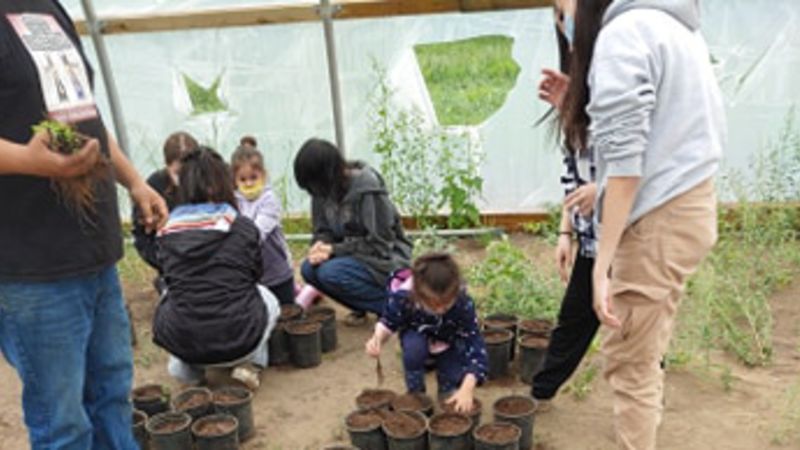
Students from kindergarten to Grade 8 were all involved in the planting of the community garden recently at Muskoday First Nation. (Submitted photo/Joe Munroe)
Gardening on Muskoday

Muskoday plants first community garden, ready to feed families come fall

Jun 17, 2021 | 3:06 PM

The Muskoday First Nation will have plenty of fresh vegetables for its residents come fall thanks to a new community garden.

This is the first year the community is planting the 1.5 hectare plot, Joe Munroe, Food Security Coordinator for the garden told paNOW. The school received a $10,000 grant for a community school gardening project and the band receiving funds to address food security on the First Nation.

Gardening now is different from the way our grandparents have done it, said Munroe, especially since Indigenous peoples were self-sustaining before colonization. A misconception of the opposite is a concept Munroe believes still exists.

Now, First Nations are dealing with climbing rates of diabetes, and other health and food security issues.


Having the garden will not only address these issues but also show young people how they can grow their own food and be self-sufficient as well.

“There’s been no transfer of knowledge to the kids from the older generations. People have been conditioned to buy foods from the grocery store where it is expected to be plentiful, and there, and good food. That’s not turning out to be the case.”

(Becky Zimmer/paNOW Staff)

Transferring the knowledge to the next generation is the most important part of the project, besides being able to feed the community a more traditional diet, said Munroe. And Muskoday First Nation Community School students are getting involved in the planting. Each class did a portion of the planting, said Munroe, with the older students helping the smaller ones. Students are also going to learn about no-till gardening and the history of First Nation agriculture, agroecology, and plants working together, like the three sisters planting.

For thousands of years, Indigenous peoples worked the land and had their own knowledge and experience. Corn is strong evidence for that, said Munroe, with selective breeding evolving the corn people use today.

“This is what people sustain themselves with, along with the meat and the berries and everything else in the forest.”

Come fall, each family on Muskoday will be able to receive 20 lb of potatoes a month, as well as a whole host of other fruits and vegetables, including corn, beans, squash, lettuce, tomatoes, and strawberries to name a few.

becky.zimmer@pattisonmedia.com

On Twitter: @bex_zim

View Comments