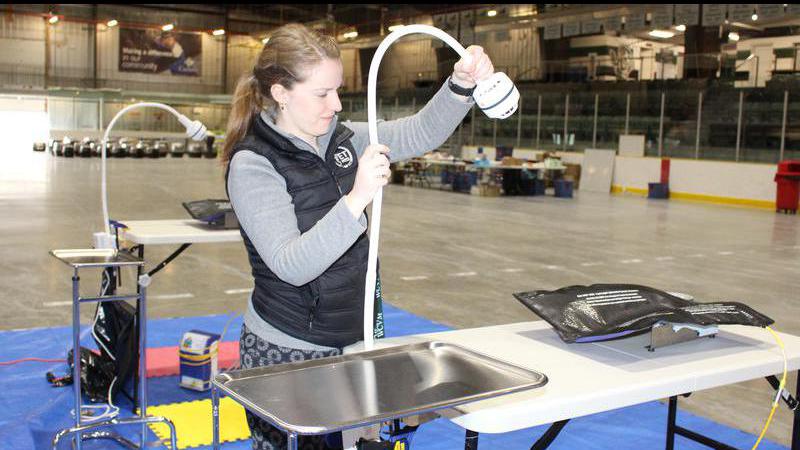
Hundreds of cats and dogs have been spayed and neutered in the tri-communities since 2014. (Derek Cornet/larongeNOW Staff)
animal care

Nearly 1,000 vet checks performed on dogs and cats by WCVM in tri-communities since 2014

May 3, 2022 | 5:51 PM

Since Saskatoon’s Western College of Veterinary Medicine (WCVM) began hosting animal care clinics in 2014, approximately 1,000 wellness checks have been completed on dogs and cats in the tri-communities.

That’s according to Dr. Jordan Woodsworth who explained that number includes about 800 dogs and 200 cats. About 90 per cent of wellness checks are either spays and neutering, but WCVM staff and students also provided vaccines, deworming and other preventative care procedures.

Of those 1,000 pets, 45 per cent came from Air Ronge, 30 per cent from La Ronge and 17 per cent from Lac La Ronge Indian Band communities.

“I think one of the things it does for the North is it provides a reliable access for vet care at a certain time of year that allows folks to plan ahead,” Woodsworth said. “We recognize that it helps with community health and family health. It helps to decrease the number of roaming dogs and cats because there are fewer of them reproducing, so these are all really good things.”


The WCVM typically offers two mobile clinics per year for the tri-communities with one in the spring and another in the fall at the Jonas Roberts Memorial Community Centre. The next clinic is from May 12–15, but Woodsworth noted it is already nearly completely booked for surgeries.

Northern Saskatchewan isn’t alone when it comes to a shortage of veterinarians and those willing to provide animal care in northern, remote and Indigenous communities. Woodsworth mentioned the situation tends to be more severe in those communities, but elsewhere, especially since the pandemic, there’s been a veterinarian shortage across North America.

The WCVM is the only veterinary college that serves people from British Columbia, Manitoba and Saskatchewan. There’s another college in Alberta that serves students there.

“We graduate between 80 and 90 veterinarians a year and those are spread out across those three western provinces,” Woodsworth said. “They do disperse all over, so we have some that go international, some go to Eastern Canada and some end up in the United States. Ninety students out of our college in a year is not enough.”

Woodsworth added, however, veterinary care in the tri-communities is lacking and she is working to address it on a provincial level. She’s hopeful that, at some point in the not too distant future, there will be some northerners with a veterinary technician license who will return to their home communities to provide animal health care.

“The other big piece of the puzzle as far as access to veterinary care goes is training and retention of veterinarian technologists,” Woodsworth said. “There is a training program for vet technicians in Saskatoon as well at Saskatchewan Polytechnic. It’s a two-year program directed at entry out of high school and it is sometimes more accessible to people as far as length of training and things like that.”

derek.cornet@pattisonmedia.com

Twitter: @saskjourno

View Comments