Rising Interest Rates: What to Expect in 2023
-
Share on Facebook
-
Share on Bluesky
-
Share on X
- Copy Link
“The views and opinions expressed in this article are those of the author and do not necessarily reflect the position of Pattison Media and this site.”
2022 will go down in the record books as an abnormal year for the financial markets.
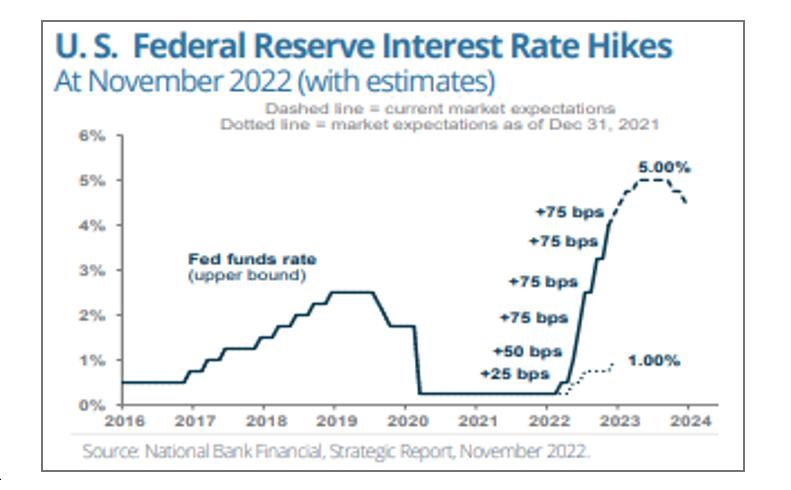
As inflation reached 40-year highs, it caught the central banks by surprise and led to a rapid tightening of monetary policy through interest rate increases. What has made this tightening cycle unique is the speed and magnitude at which rates increased (chart below).
Many argue that these actions have been necessary because the central banks acted too late to control inflation. However, this created significant volatility in 2022, with declines to both fixed income and equity markets. The declines may have felt particularly significant because for much of 2020/2021, asset values increased with little interruption, supported by the availability of low-cost capital and use of leverage, an increased money supply due to pandemic stimulus and excessive exuberance.