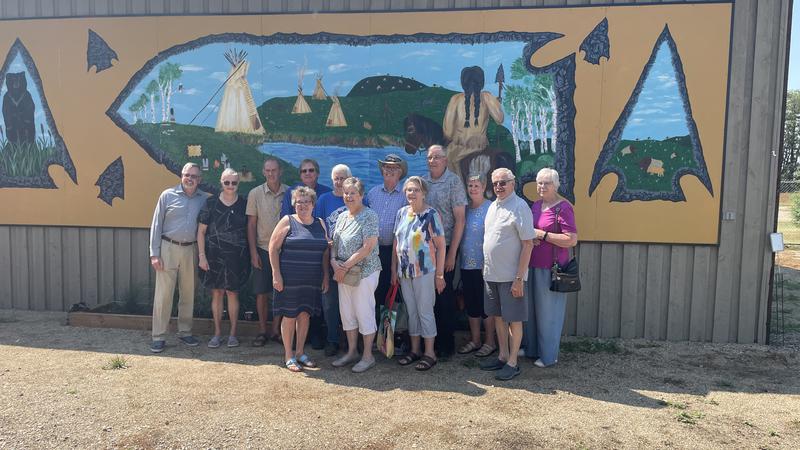
Members of the Vigrass family. (Ben Tompkins/northeastNOW Staff)
Victor Vigrass

Melfort and District Museum celebrates northeast archaeologist

Aug 2, 2023 | 8:49 AM

A northeast archaeologist was celebrated at the Melfort and District Museum on Tuesday (Aug. 1).

A special collection of archaeological artifacts was presented, which featured the work of late amateur archaeologist Victor Vigrass.

A large amount of Vigrass’ family was in attendance and spoke about their relative and his collection.

“He farmed here for most of his life, he loved collecting artifacts, he talked about them, and it was a real passion of his,” said Rick Vigrass, grandson of Victor. “The fact that the museum has his collection here, he’d be really happy that his picture and bio are up.”

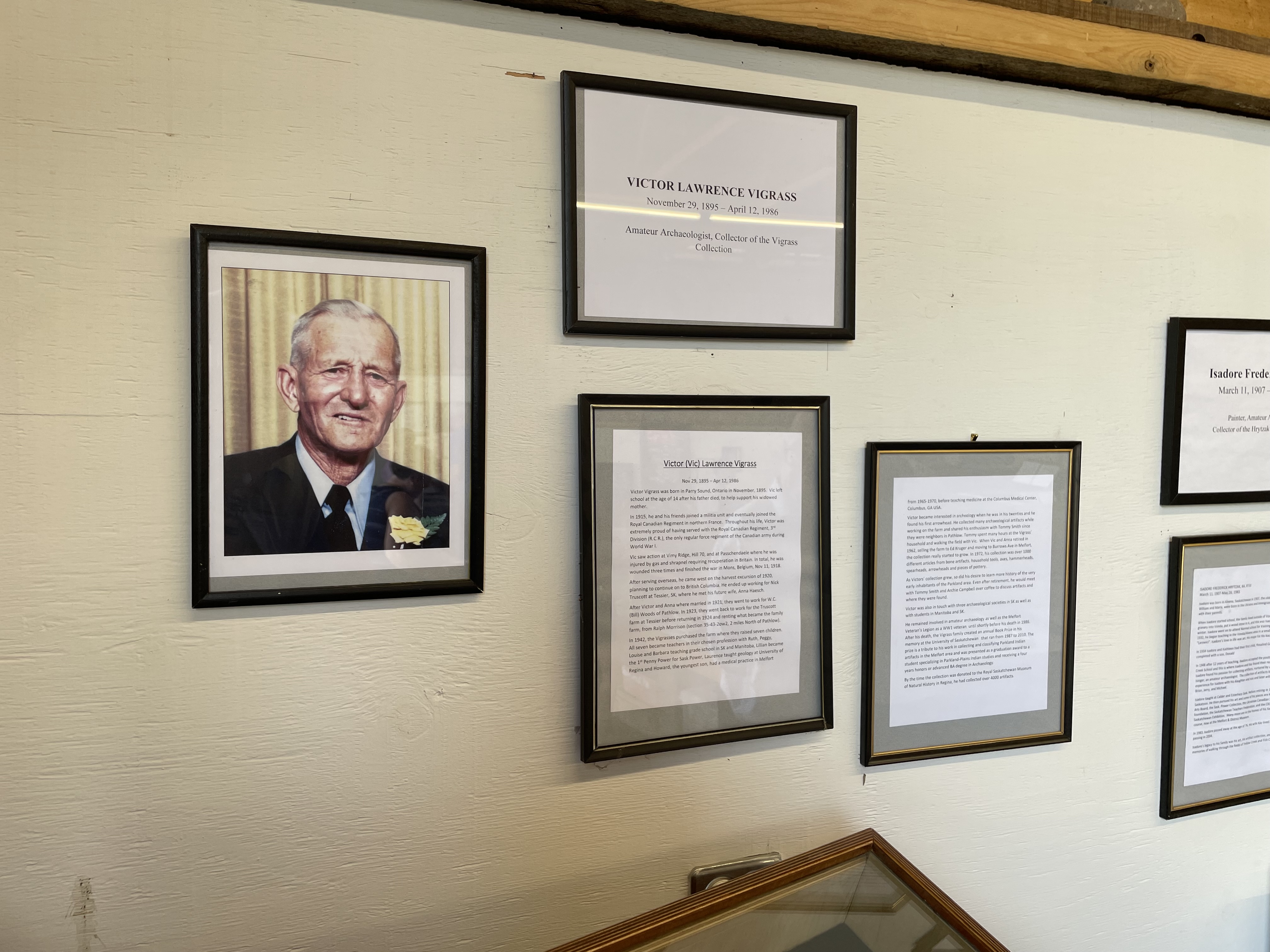
Vigrass, a lifelong resident of Pathlow, currently has a collection of over 4,000 artifacts residing with the Royal Saskatchewan Museum in Regina.

(Ben Tompkins/northeastNOW)

Victor’s collection has included many items such as bone artifacts, household tools, pottery, and much more.

That museum was the one that brought some of his artifacts down to sample in the Indigenous Peoples and Archaeology building.

“He had quite a collection, and then when he passed away, it ended up going to the Regina Museum, which is still the center for all that sort of study. I don’t think he would have had any idea that it would come back here, and I don’t think he would even envision that there would actually be a building dedicated, but I think it’s great,” Rick added.

“I think it’s a real sign of reconciliation, and I’m sure the Indigenous people of the area will value having something like that over time. I think he’d be really happy.”

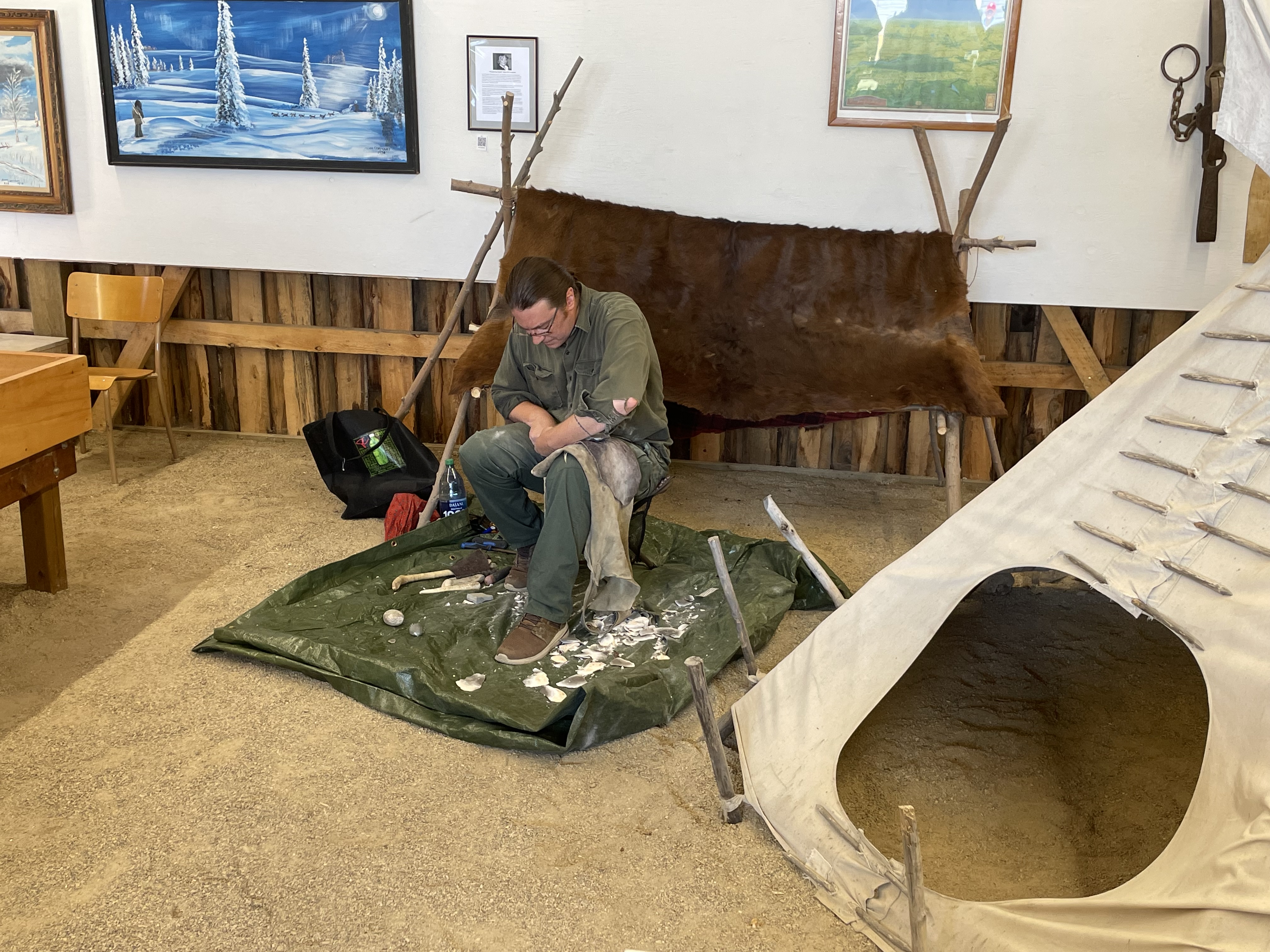
Representatives from the Saskatchewan Archaeology Society were present, and Gabe Lamarche did a flintknapping demonstration.

(Ben Tompkins/northeastNOW)

Meanwhile, there were also remarks from the Royal Saskatchewan Museum, the City of Melfort, and the Melfort and District Museum Board.

Victor found his first arrowhead in his twenties and his collection started to grow after retiring in 1962.

“He had an area in the basement with a cabinet with little thin shelves on it and every time he pulled one out, there’d be artifacts on it all labelled and everything, and he knew where everything was,” explained Rick.

“We’d then go up looking together and he knew all the fields around. He had an imagination of what it was like before it was farmed and where people would be, and so that’s how he decided where in the field he would go look, and every time we went we seemed to find some artifacts.”

news@northeastnow.com

On Twitter @BenTompkins_8

View Comments