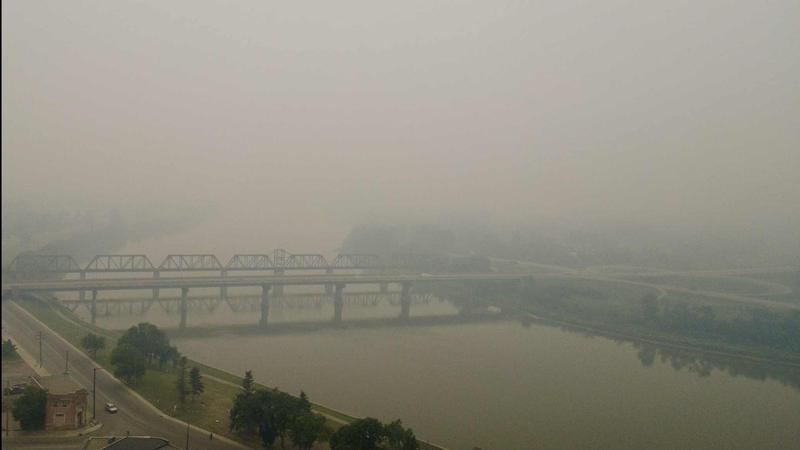
Prince Albert has experienced several days like the one pictured above due to wildfire smoke this summer. (Nigel Maxwell/paNOW)
Smoky Summer

Prince Albert and Saskatoon experiencing smokiest summer to date; Regina and La Ronge close behind

Jul 24, 2025 | 3:22 PM

Saskatchewan is experiencing one of its smokiest wildfire seasons in recorded history, with cities like Prince Albert and Saskatoon already surpassing previous records for wildfire smoke exposure by mid-summer. Regina and La Ronge are also seeing significant smoke levels, putting all four communities on pace to challenge or break annual records.

According to Environment Canada, Prince Albert has been hit hard, with 252 smoke hours logged so far, smashing its previous record for this time of the year. That record was 208 hours in 1995. The 252-hour total now ranks as the second-highest smoke season on record for the city overall.

La Ronge, located in a northern region often hit hardest by wildfires, has already logged 439 smoke hours. Only the years 2015 (512 hours) and 2023 (490 hours) were higher by late July. Even with two to three months remaining in the season, 2025 already ranks fourth all-time for the community.

Saskatoon has recorded 182 smoke hours so far in 2025, the highest ever logged by this point in the year.

In Regina, the smoke has tied a 30-year record with 168 smoke hours registered so far. That’s a big rise from last year’s 115 hours at this time.

The wildfire smoke season in Saskatchewan typically runs from April to October, but it can begin earlier or last longer depending on fire activity and weather patterns. With over 50 wildfires still active across the province, meteorologists warn that the current pace could possibly push multiple cities toward new all-time annual records before summer ends.

“We do have a lot of fire activity in the province, especially in parts of North Central Saskatchewan and a lot of smoke in the air now. Over the next couple of days we’ve got some southerly winds which should keep things a little clearer for those areas, but there is still a lot of smoke and it has been very dry. So it’s impossible to say if this is going to be the record-breaking season for sure,” said Environment Canada meteorologist Christy Climenhaga.

She explained how “smoke hours” are measured:

“When we’re looking at smoke hours, what we’re calculating is when smoke has reduced visibility below six miles within that hour, and that’s what you call a smoke hour.”

With weeks of peak fire season still ahead, health authorities are urging residents to monitor air quality indexes and limit outdoor activity when smoke levels are high.

Austin.mattes@pattisonmedia.com

On X: @AustinMattes

View Comments