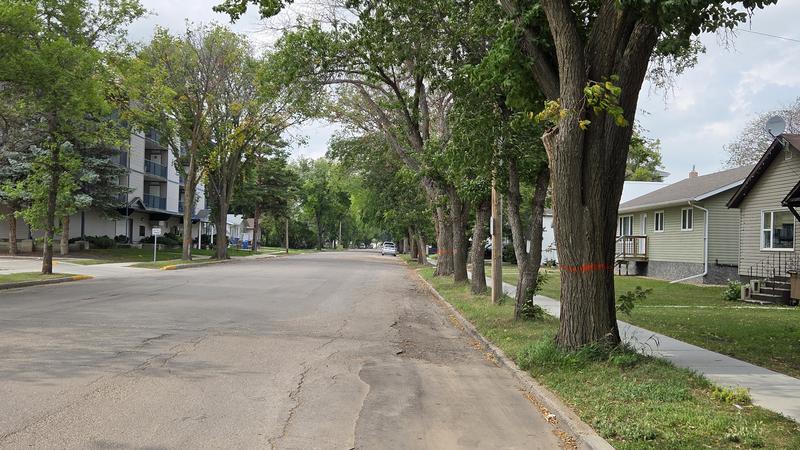
The latest DED survey in Melfort found 127 infected trees city-wide. (File photo/northeastNOW Staff)
Dutch Elm Disease

Ministry specialist discusses Dutch Elm Disease in Melfort

Aug 19, 2025 | 3:45 PM

A Forest Health Specialist with the Ministry of Environment is weighing in on the high number of Dutch Elm Disease (DED) cases in Melfort.

The city hired a Dutch Elm Disease expert to inspect elm trees across Melfort, and his report indicated there were 127 infected trees.

That is an increase from the 102 found in 2024, and 89 the year prior.

Josh Pol with the Ministry of Environment told northeastNOW the disease was first detected in Melfort back in 2017 and has continued to be a challenge ever since.


He said there is a simple reason that Melfort has had high disease numbers over the years.

“What makes Melfort particularly susceptible is the high number of elms within the city,” Pol said. Many of those elms are in established neighbourhoods with a large canopy of shade-providing trees.

According to Pol, there may be many factors at play as to why the numbers keep increasing in and around the city.

Pol said their goal is to limit the spread of the disease through their efforts in buffer zones around eight communities in the province, including Melfort.

“To help the City of Melfort, we provide technical advice, training, legal authority, [and] regulatory controls to help with the management activities.”

With Dutch Elm Disease, Pol said the best thing communities can do is to remove infected trees as soon as possible and have a survey program that is able to detect infected elms and remove them.

He said when the disease is established it is difficult to stop it completely; however, with efforts from the city and ministry, the number of infections should decline over time.

Other communities like Saskatoon have noted infected trees this year, with six positively identified and more likely. To Pol’s knowledge, though, the Melfort zone seems to have the most cases this year.

Residents can keep an eye out for trees that could be infected with DED. Pol said such trees have yellowing and wilting leaves in several branches near the top of the tree, usually starting in late June. If you spot such trees, you’re recommended to report them to your local municipality.

It is also illegal to prune elm trees between April 1 and Aug. 31 to reduce the chance of the disease spreading. Pol said pruning outside the provincial ban helps keep the tree healthy and less susceptible to disease, including DED.

Pol said it is also illegal to transport, use, or store any sort of elm wood, including Siberian Elm.

cam.lee@pattisonmedia.com

View Comments