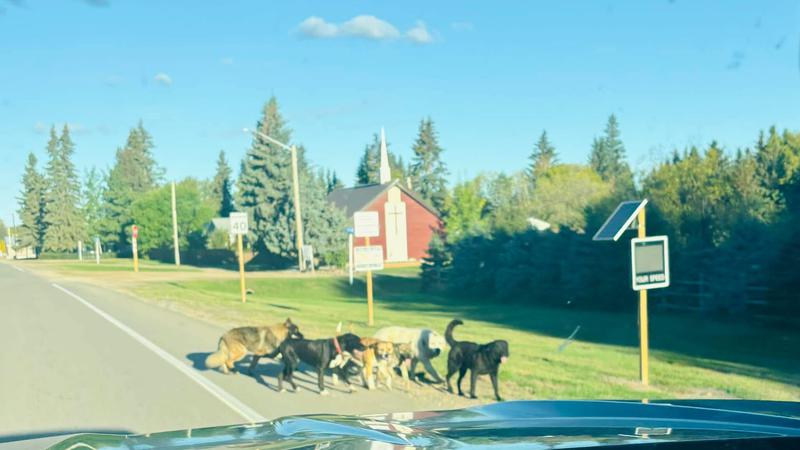
Makwa Sahgaiehcan First Nation School posted on Facebook last year to remind people about a pack of dogs wandering in the area. (photo/Makwa Sahgaiehcan First Nation School)
PUBLIC SAFETY

‘Not feeling safe for walking around town’: Loon Lake mayor says crime down, but stray dogs leave residents uneasy

Sep 9, 2025 | 3:00 PM

Crime in Loon Lake has eased since last year, when the mayor was calling for emergency help after a church fire and a rash of criminal activity. But he warns residents are now facing a different threat — packs of stray dogs roaming town.

Mayor Brian Hirschfeld said political pressure from then-MP Gary Vidal for Desnethé—Missinippi—Churchill River and Meadow Lake MLA Jeremy Harrison led to more RCMP support in the community.

“They really put pressure on their provincial counterparts and on the premier and on the RCMP. And that part has improved. It’s not a 100 per cent, but the break-ins and the theft in Loon Lake have improved,” Hirschfeld said.

He said Vidal and Harrison pushed their counterparts to act, which brought the Crime Reduction Team (CRT) into the community and led to extra RCMP officers being deployed.

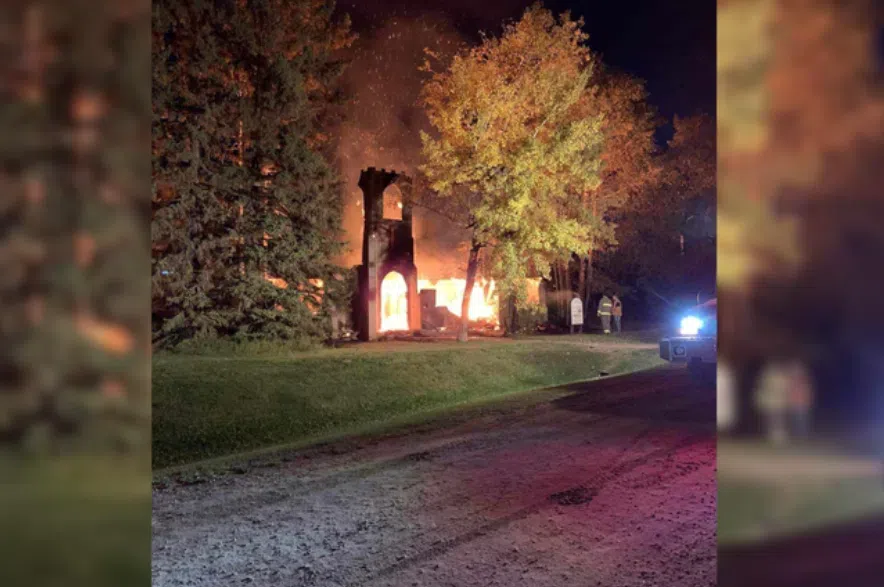
That marks a shift from about a year ago, when he described the situation as dire in a letter to Premier Scott Moe and NDP Leader Carla Beck. At the time, Hirschfeld warned Loon Lake was on the verge of a state of emergency following the destruction of St. George Anglican Church — a historic 85-year-old building he called “iconic” — and an outbreak of vandalism and theft.

RCMP later charged a 25-year-old from Makwa Sahgaiehcan First Nation with arson in the church fire.

The St. George Anglican Church burned to the ground on Sept. 28, 2024 after standing in Loon Lake for 85 years. (Submitted)

But while break-ins have slowed, Hirschfeld said a surge in stray dogs has taken their place as the main safety issue.

“We have a rising dog problem again… people aren’t feeling safe walking around town because of the dogs now,” he said, adding that it’s been a persistent issue that has lingered for decades.

He pointed to a recent case where “there was just a lady chased by a pack of four dogs here.”

Hirschfeld said the dogs are mostly coming from the nearby Makwa Sahgaiehcan First Nation. The village once spent up to $12,000 a year on a dog catcher, but he said the community can no longer afford it.

“They’re not our dogs. These dogs are coming from the reserve and we’ve been paying for it for 35 years now or longer to catch these dogs, rehome them [and] feed them,” he said.

“We’re a small community with a small budget and we just can’t afford to do that. … It really is up to the First Nation to deal with that problem, not us.”

Chief Melvin Mooswa said Makwa Sahgaiehcan is taking steps, pointing out that the First Nation has been working with the village on solutions.

“We’ve been networking with the town trying to find solutions, which it was good that they’re helping us out and we’re helping them out to get some ideas and what to do,” Mooswa said.

He said the community doesn’t wait for problems to escalate before stepping in.

“Any problems that we’ve been having our calls from, having dog issues, we kind of deal with it right away. We don’t wanna wait around for anything serious to happen. So, we’ve been kind of on top of the situation right away,” he said.

He explained that animals are kept for a short period to see if an owner claims them, but if they go unclaimed the Nation tries to rehome them outside the community. If dogs become aggressive or attack people, he said they sometimes have no choice but to put them down to protect children and residents.

He added that dog issues aren’t unique to Makwa Sahgaiehcan but are common in many northern communities, and that owners need to take more responsibility for their pets.

“A dog owner needs to start stepping up and looking after their dogs, and we keep reminding them,” he said. “If we have no choice, we have to put ’em down… If they attack people.”

Kenneth.Cheung@pattisonmedia.com

View Comments