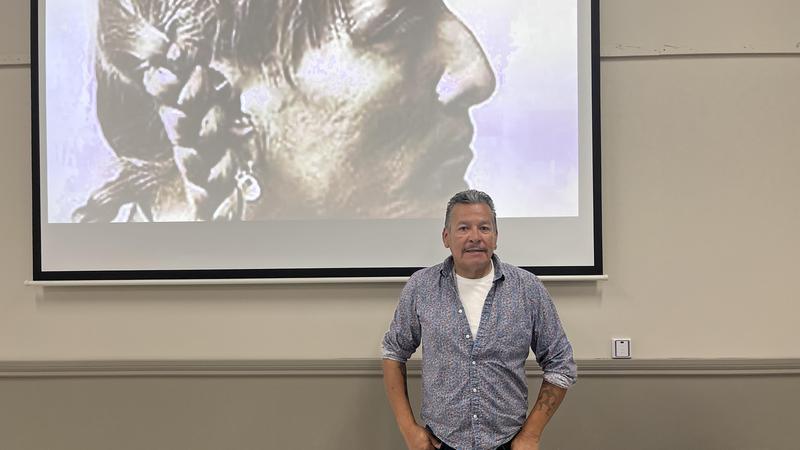
Knowledge Keeper Jeff Wastesicoot stands next to an image depicting Indigenous braided hair (Lane Hoffart/battlefordsNOW)
Wakomitowin Blood Lineage Workshop

Workshop explores sacred role of hair in Indigenous culture after hospital incident

Sep 12, 2025 | 6:00 AM

In many Indigenous cultures, hair is more than just a physical attribute; it holds spiritual and cultural significance. Knowledge Keeper Jeff Wastesicoot is speaking at a three-day workshop being held in North Battleford this week exploring the Indigenous bloodlines and the deep-rooted traditions surrounding hair within that context.

“In our history, when you want to take advantage of a group, you will cut their hair. And now you’ve taken away their spiritual integrity,” Wastesicoot said.

The Wakomitowin: Blood Lineage event was made possible by University of Saskatchewan professor Dr. Holly Graham through her five-year Néhiyaw Wīcihitowin program, which ultimately aims to provide Cree youth with an opportunity to connect with their traditional identity.

The workshop also comes on the heels of an incident in Saskatoon where hospital staff cut the hair of a 54-year old Indigenous woman who was in hospice care. They did so while she was medically incapacitated and unable to give consent.
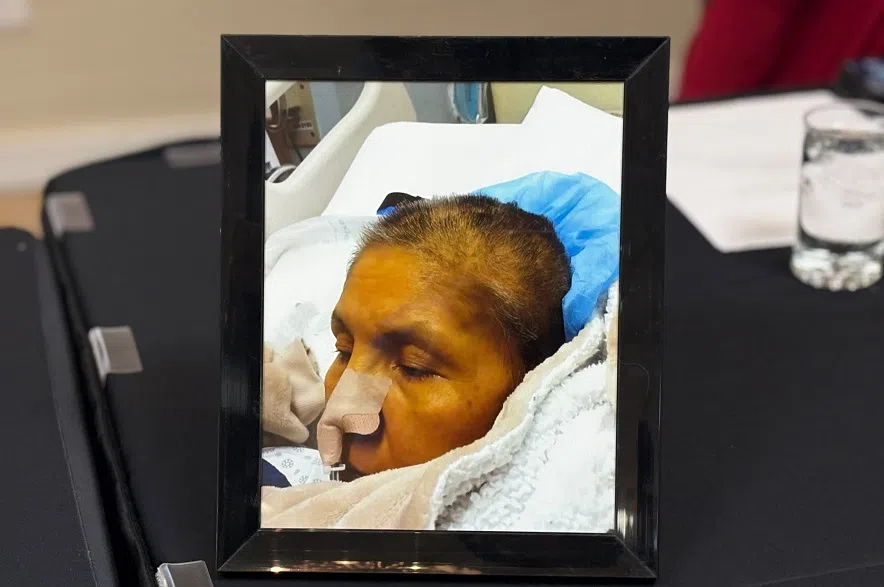
Corina Morin was admitted to the Royal University Hospital on June 10, where her family says staff cut her hair without consent. Photo taken in Saskatoon on Aug. 12, 2025. (Mia Holowaychuk/650 CKOM)

Those at the workshop in North Battleford heard, in Indigenous cultures, hair is sacred and seen as an extension of oneself, linking them to their ancestors, the land, and the Creator. Graham said cutting someone’s hair without consent goes back to residential schools where it was done deliberately to sever cultural roots and dehumanize Indigenous people. She said having the same type of practice occurring in healthcare today is re-traumatizing.

“It’s so significant when you look at historical trauma and ongoing trauma, but when you look at the cultural significance of cutting hair, that’s where it really comes into. It’s actually a part of disconnecting that person from their spirituality, and that does have consequences for their health and wellness.”

In the aftermath of the incident in Saskatoon, the Saskatchewan Health Authority (SHA) created a policy stating that Indigenous hair cannot be cut without the consent of the patient or their family and can only be cut if the situation is life or death.

In a statement provided to battlefordsNOW, the SHA said it’s committed to providing care that respects a patient’s cultural background.

“The Saskatchewan Health Authority (SHA) is committed to creating a culturally safe and respectful environment in all our facilities, with all SHA team members having a role in fostering inclusive, respectful and culturally-responsive health care. We acknowledge the deep cultural and spiritual significance of hair and braids in First Nations and Métis cultures, and recognize that cutting hair without permission can cause emotional and spiritual harm, evoking past cultural trauma.”

While the SHA couldn’t provide further information on the incident, it did say that an apology was made directly to the patient for their experience and the SHA worked to provide them with personal and spiritual support.

Wastesicoot said the workshop is part of First Nations’ process of taking back their culture and identity, to help prevent these types of incidents from happening in the future.

“Through colonization, they cut us off and assimilated us. They disrupted the relationship to our spiritual faith and not really understanding it,” Wastesicoot said. “This process is the beginning of revalidating who we are as a people of these lands, to revalidate the value as to our existence.”

He called it ‘spiritual restorative justice.’

“We’ve been given so many labels: Indigenous, First Nation, Aboriginal, Cree. That’s not our language. That is a label that has been given to us…same with Indian. We have yet to tell the world who we are, and we are about to make a stand and tell the world who we are.”

-With files from CKOM

lane.hoffart@pattisonmedia.com

View Comments