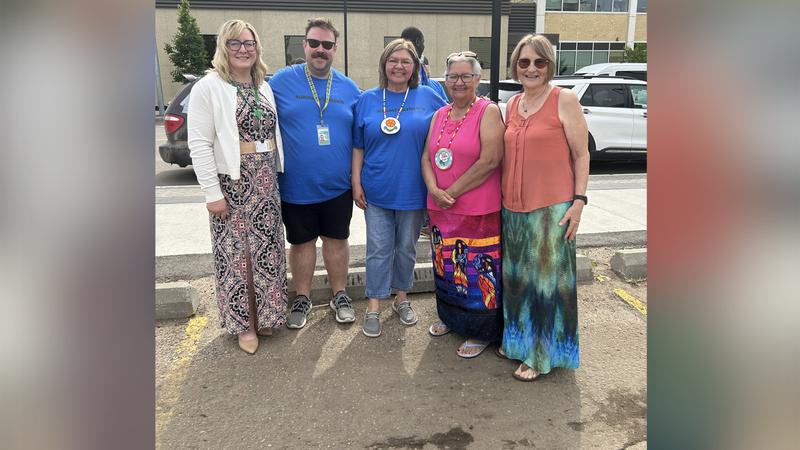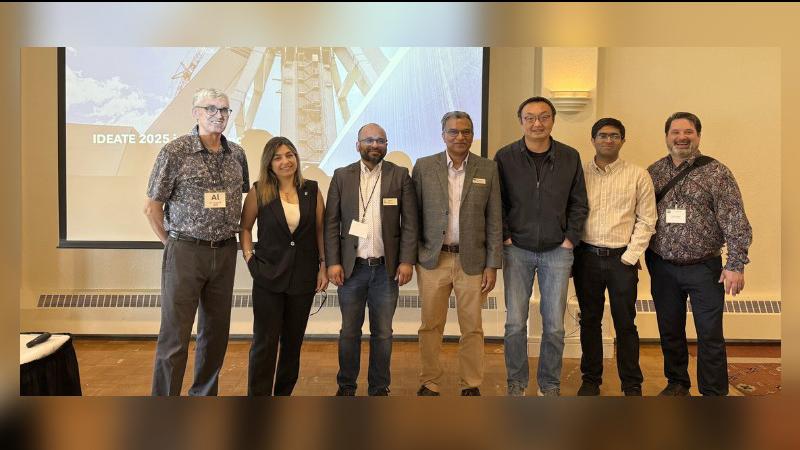
P2INACLE is a collaboration between six western Canadian schools, including Sask. Polytech. (submitted/SaskPolytech.ca)
New research

Building with byproducts; SaskPolytech gets in on new research

Oct 3, 2025 | 6:05 AM

Mining resources creates more than products to ship and money to be made; it also creates byproducts and the question of what to do with them.

SaskPolytech, working with other polytechs across western Canada, is hoping to answer some of those questions, especially when it comes to potash.

Three new research projects were announced yesterday, all with the goal of finding practical ways to use mining byproducts. The federal government has kicked in $900,000 through PrairiesCan to get the projects going.

“Canada has what the world wants — and our mining and critical minerals sector is ready to deliver. In a period of profound change and new challenges, this sector is central to building the strongest economy in the G7, thanks to the innovation that drives new solutions, supports good jobs, and creates lasting opportunities,” said Eleanor Olszewski, Minister responsible for Prairies Economic Development Canada.


Canada has 11 potash mines, and all of them are in Saskatchewan. While potash is mainly used as a crop fertilizer, it can also be used as an alternative to de-icing salt, in pharmaceuticals, ceramics and detergents.

The tailings that are left after potash is extracted and processed from ore are very high in salt and often left in piles. When it rains, the water mixes with the tailings and creates a brine which runs into the environment, damaging the soil and water.

“Saskatchewan’s mining sector is a staple of many of our rural and northern communities and is an economic driver for Canada,” said Buckley Belanger, Secretary of State (Rural Development).

“When industry and our post-secondaries work together, like this partnership between P2INACLE and IMII, we solve real problems — quicker, safer, cleaner. Innovation in mining isn’t abstract; it helps workers today and keeps our communities thriving for the long haul.”

One project will look at how to combine potash tailings, fly ash and kraft lignin with other concrete ingredients to make building products.

Fly ash is itself a byproduct of coal combustion that has been used in concrete to make it stronger, less porous and more resistant to cracking.

Kraft lignin is a byproduct of the kraft pulping process that can be used in composites, as a biosorbent for heavy metals and takes the place of fossil fuels.

The researchers in that project will work under Dr. Abu Kamal, a SaskPolytech researcher.

He will also oversee the second project, which will examine how to use potash tailings in compost, which would return nutrients into the environment.

The third project will investigate how electromagnetic frequencies can be used to create an imaging system that can look beyond the visible part of the inside of a potash mine.

They will test how electromagnetic radiation interacts with different soils. One of the goals will be to find the most efficient frequency range.

Another SaskPolytech research chair, Dr. Abdul Raour will help lead this project.

All of the projects will involve other polytechs, such as NAIT and SAIT in Alberta as they are part of the research network that are collaborating to push the projects.

The remaining schools include Northwestern Polytechnic, Red Deer Polytechnic and RRC Polytech.

Together, the six schools are working under the name the Prairie Polytechnic Innovation Network Accelerating Commercialization for Local Ecosystems, known as P2INACLE.

susan.mcneil@pattisonmedia.com

View Comments