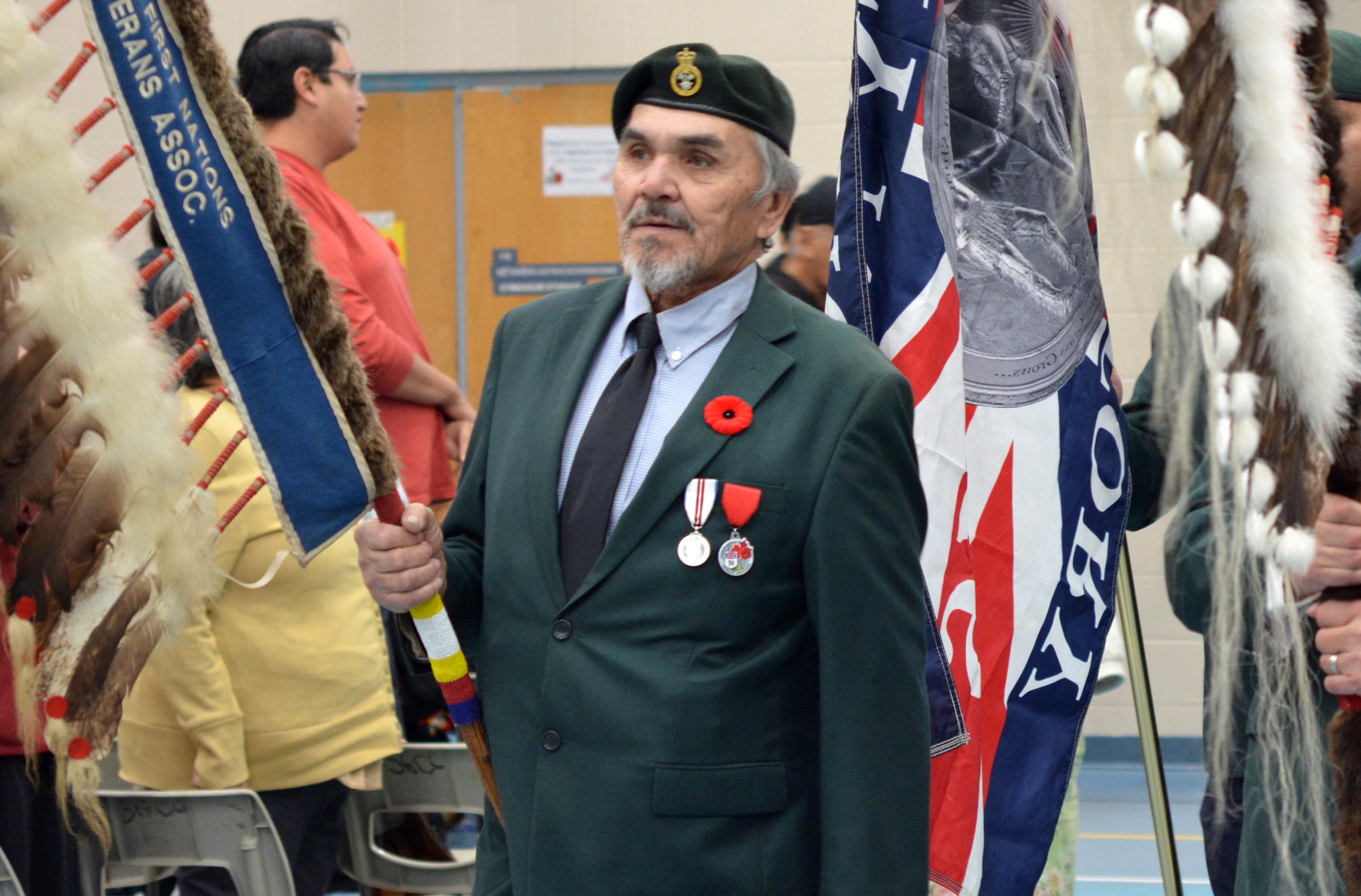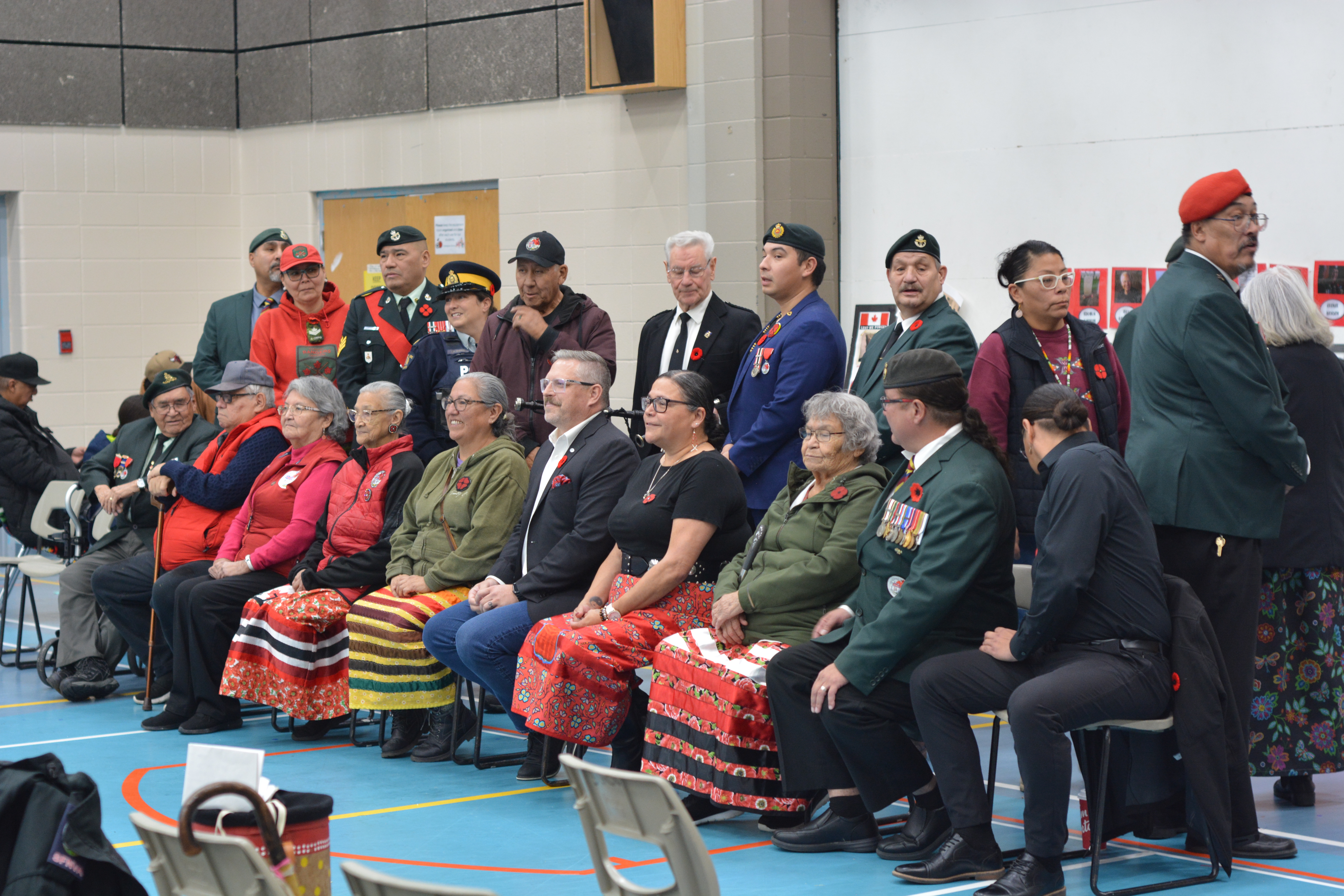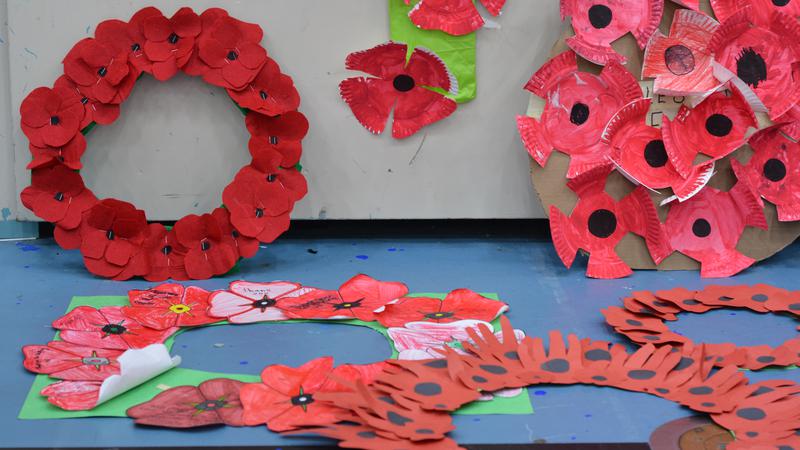
Handmade poppy wreaths and decorations made by Sweetgrass First Nation students were displayed during the community’s Remembrance Day ceremony on Nov. 10, 2025. (Kenneth Cheung/battlefordsNOW)
LEST WE FORGET

At Sweetgrass First Nation, veterans share untold stories of service, sacrifice and healing

Nov 10, 2025 | 3:29 PM

The low hum of drums and the cry of bagpipes drifted through the community hall at Sweetgrass First Nation on Nov. 10 as veterans in berets and medals rose to their feet.

Around them sat families, students and elders – faces marked by pride, grief and quiet gratitude.

For many, this year’s Remembrance Day ceremony was more than a moment of silence. It was a moment of truth – a time to remember, to speak, and to heal.

“She heard it firsthand”

For Hilliard Kahpeaysewat, the memory of Afghanistan still rings as clearly as the satellite call he made home on his birthday in 2009.

He phoned his mother from a forward base, just as dawn broke. She was at work as a janitor at a school when the line filled with chaos.

“At that time the Taliban … came crawling below me but the IED went off in his hand,” he said. “So what happened was everybody opened up.”

His mother heard the explosion over the line.

“I told my mom, just wait, and I had to get into the fight,” he said. “When I picked up the phone [again], my mom was so traumatized. She said, ‘get home now, come home now. You know, that’s enough.’”

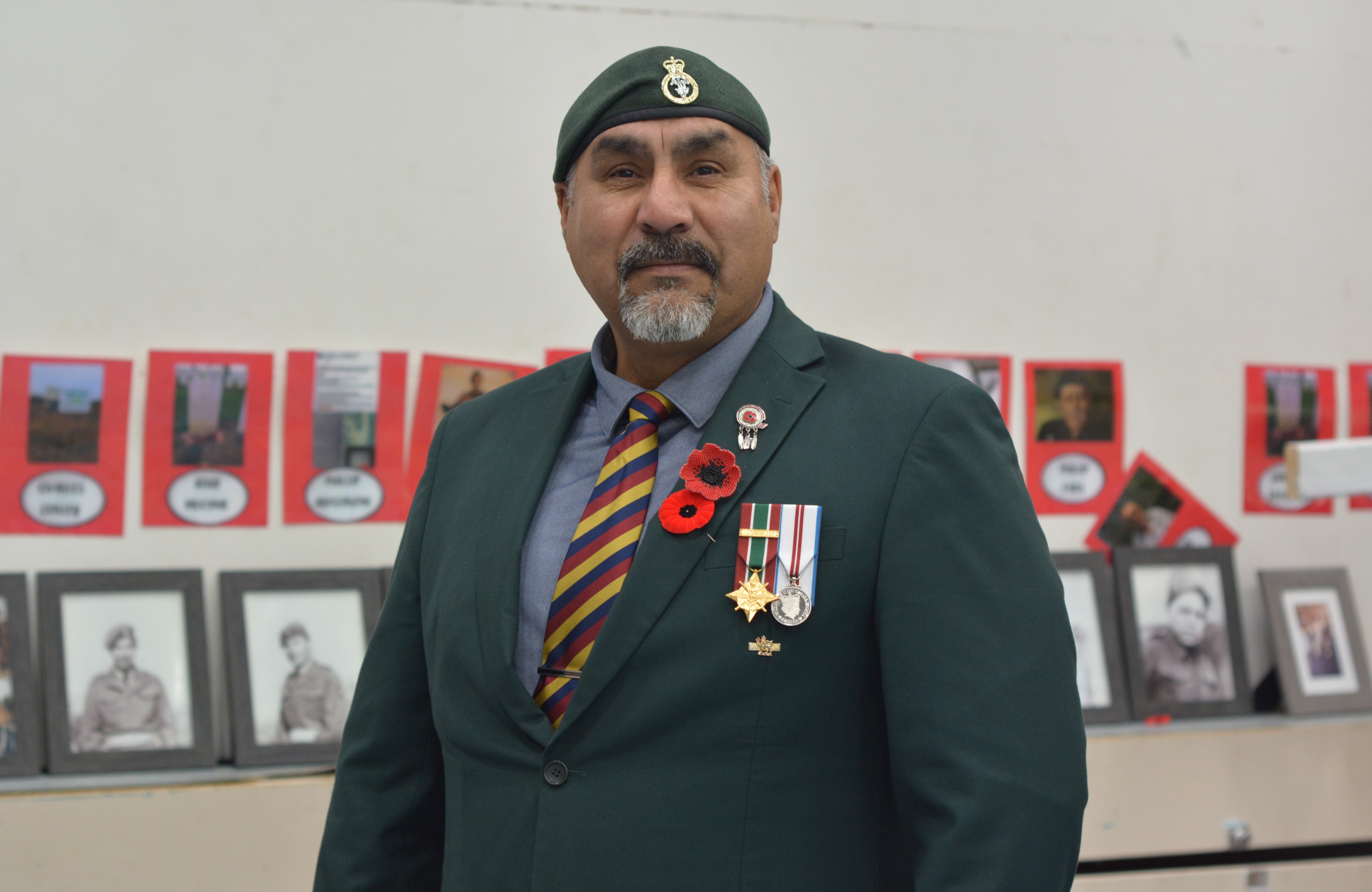
Hilliard Kahpeaysewat, vice-president of the Saskatchewan First Nations Veterans Association’s North Battleford Branch, shares his experience serving in Afghanistan during the Sweetgrass Remembrance Day ceremony on Nov. 10, 2025. (Kenneth Cheung/battlefordsNOW)

Kahpeaysewat said the experience changed them both. His mother still goes to schools to share what she heard that day, reminding students of the people behind the uniform.

“When she sees they don’t really respect veterans, she’ll tell that story,” he said. “‘I know what my son went through. I heard it firsthand.’”

When he returned from deployment, the battle didn’t end. He struggled with anxiety and turned to alcohol before finding help through faith and treatment.

“I realized that you have to reach out to your Creator, your higher power … to heal,” he said.

Now, he tries to guide other veterans who carry invisible wounds.

“If I can help one person, I feel that I’m healing more,” he said. “The more people I can help, the more I feel, ‘oh, I did something in my life and I’m healing.’”

For him, service doesn’t stop when the war does.

“We should all help and rise as a people,” he said. “Like, we’re Canadians. Canadians are known to do that.”

“They’re still human beings”

For David Pelletier, a former peacekeeper and president of the Saskatchewan First Nations Veterans Association’s North Battleford branch, the stories of war are often inherited.

He recalled the words of his late uncle, Francis DesJarlais, a Korean War veteran who waited until his final days to tell his story.

“‘I saw three of them charging in my direction,’” Pelletier recited. “‘I raised my rifle and I fired as fast as I could pull the trigger and killed all three … Everything I was taught about respecting life was all gone.’”

David Pelletier, president of the Saskatchewan First Nations Veterans Association’s North Battleford Branch, recounts the wartime story of his late uncle, Korean War veteran Francis DesJarlais, during the Sweetgrass First Nation Remembrance Day ceremony on Nov. 10, 2025. (Kenneth Cheung/battlefordsNOW)

His uncle turned to ceremonies to find peace. Others, Pelletier said, still struggle alone.

“Combat has a severe effect on the human psyche,” he said. “Some stay away from these places [organizations that help veterans cope with PTSD] … they feel embarrassed of what they had done during a battle.”

He paused.

“They’re supposed to be tough killers, but they’re still human beings,” he said. “The next time you see a veteran, go up and shake his hand … go up and tell him you’re proud of what they did and sorry for what they went through.”

“If good people don’t stand up”

Robin Dawatsare, a retired sergeant and Grand Chief of the Saskatchewan First Nations Veterans Association, spent more than two decades in uniform — from the Bold Eagle program to the Princess Patricia’s Canadian Light Infantry.

“The Army provided food, shelter to my family, a job, stability, and a pension to myself, which I’m very proud to achieve,” he said.

Those years, he added, taught him the discipline and leadership that now guide his advocacy for Indigenous veterans across the province.

Dawatsare said one thing still weighs on him — Canada’s silence on the Victoria Cross, once the country’s highest military honour.

“They don’t issue out the Victoria Cross in Canada,” he said. “It’s one thing Canada’s got to start recognizing, to acknowledge these great heroes that above and beyond served and saved the lives of other servant members.”

Robin Dawatsare, Grand Chief of the Saskatchewan First Nations Veterans Association, reflects on his 22 years of military service at the Remembrance Day ceremony in Sweetgrass First Nation on Nov. 10, 2025. (Kenneth Cheung/battlefordsNOW)

Looking at today’s conflicts, Dawatsare added quietly, “There’ll always be war in this world … If good people don’t stand up against evil, evil takes over.”

For the veterans who shared their stories, remembrance wasn’t about medals or victory. It was about honesty, loss and the strength to helping others heal.

“We all come back home to it,” Kahpeaysewat said.

“We all want to come back home to it. We could go anywhere in the world. I’ve seen a lot of worlds. I always want to come home.”

Framed portraits of Sweetgrass First Nation veterans who have passed away are displayed during the community’s Remembrance Day ceremony on Nov. 10, 2025. (Kenneth Cheung/battlefordsNOW)
(Kenneth Cheung/battlefordsNOW)

Kenneth.Cheung@pattisonmedia.com

View Comments