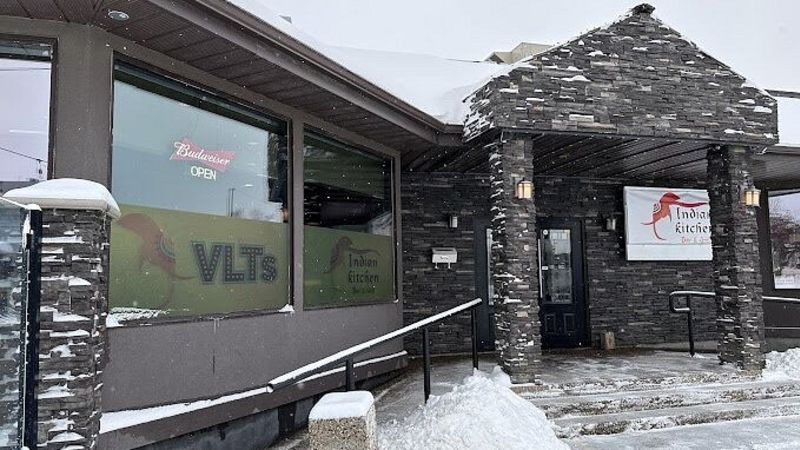
Indian Kitchen is located at 4406 49 Ave Lloydminster, Sask. The owner says the restaurant may be forced to close as immigration delays threaten the status of its two chefs. (Photo/Indian Kitchen)
IMMIGRATION

Work-permit delays threaten to shut down Lloydminster restaurant, owner says

Dec 4, 2025 | 5:33 PM

A Lloydminster restaurant owner said her business may have to close within weeks because immigration paperwork delays have left her two chefs unable to renew their work permits.

“Without them, I am nothing,” said Ravinder Kaur, owner of Indian Kitchen. “If I am not able to find any chef, I have no other option than just shutting it down.”

One chef’s permit expired last week and the other’s is set to lapse in about six weeks. Kaur said both men have lived in Canada for seven to eight years, have children enrolled in local schools and recently received medical care in the community.

“It’s not like they just pack their bags and go back,” she said. “A life is definitely built here.”


Kaur said she has tried all her contacts, industry networks and job platforms to find additional chefs, and although she has received more than 100 applications, none had the skills needed. Now, she is letting anyone who wants to work come in and try.

“Please, if you are Canadians who want to work in the Indian Kitchen, we will teach you right away. We will hire you right on the spot… If you have these skills, if you know a little bit about Indian cooking, please come and we will let you start working right away.”

She said Indian cuisine relies heavily on instinct and non-standardized methods.

“There is no spoon, there’s no one cup, there’s no measurements,” she said. “[The current chefs] just know it by heart.”

Kaur and her husband tried preparing some dishes themselves, but she said neither could match the chefs’ work.

“If I’m not able to deliver the same quality or somewhat closer to the quality we are providing, people will notice and stop coming.”

To renew the chefs’ work permits, Kaur will have to obtain a Labour Market Impact Assessment (LMIA), but she said repeated rejections of her mandatory Job Bank posting have prevented her from beginning the application.

“They just keep declining it for some reason,” she said, noting that not even her immigration consultant has an answer.

“We are not even at the first step for them to get their LMIA… We don’t even know what to do next.”

Kaur said her situation drew attention after she spoke to a national news outlet and the story was published on Tuesday. She said the coverage prompted online comments accusing her of refusing to hire Canadians.

“When you go to Facebook, when you go anywhere, you see people are blaming these temporary foreign workers for everything,” she said.

“They are one of the hard-working classes we have. They are contributing to the economy and paying their taxes.”

An example of the comments she received followed the publication of an article by a national news outlet on the same topic. (submitted)

Jyoti Haeusler, a Regina-based immigration lawyer and partner at McDougall Gauley LLP, said the problems Kaur described reflect delays she is seeing across Saskatchewan, particularly in smaller communities and in specialized restaurants.

“I can say without any uncertainty, 100 per cent this is an issue that all of my clients are facing across the board,” she said. “Sometimes you’re faced with very specialized skills… and that may be very difficult to find locally.”

“There are delays in processing across the board, whether it’s federal applications or provincial applications,” she said.

“I honestly don’t really know what the answer is for that, but that delay causes all of these further delays down the road.”

As part of the federal immigration cutbacks in the 2025 budget, the number of new temporary residents — including visitors, students and workers — will drop from 673,650 in 2025 to 385,000 in 2026, a 43 per cent year-over-year decrease.

“We will balance the number of new arrivals with the planned departure of international students and temporary workers as their status expires in 2025 and 2026. We have committed to reduce temporary resident volumes through departures, program limits, and lower immigration levels to less than 5% of the population by the end of 2027,” Lena Metlege Diab, Minister of Immigration, Refugees and Citizenship, said in a statement.

“As we bring our temporary resident population to sustainable levels, we will continue to work with provinces and territories to prioritize people seeking to study and work in fields that will support Canada’s workforce needs in communities across the country including in rural areas.”

Haeusler said the legal options available if the chefs lose status are limited. A temporary resident permit would allow them to remain in Canada but would not permit them to work or allow their children to attend school without paying international fees.

“It just allows you to stay in the country,” she said. “But that also won’t allow you to get healthcare coverage… I don’t know how much that really helps them.”

Workers may apply to restore their status within 90 days, but they would be prohibited from working during that period. Current work-permit processing times exceed 200 days.

“You can’t pay rent and pay for expenses in a somewhat expensive country with nobody working,” she said.

If no approvals arrive, Haeusler said the chefs may have to leave Canada and reapply from abroad.

“In all likelihood… the workers are going to be forced to go back to India and then start the process from there,” she said.

Kaur said the uncertainty has left her unsure how long she can continue operating.

“Without them, I am nothing.”

Kenneth.Cheung@pattisonmedia.com

View Comments