
Everyday Ways to Feel Better in Your Body and Mind

Dec 22, 2025 | 9:46 AM

The views and opinions expressed in this editorial are those of the writer’s and do not necessarily reflect the views or positions of Pattison Media.

Well-being is the state of feeling healthy, balanced, and capable of handling daily life—physically, mentally, and emotionally. For most people, the challenge isn’t knowing what well-being is, but figuring out how to support it consistently amid work, family, and endless notifications. The good news is that improving how you feel doesn’t require extreme routines or dramatic life overhauls. Small, intentional choices can compound into noticeable change.

Quick Summary

Small, consistent habits can significantly improve how you feel physically and mentally over time. Focusing on realistic routines, self-awareness, and supportive tools makes well-being easier to maintain day to day.

Building routines you’ll actually keep

Consistency beats intensity almost every time. Instead of chasing motivation, focus on building routines that feel doable even on tired days.

Here are a few foundational habits worth anchoring first:

* Going to bed and waking up at roughly the same time

* Drinking water before caffeine

* Moving your body in any form you enjoy

* Taking short breaks from screens

* Eating regular meals instead of skipping and binging later

These aren’t flashy, but they create the conditions for better energy, mood, and focus.

A practical reset when you feel off

You don’t need to do everything every day. Think of this as a menu, not a mandate.

1. Do one thing that gets your heart rate up (even for 5–10 minutes)

2. Eat at least one meal without distractions

3. Step outside or near natural light

4. Check in with your stress level and name it honestly

5. Wind down intentionally at night (stretching, reading, or quiet time)

Checking off just two or three items consistently can shift how you feel within weeks.

Tracking progress without making it complicated

Designing your own fitness tracking sheets gives you full control over what you measure, whether that’s workouts, daily movement, hydration, or how your body feels from week to week.

Creating them yourself lets you tailor layouts, categories, and notes to match your routine instead of forcing your habits to fit a generic template.

Saving these sheets as PDFs helps preserve formatting and makes them easy to store, print, or share across devices without worrying about accidental changes.

Methods to rotate PDF documents allow you to rotate PDFs so your trackers stay clear, readable, and practical as your fitness needs evolve.

How mental well-being shows up in everyday life

Mental well-being isn’t constant happiness. It’s the ability to cope, adapt, and recover. That often looks like:

* Noticing negative thought loops before they spiral

* Allowing rest without guilt

* Asking for help earlier instead of later

One effective practice is doing brief “mental audits.” Ask yourself: What’s draining me right now? What’s helping me recover? Awareness alone often leads to better decisions.

When work dissatisfaction affects your well-being

Your job takes up a significant portion of your life, so it’s no surprise that unfulfilling work can spill into sleep, stress levels, and self-esteem. For some people, improving well-being eventually means reconsidering their career path. Changing fields can feel intimidating, but modern education options make it more accessible than ever.

Online degree programs allow many adults to continue working full-time or caring for family while preparing for a new profession.

For example, the benefits of studying psychology include learning how thoughts, emotions, and behaviors influence human experience—skills that can be used to support people facing mental or emotional challenges.

One effective practice is doing brief “mental audits.” Ask yourself: What’s draining me right now? What’s helping me recover? Awareness alone often leads to better decisions.

ARTICLE CONTINUED AFTER GRAPHIC

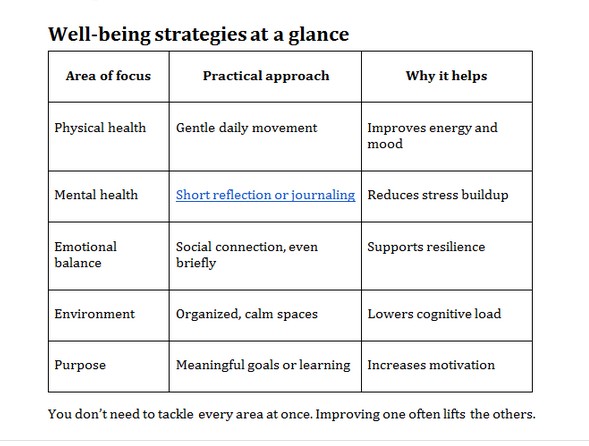
You don’t need to tackle every area at once. Improving one often lifts the others.

Frequently asked questions

How long does it take to feel better after changing habits? Some people notice small shifts in energy or mood within a week, while deeper changes often take a month or more of consistency.

Do I need a strict routine to improve well-being? No. Flexible routines tend to last longer than rigid schedules, especially during busy or stressful periods.

What if I fall off track? That’s normal. Restarting gently is more effective than trying to “make up” for lost time.

Closing thoughts

Feeling your best every day isn’t about perfection—it’s about alignment. When your habits, environment, and goals support who you are now, well-being becomes easier to maintain. Start small, adjust often, and give yourself permission to evolve. Over time, those steady choices add up to a life that feels more balanced and sustainable.

View Comments