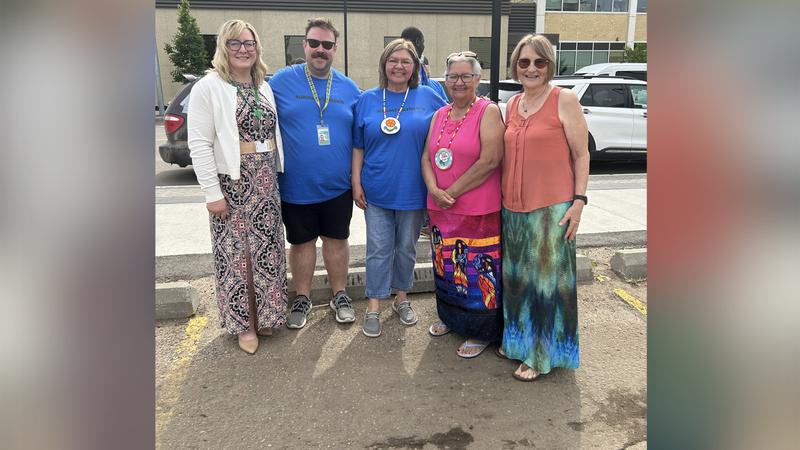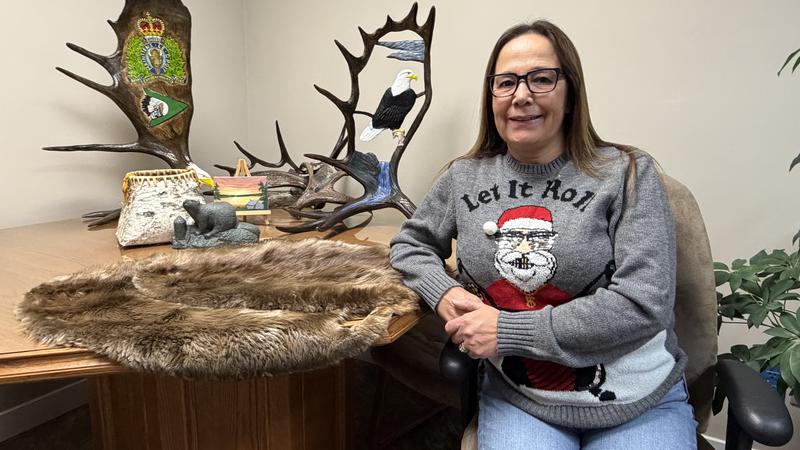
2025 marked a very busy year for LLRIB Chief Tammy Cook-Searson and the band council. (Derek Cornet/larongeNOW Staff)
year in review

Wildfires, agricultural settlement payments mark highlights for LLRIB in 2025

Dec 27, 2025 | 6:00 AM

The distribution of agricultural settlement payments, as well as evacuations from wildfires in the spring, marked the biggest moments for the Lac La Ronge Indian Band (LLRIB) in 2025.

In 2024, the LLRIB achieved a $601.5 million settlement from the federal government regarding the Treaty 6 Agricultural Benefits Claim, also known as ‘Cows and Plows.’ While advances went out last December, the bulk of the payments went out to members in January. While there were many positives that came with it such as people able to make down payments for houses or vehicles and pay down debt, Chief Tammy Cook-Searson explained the settlement also magnified negative issues in the communities.

“We seen a lot of addictions, the drugs and alcohol coming into our communities. The violence, the gangs. It’s something we continue to work on. As a result of that, we formed a committee, and we met very regularly with all the different agencies just trying to collaborate together,” she remarked.

“We were losing lives with strep pneumonia because they weren’t going in right away, so we did a public health notice and we tried to improve the emergency services, so they brought in extra doctors just to help with the flow of the emergency department.”

The wildfire season, particularly in May and June, also proved to be challenging for the LLRIB and its members. There were evacuations in Hall Lake, La Ronge, Stanley Mission and Sucker River. In total, 21 houses, the Clam Lake Bridge, and many cabins were destroyed.

The band was able to support its members through that period with $300 weekly evacuation payments, a $787 payment to all members, as well as a $4,340 payment in December to replace traditional foods that were lost.

“It was so dry and the winds were crazy and that fire came so fast. We tried our best to get ready. It started off with Hall Lake. We brought in lots of resources, and we worked with the Saskatchewan Public Safety Agency, but it started getting worse and worse,” Cook-Searson noted.

“I’m really proud of how our communities supported one another. The wildfires were coming from all directions. It was a smoky and stressful time, but people stuck together. Even outside communities stepped in to support us and the shows real strength.”

In addition, it was a busy year for the Woodland Wellness Centre which received 300 client application from people in Saskatchewan, Manitoba and even the United States. In total, 80 clients were able to successfully complete the in-patient programming.

“The Woodland Wellness Centre hosted the first community round dance in March at Senator Myles Venne School,” Cook-Searson added.

“It was really well attended by the tri-communities, as well as our surrounding communities. It was good to see people coming together in that way.”

Other highlights included the band’s first ever Family Wellness Conference in July. It brought in more than 1,600 attendees and a special donation from Cameco made possible the serving of nearly 1,000 steaks.

With more than 900 employees, the LLRIB continues to advance priorities for its members. In addition, the band’s economic arm Kitsaki Management Limited Partnership reached a milestone of 1,964 employees, the highest number since the company started in 1981.

In 2026, a new day care and Head Start facility will be built in Stanley Mission and similar programming will be expanded in Bell’s Point. Kitsaki Hall in Morin’s Hill will also either be renovated or rebuilt.

“In Stanley Mission, there’s a new subdivision that started early in the spring,” Cook-Searson said.

“We’re developing 87 lots there, which will really help the community with the growth and increase in housing. They are aiming for about 15 new homes every year, along with renovations.”

Big changes are also coming to the band’s Little Red River reserve. Cook-Searson stated sites have been found for a future fire hall and a water treatment plant. There’s already a
$500,000 fire truck on the reserve and volunteer firefighters have been training with the Lakeland Fire Department.

“Right now in the community of Little Red, they are still getting water delivered every day, like jugs of water to the households, so about 100 households because of the unsafe drinking water there,” she said.

“We have been able to secure funding through Indigenous Services Canada and we have been working hard on that project. We are getting closer to building a water treatment plant.”

derek.cornet@pattisonmedia.com

View Comments