Canada’s pro-U.S. stance in Iran attack carries security risks — and political bets

Feb 28, 2026 | 1:21 PM

Canada’s support for U.S. strikes against Iran could come with security risks as the regime looks to retaliate against perceived enemies abroad, say experts, who also note the political gamble of betting on an attack with uncertain aims and outcomes.

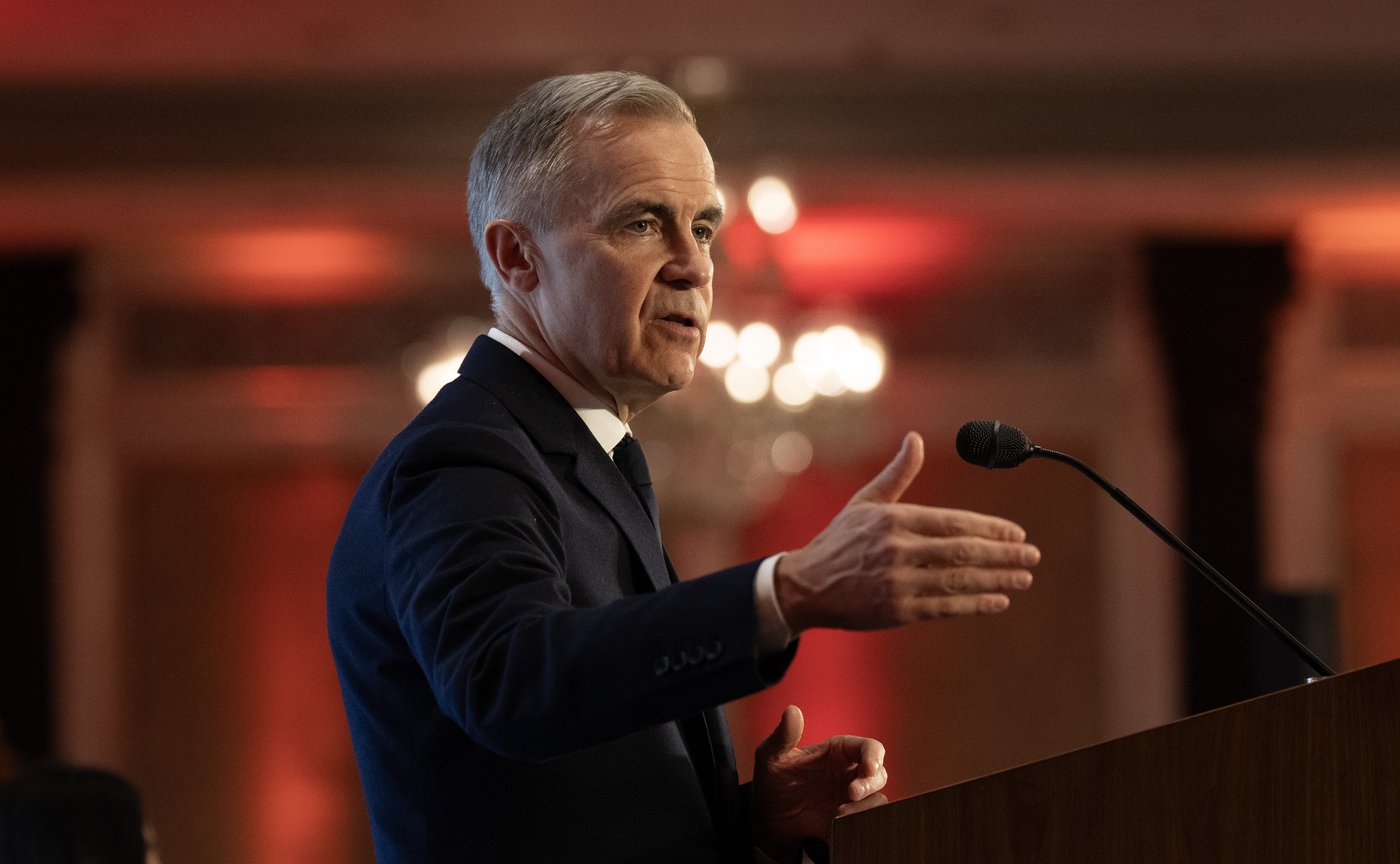
Prime Minister Mark Carney said the government backs American military action on Saturday to stop Iran from obtaining a nuclear weapon and “prevent its regime from further threatening international peace and security.”

Under Ayatollah Ali Khamenei — the nation’s supreme leader who U.S. President Donald Trump said had been killed after 37 years in power — Iran has a history of lashing out against western countries through cyberattacks on critical infrastructure, online harassment and assassination attempts.

“We should be concerned,” said Thomas Juneau, assistant professor at the University of Ottawa’s school of public and international affairs.


He pointed to a pattern of “transnational repression — targeting of Iranian-Canadian dissidents, human rights or democratic activists.”

Now in an existential fight, the regime may well pull out all the cyber-stops.

“The Iranian state is now facing a fight to the finish, to its elimination effectively. They have in their minds absolutely nothing to lose,” said Sajjan Gohel, international security director at the Asia Pacific Foundation.

“The Iranian state could utilize its contacts with organized criminal groups … to target the Iranian diaspora, to intimidate and even try to kill.”

Iran and affiliated groups have carried out numerous campaigns against far-flung foes.

In 2024, the House of Commons condemned an alleged Iranian plot to assassinate former Liberal justice minister Irwin Cotler.

Iranian hackers breached industrial equipment at Pennsylvania water facilities in 2023 and a New York dam in 2013. Between 2012 and 2013, Iran targeted dozens of U.S. financial institutions to disrupt online banking. More recently, state-aligned cyberwarfare groups have monitored and harassed dissidents in Canada, the U.S., U.K., Germany and elsewhere.

“Survival at home includes countering anti-regime activism abroad. They won’t disentangle these two things,” said Juneau.

Israel, which took part in Saturday’s airstrikes, for decades has pointed to the Iranian regime as the main source of threats to its security, and the Carney government has echoed the view that militant groups such as Hamas, Hezbollah and Houthi rebels all threaten Israel with Iranian support.

Leaders of several western countries condemned the Iranian regime on Saturday while offering less full-throated support for the U.S.-Israeli attack. French President Emmanuel Macron called the situation “dangerous” and warned of “grave consequences” for global security.

United Nations Secretary-General Antonio Guterres went further, condemning the use of force as well as Iran’s retaliation. He warned that they “undermine international peace and security.”

Carney has ruled out any Canadian military involvement in the attacks, despite rhetorical backing.

“What surprises me the most about Carney’s statement is the fact that he did take this rather definitive stance in support of a military action whose objectives seem fluid and uncertain, and whose consequences could be grave,” said Stephanie Carvin, who teaches international relations and security issues at Carleton University.

“You don’t have to support the Iranian regime to see the risks and danger of this particular action.”

Carvin added that Canada’s position on any issue sensitive to the U.S. has to keep the ongoing negotiations around free trade in mind, for fear of poking the bear.

The task of dislodging a regime largely through airstrikes remains a major hurdle.

“I’m not saying it’s impossible, but without boots on the ground — and that’s not what the United States wants to do — it would not be easy,” said Maral Karimi, author of “The Iranian Green Movement of 2009” and a lecturer at Toronto Metropolitan University.

For others, that instability kindles a brighter flame than the dark certainty of a theocratic dictatorship.

“In that uncertainty, there’s also hope. That uncertainty provides the possibility of Iranians actually controlling their own destiny for once,” said Kaveh Shahrooz, a senior fellow a the Macdonald-Laurier Institute.

“The opposite of uncertainty in this case would have been continued brutality, a system that is committed to gender and religious apartheid, that has no respect for international law and that has supported for decades terrorism around the world.”

In 2024, the federal government listed the Islamic Revolutionary Guard Corps — a “praetorian guard” military force that swears fealty to the ayatollah — as a terrorist entity under the Criminal Code.

Saturday’s attack carries implications in areas ranging from international security to oil prices and trade flows. Shipping through the Strait of Hormuz effectively shut down amid the fighting, blocking the corridor for a fifth of the world’s oil shipments, according to transport companies and Iran’s Tasnim news agency.

A key question now is how long the conflict will last, and how far beyond Iran it will spread, as the U.S. and Israel look to corral the strife set off by their reversal from decades of sanctions, containment, periodic surgical strikes and proxy wars.

“We’ve seen that regime change in the last 30 years doesn’t really work very well. Whether we’ve tried it in Afghanistan or in Iraq, it doesn’t quite develop the way perhaps people had envisaged,” said Gohel.

This report by The Canadian Press was first published Feb. 28, 2026.

— With files from Dylan Robertson in Ottawa

Christopher Reynolds, The Canadian Press