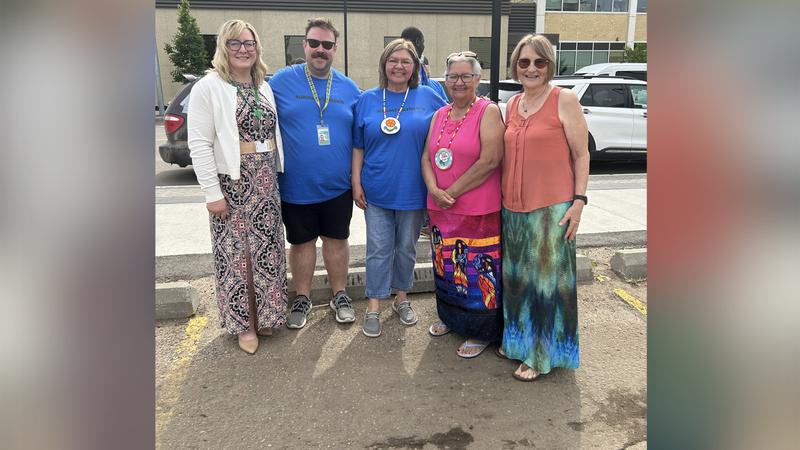
A MADD awareness campaign north of Prince Albert from 2023. (Image Credit: Logan Lehmann/paNOW Staff)
Driving high

Cannabis use caused 50% of young drivers to crash in simulation: researcher

Mar 23, 2026 | 12:41 PM

New research from the School of Public Health at the University of Saskatchewan shows that young drivers feel the effects of cannabis consumption for hours after they consume it.

That leads to a much higher likelihood of a collision, said Professor Alexander Crizzle.  

“What we found was that edibles and recreational users, specifically those who are, you know, between the ages of 19 and 30, have impacts on driving lasting up to six hours and even beyond,” he said.  

Even after four hours, over half of the drivers crashed on a simulator. 

They stopped testing after six hours so how much drivers are impacted after that is still unknown.  

“While most people started to have their symptoms improve or alleviate after that six-hour mark, driving was still impaired,” he said.  

Crizzle’s work includes being the director of the Driving Research and Simulation Lab and much of his research is directly related to transportation-related issues.  

In this case, they tested drivers aged 19 to 30 in a simulator. Each participant was given 10 mg of cannabis with THC in an edible and assessed before consumption, and again after 1.5 hours, 2.5 hours, four hours and finally at the six-hour mark.  

Recent numbers from the Saskatchewan RCMP show that high drivers outnumber drunk drivers, often by a significant margin.  

In early 2026, officers from Combined Traffic Services unit began a series of checkstops and targeted enforcement on northern roads.  

Each of the four rounds saw charges laid against drunk drivers and high drivers and each time, the high drivers outnumbered the drunk drivers.  

Week one in La Ronge, Stanley Mission, Grandmother’s Bay and Missinipe led to eight high drivers and one drunk driver being caught.  

On week two the same areas saw four high drivers and one drunk driver.  

Week three in La Ronge and Wollaston Lake saw 25 high drivers and three drunk drivers.  

Week four focused on highways leading to and from La Ronge, included Stony Rapids, Uranium City, Fond Du Lac, Black Lake and Southend with 18 high driver’s and two drunk drivers.  

Sgt. Blair DeBruin is the F Division Impaired Driving Specialist, and the Provincial Co-ordinator for the Drug Recognition Expert Program. 

He attributes some of the increased numbers to more widespread testing and thinks the problem has existed for years.  

“We’ve got more officers that are getting this training, we have more oral fluid devices out there, out in the field,” he said. 

“So to say that the numbers have gone up, I would suggest that they’ve been around for years. It’s just the officers now have the more ability and training to detect some of these drivers that are under the influence or impaired by drugs out in the field now.” 

Unlike alcohol, where up to .08 mg blood alcohol level is needed to trigger criminal code charges, Saskatchewan law allows for zero impairment from cannabis.  

“You could even have cannabis in you that you might have consumed a day ago and if they can see that there’s still a factor, then they can take you legally off the road because there’s that zero tolerance policy,” Crizzle said.  

Crizzle’s recent testing focused on younger drivers and recreational users. His hope now is to follow up by testing habitual users.  

“Chronic users have a much higher tolerance, you know, because they use cannabis daily and maybe multiple times a day, so it’s not a quick hit anymore like it would be in a recreational user,” he said.

He said evidence already shows that chronic users show signs of their use in their everyday life.  

“With chronic use, the effects of cannabis do slow down the ability to think as clearly, to think as quickly, to make quick decisions and appropriate decisions,” he said.  

Testing between alcohol and cannabis is different as alcohol stays in the consumer’s blood and is easy to detect. 

“Cannabis does not. It goes right into your fat cells and it stays there for a long period of time. Cannabis will stay in your body for sometimes up to 30 days.” 

That means if cannabis is detected at all, it had to have been consumed fairly recently. 

“But if it’s not in the blood and it’s low, they don’t know exactly when that cannabis might have been consumed. It could have been a couple days ago, could have been a week ago, but you’re still considered impaired because you had it in your system and you’re driving.”  

Crizzle thinks that in the decade since cannabis was de-criminalized, it has become more popular and given that users can grow some plants at home, it is also affordable.  

MADD Canada has research from 2018 that shows a growing amount of driving after drug use and states that the number of fatalities involving drugs is double that of alcohol alone.  

Crizzle and DeBruin both said that the best choice is still to not consume either before driving.  

“Just because cannabis has become legal to use in Canada, it does not mean you can operate a conveyance while under the influence or impaired by cannabis,” said DeBruin.  

“You know, alcohol is legal to use, but you can’t mix drugs or alcohol and then drive a conveyance or motor vehicle in Canada while under the influence or impaired by that substance.” 

Susan.McNeil@pattisonmedia.com

View Comments