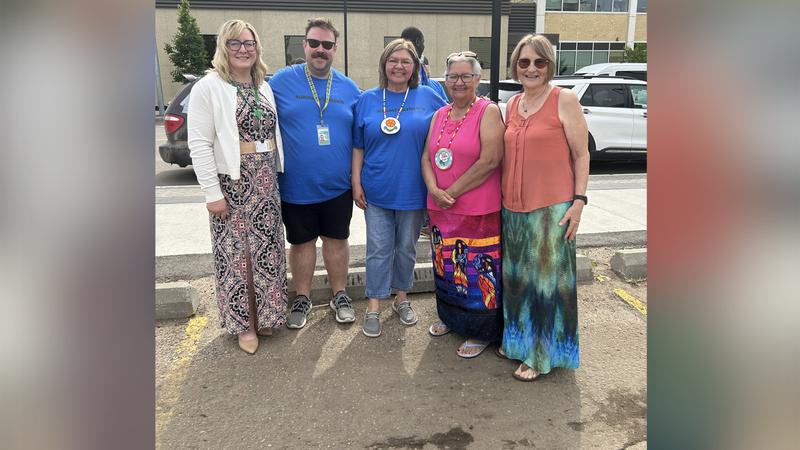
Vice Chief Joseph Tsannie of the PAGC at a symposium on policing models available to the PAGC members. (Image Credit: Susan McNeil/paNOW Staff)
Indigenous policing

Existing First Nation police services share experience with PAGC 

Mar 26, 2026 | 6:15 PM

As the Prince Albert Grand Council nears a final decision on the future of policing in their member communities, the Chief of the Manitoba First Nations Police Service had some insights to share.  

Jason Colon, one of multiple presenters at a PAGC symposium on the models of policing options available, said the force he leads recently expanded into two new communities.  

“What we’ve learned is that there’s really a need for the funders to commit ahead of time so that we can have the infrastructure in place,” he said.  

MFNPS is funded through the federal First Nation Policing Program, but both federal and provincial governments cover policing costs in rural areas with some variation by province when it gets down to the community model.  

The PAGC has multiple options and decisions that were placed in front of the member communities at the symposium in Prince Albert on March 26.  

Options include a regional one with hub offices in La Ronge and Prince Albert and detachments or officers in outlying communities, individual First Nations creating their own force or staying with the RCMP and improving in areas like response times, community relations and improving the community safety officer program.

The first decision is whether they want to go ahead or not. That will happen in October but meanwhile, more preparation will be done and more engagement.  

“The next phase is making sure communities understand what it is to take over such a police force and making sure that communities have the knowledge in order to continue to support this initiative,” said PAGC Vice Chief Joseph Tsannie.  

Tsannie has been working on the Indigenous policing plan for PAGC for close to a decade. He said members communities are seeing growing levels of crime caused by addictions.  

“I always have to be optimistic with anything that we do in life. We need to have high standards and putting that energy out there is so important that, you know, if the willingness is there from our communities and the drivers are the communities, they’re the ones that trigger this,” he said.  

“So I strongly believe that our communities will step up. The unity of the Grand Council is so important, numbers are so important.” 

Tsannie’s main drive is the opportunities that will be available to young members of the various bands that make up the grand council.  

Representatives at the symposium were urged to begin conversations with teens to encourage them in a career in policing.  

Recruiting new officers and keeping veterans has become a serious challenge for the RCMP, which currently polices every community in the PAGC. 

Colon said in Manitoba said their recruitment numbers are strong.  

“We’ve actually done very well in the recruitment area for service,” he said.  

A bigger issue is retention, but that is attributed to a lack of funding to pay their officers equitably to the RCMP or municipal services.  

“I think we’ve addressed a lot of those issues now,” Colon said. “Our officers are paid the same as any other officer in the province as well now.” 

Funding needs to be consistent in order to bring stability, which helps officers decide to stay.  He also said that while 70 per cent of their staff is Indigenous, being local is a bigger priority.  

“The goal for our recruitment is really to focus on people that are from the community or from the surrounding area. We’re looking for the people that want to live in our types of areas and more rural people,” he explained.  

“If you’re grew up in the area and you want to be part of, you want to stay in that area, those are the people that we’re really looking for.” 

The PAGC needs to consider funding of their own, which will change depending on how many bands join. Some communities are fly-in only, some have long access roads and some are next to cities, such as Prince Albert. Once a decision is made, the PAGC will work with federal and provincial governments on funding.

Because each band can decide for itself, some, most or all may opt in or not but having a significant buy-in helps with success, Tsannie has said in previous interviews.  

Colon said he has no doubt the PAGC can create a functioning police service, but consistency is key to long term success.  

“They can definitely show that they can do the job and create the service, but they just need the support from the program and the province to make sure that they are able to implement what they want to implement here.” 

That and the recognition that each community is diverse so what is needed will also be different.  

As someone who has worked with multiple police services, including municipal services, Colon said the result can be very good if done properly.  

“I can tell you the level of service that First Nation police services provide is – even with the lack of funding over the years – has been amazing. It’s, I think, the Cadillac service that you’ll get when you have people that are connected and want to be part of the community.”  

susan.mcneil@pattisonmedia.com

On BlueSky: @susanmcneil.bsky.social

View Comments