Chris Hopkins spoke at Prince Albert Chamber of Commerce luncheon on Wednesday afternoon and gave an update on the alumina project near Tisdale. (Image Credit: Susan McNeil/paNOW)
Mines and Minerals

Alumina project ready for next steps, says CEO

May 13, 2026 | 5:00 PM

A massive alumina discovery in northeastern Saskatchewan could eventually lead to aluminum smelting in Tisdale, according to the CEO of Canadian Energy Metals (CEM) — but only if the province can supply enough power.

Speaking at a Prince Albert & District Chamber of Commerce luncheon Wednesday, Chris Hopkins said the company behind Project Thor hopes to move beyond mining and processing alumina to eventually producing aluminum metal in Saskatchewan, creating significantly more economic value in the province.

“If we want to go beyond that and go to metals, we need a lot more energy,” Hopkins said. “That requires some aggressive policy making, or we’ll have to invite power producers to get involved and generate more power.”

READ MORE: Discovery of alumina near Tisdale of global importance  

Canadian Energy Metals said the project, located between Zenon Park, Star City and Tisdale, is one of the largest known alumina-bearing deposits in the world. The company said the polymetallic shale deposit could supply North America’s aluminum needs for hundreds of years.

Right now, the company is focused on getting financing and documenting the proprietary process it created as part of its business model. Work will soon begin on a pre-feasibility study, which Hopkins said will be completed by the end of this year.

“Risks change; they don’t go away. And so to address financial risk, we signed on with two global financial groups. The mechanism we used [in the past] was to partner with a major [mining company]. With that element beside us, we gain credibility in the market,” he said.

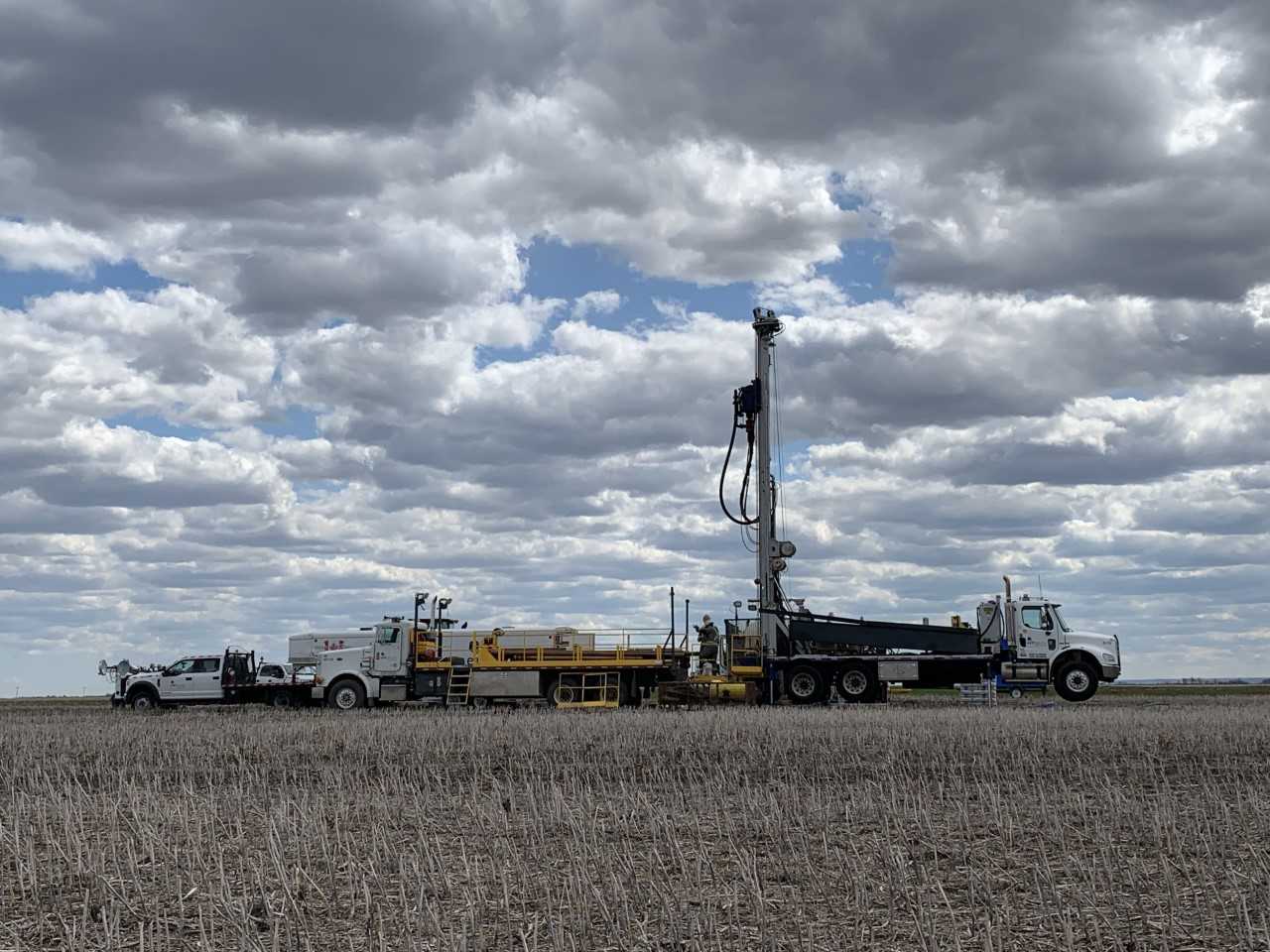
Canadian Energy Metals announced the discovery of the critical mineral alumina near Tisdale in January.
Canadian Energy Metals announced the discovery of the critical mineral alumina near Tisdale in January. (Image Credit: Submitted photo/Christopher Hopkins)

Ultimately, CEM wants to have a smelter in Saskatchewan and hopes the province can provide the electricity.

Hopkins pointed to Quebec’s aluminum industry as an example of how low-cost electricity can dramatically increase the value of raw materials through smelting.

“Quebec makes aluminum, and as a result, they get the benefit of lifting the value up from about $1,000 to $4,000 just by zapping it with electricity,” he said. “About $500 worth of electricity gets them that margin.”

Most of the world’s aluminum is currently produced from bauxite ore and processed overseas, largely in China. Hopkins said Project Thor offers a different approach, using shale ore and what the company describes as a cleaner extraction process.

“Our ore is a shale, and the process that’s been developed is very clean environmentally and quite different than the normal process,” Hopkins explained.

The company said the deposit sits about 30 to 40 metres below the surface and extends another 90 metres underground, making it suitable for surface mining.

“We’ve drilled about 157 holes out there and identified about five discrete project areas,” Hopkins said. “It’s very thick, it’s uniform and continuous in terms of the content of metals within it, and it’s sellable and suitable for surface mining.”

Hopkins said the conceptual model involves mining 50,000 tonnes of material per day and producing roughly 1.8 million tonnes of alumina annually.

The operation would focus initially on high-purity alumina and chemical-grade alumina products, which command significantly higher prices than aluminum metal.

“High purity alumina has a value of about $25,000 a tonne,” Hopkins said. “Chemical grade alumina has a value of about $5,000 a tonne, while pure aluminum metal is worth about $3,500 to $4,000 a tonne.”

The company has also purchased the former Westeel facility on the west side of Tisdale, where it plans to build a demonstration plant and research facility “based on the continuing evaluation of the resource and development of new and different products” tied to Project Thor’s development.

While alumina remains the primary focus, the company said it also plans to explore the potential for scandium and vanadium production as development continues.

Project Thor was formally announced in January with Hopkins speaking alongside Premier Scott Moe.

susanmcneil@pattisonmedia.com

View Comments