A thick blanket of yellow smoke from the Lobstick fire burning between Duck Lake and MacDowall, settled about Prince Albert Thursday. (Image Credit: Nick Nielsen/paNOW)
Air Quality

Health experts urge caution as wildfire smoke blankets Prince Albert

May 28, 2026 | 5:08 PM

Wildfire smoke drifting into Prince Albert on Thursday served as an early reminder of the health risks Saskatchewan residents may face this fire season.

Yellow skies and the smell of smoke prompted questions from residents throughout the day, with local fire departments explaining the haze was coming from the Lobstick wildfire burning between Duck Lake and MacDowall.
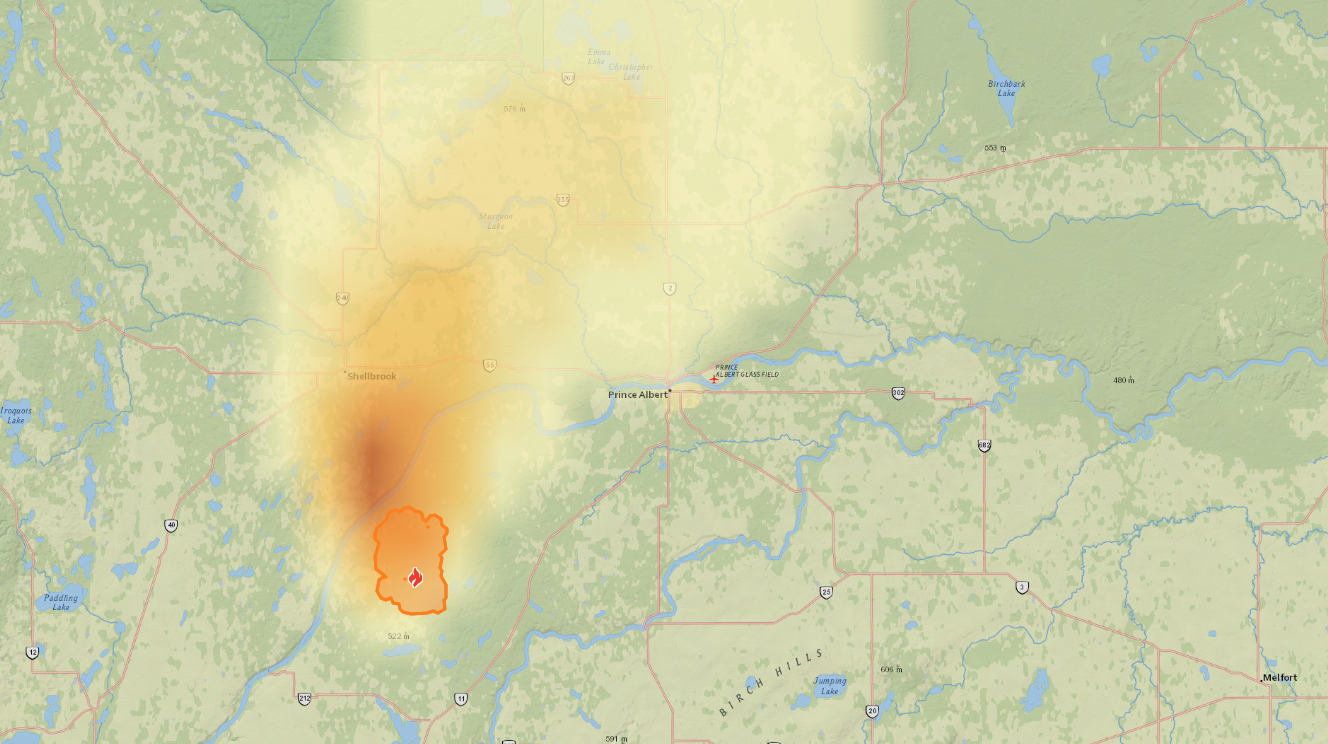
A screenshot of the smoke forecast over Prince Albert recorded by firesmoke.ca, which is a portal for information about wildland fire weather and smoke operated by the Weather Forecast Research Team at the University of British Columbia and BlueSky Canada.
A screenshot of the smoke forecast over Prince Albert recorded by firesmoke.ca, which is a portal for information about wildland fire weather and smoke operated by the Weather Forecast Research Team at the University of British Columbia and BlueSky Canada. (Image Credit: firesmoke.ca)

According to the Saskatchewan Public Safety Agency’s active incidents map, the human-caused fire has grown to about 6,000 hectares.

By Thursday afternoon, the air quality in Prince Albert was listed at 6, which is on the higher end of ‘moderate risk.’ At that level, those with compromised health systems should consider reducing or rescheduling strenuous activities outdoors if they are experiencing symptoms.

While many people associate wildfire smoke with those who already have respiratory problems, Lung Saskatchewan president and CEO Erin Kuan said the effects can extend well beyond vulnerable groups.

“Anything you do to prevent those tiny little PM 2.5 particles from entering your nose or mouth is going be good,” Kuan said.

Children, seniors, pregnant women and people with conditions such as asthma or COPD are especially vulnerable during smoky conditions, but she said even healthy people should take precautions.

“If at all possible, something like an N95 or proper respiratory mask are preferred,” Kuan said.

She added wearing a mask outdoors during heavy smoke is not an overreaction.

“We would always encourage someone to wear a mask if they’re at all hesitant or concerned or have to be outside,” she said.

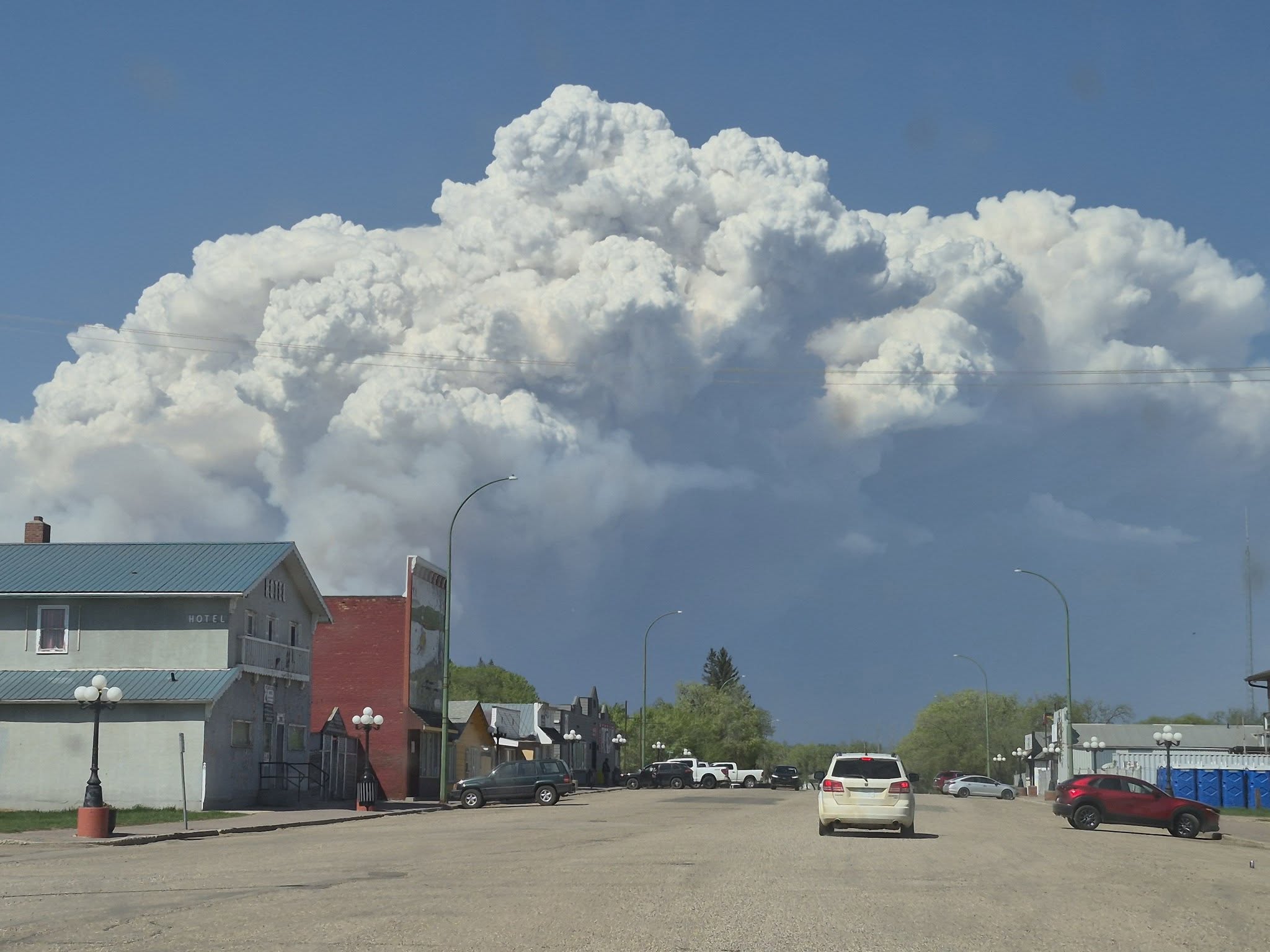
Smoke from the Lobstick fire towers over Duck Lake on Thursday, May 28, 2026.
Smoke from the Lobstick fire towers over Duck Lake on Thursday, May 28, 2026. (Image Credit: Submitted)

Kuan said wildfire smoke contains fine particles that can irritate the eyes, nose and throat and may worsen breathing problems.

She encouraged residents to monitor Saskatchewan’s Air Quality Health Index and reduce strenuous outdoor activity when smoke levels rise.

“If you’re typically someone who likes to run in the middle of the afternoon, that’s obviously not the time to do it with all of this heat and the wildfire smoke combined,” Kuan said.

She also recommended people stay indoors when possible and take steps to keep smoke out of their homes.

“If you’re fortunate enough to have air conditioning, you want to put your air conditioner on that recirculation mode so that you’re not pulling in outside air into your home.”

Closing windows and doors, lowering shades to keep homes cool and using HEPA-certified air filters can also help improve indoor air quality.

Kuan said Lung Saskatchewan typically sees an increase in calls to its helpline during wildfire season as residents look for advice on protecting themselves and their families.

There are currently 5 active wildfires burning in the province.

View Comments