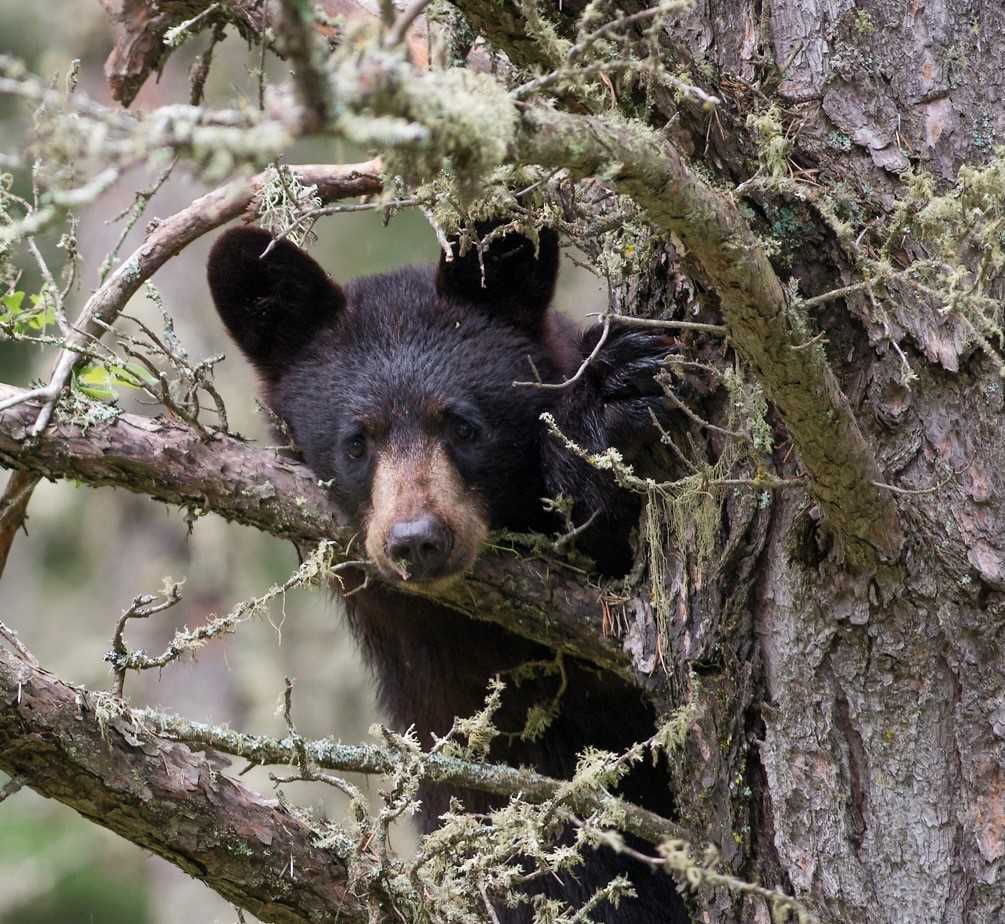
Prince Albert-based photographer and SaskPoly instructor in Natural Resources Hamilton Greenwood said that virtually all bears in Saskatchewan are black bears, but some black bears have brown or cinnamon colouring. (Image Credit: submitted/Hamilton Greenwood)
Attacks are rare

Bear encounters down in Prince Albert National Park, La Ronge area despite deadly northern attacks 

Jul 18, 2026 | 6:05 AM

Despite two fatal bear-related incidents in northern Saskatchewan in the past two months, officials say reported bear interactions in Prince Albert National Park and the La Ronge area are down compared with last year.

Tom Perry, acting resource conservation manager for Prince Albert National Park, said the park had responded to 29 bear interactions so far this year, compared with about 44 at the same point last year.

“Bear interactions are actually down from last year and more in line with long-term norms,” Perry said.

Perry spoke with paNOW before the fatal bear incident that took place near McTavish Lake this week was confirmed.

In the La Ronge area, the Saskatchewan Ministry of Community Safety said conservation officers responded to 82 bear-related calls for service as of July 9. That is down from 133 calls recorded by June 10 last year.

Those calls led to 32 bear traps being deployed, 11 bears being trapped, eight bears being relocated and nine bears being euthanized. The ministry said bears that become habituated to people or human food can pose an ongoing public safety risk and are often unsuitable for relocation.

The province confirmed Thursday that a bear was involved in the deaths of two people near McTavish Lake, about 90 kilometres north of La Ronge. The figures do not include that incident.

The bear suspected in the deaths of Jay and Deb MacDonald on Wednesday was located and euthanized, and its remains were sent to the Western College of Veterinary Medicine for a necropsy.

Just two months ago, a 27-year-old contractor was killed by a black bear at a remote work site northeast of Points North Landing. Fatal bear attacks remain rare in Saskatchewan, but the two incidents have renewed attention on bear safety in northern communities, parks and remote work areas.

While the recent fatalities have heightened public concern, officials maintain bear activity overall remains within normal ranges in much of northern Saskatchewan.


Derek Coupal took this video recently in Christopher Lake. Some village residents say they have seen more bears than normal.

Perry said most of Prince Albert National Park’s bear interactions this year happened earlier in the season, particularly in May. He said a delayed spring may have played a role, with bears leaving their dens before natural food sources were readily available.

Localized conditions, including recent wildfire activity in areas such as Candle Lake, could also affect where bears search for food. Burned areas can later produce strong berry growth and other forage, but in the short term, bears may spend more time near communities and campsites searching for food.

The Saskatchewan Ministry of Environment and Ministry of Community Safety said black bears are a natural part of the landscape in much of the province, especially in northern forests, and are highly food-motivated. Attractants such as unsecured garbage, compost and garden waste, bird feeders, pet food and uncleaned barbecues can draw bears into conflict with people.

That point was reinforced by Perry.

“Once bears get conditioned to eating human food or waste, it’s incredibly difficult to condition them not to eat it,” Perry said. “This often leads to unsafe situations for people and bears.”

The Ministry of Community Safety said conservation officers distributed letters in May to the Town of La Ronge, Village of Air Ronge, Lac La Ronge Indian Band and northern municipalities outlining bear-aware practices and ways to reduce attractants. Officers also continue to provide advice to residents, businesses and campgrounds that report bear activity.

Saskatchewan is primarily black bear country, though black bears can range in colour from black to brown, cinnamon, blond or even whitish. Perry said confirmed grizzly bear occurrences in Saskatchewan are extremely rare.

A young black bear in a tree in northern Saskatchewan.
A young black bear in a tree in northern Saskatchewan. (Image Credit: submitted/Hamilton Greenwood)

If someone encounters a bear, Perry recommends remaining calm, speaking in a low voice, backing away slowly without turning or running, keeping children close and making yourself look larger. He also recommends travelling in groups, making noise on trails, keeping pets leashed, and carrying bear spray and knowing how to use it.

Provincial officials advise people to keep their distance during an encounter, make a wide detour if possible, calmly back away, speak in low tones and avoid looking directly at the bear. They say most bears will move on without intervention.

If a bear repeatedly enters a community, refuses to leave or acts aggressively, the province said people should contact the Turn in Poachers and Polluters line at 1-800-667-7561, text #5555 on the SaskTel Mobility Network, or call their local RCMP detachment.

Perry said the goal is to reduce the chance that bears associate people with food.

“We share the forest with them,” he said. “If folks are conscious about attractant management and know bears are in the area, we can live alongside them.”

susan.mcneil@pattisonmedia.com

View Comments