Jars of honey sit on a shelf. Simon Lalonde said even if the U.S. tariffs dropped to 10 per cent, it would still be too high to continuing exporting Saskatchewan honey down south. (Image Credit: cristianoaless/Depositphotos.com)
Bitter taste

U.S. tariffs leave Sask. honey producers in sticky situation

Aug 23, 2026 | 7:41 PM

While most Saskatchewan producers dodged the effects of the latest round of tariffs, the province’s honey industry is undoubtedly feeling the sting.

On Saturday, the U.S. imposed 50 per cent tariffs on a range of Canadian exports after the two countries failed to reach a deal before the extended deadline.

The tariffs apply to roughly five per cent of all Canadian exports to the U.S., worth roughly $28 billion.

Yet, Saskatchewan doesn’t fare too poorly.

According to the Agricultural Producers Association of Saskatchewan (APAS) president, Bill Prybylski, “the majority of Saskatchewan agriculture will be unaffected,” by these tariffs, including bulk grain and livestock industries.

One area that didn’t get away unscathed, though, is the province’s honey, which is included on the list of tariffed items.

Simon Lalonde, co-owner of Lalonde Honey Farms near Saskatoon, runs his business with his brother and operates close to 4,000 hives.

He said many beekeepers have recently been working to ship their honey to the U.S. in the chance that the worst-case scenario played out — and it did.

The U.S. accounts for about 15 to 20 per cent of Lalonde’s sales.

The tariffs mean the honey business will no longer export down south, and it’s not the only one.

Murray Hanigan, President of Hannigan Honey, said “there will be zero exports with a 50 per cent tariff. There will be no movement that direction. It will be a closed door until something is renegotiated.”

For Lalonde, this applies even if the tariff is lowered.

“Pretty much any tariff at all on Canadian honey, I think, would shut down exports to the U.S.,” Lalonde said.

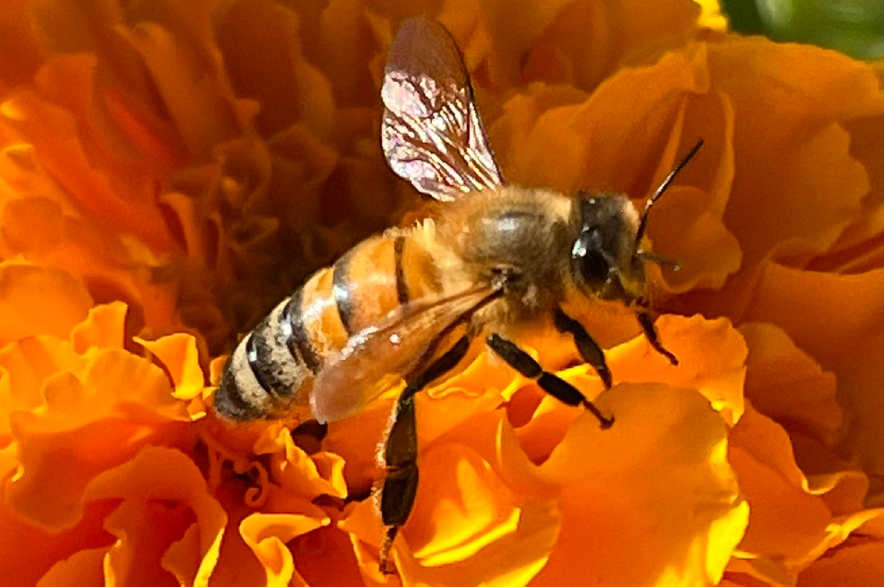
A bee sits on a flower. “If this is just going to be the new status quo, then it’s going to really change things,” Saskatchewan honey producer Murray Hannigan said about the tariffs.
A bee sits on a flower. “If this is just going to be the new status quo, then it’s going to really change things,” Saskatchewan honey producer Murray Hannigan said about the tariffs. (Image Credit: Lara Fominoff/650 CKOM)

Keep your elbows up

Replacing a customer of that size, though, doesn’t come easy.

According to Lalonde, most Canadian honey either stays here or is shipped to the U.S. or Japan. He said it’s only four per cent of honey that goes elsewhere.

While there are options, countries in Europe, for instance, have GMO regulations that limit Canadian honey.

So, “by the time we get in there and build up the value and the quality of Canadian honey, that’s going to take years. It’s not just something that we can magically start shipping our honey to another country and have them welcome it with open arms,” Lalonde said.

For Lalonde, if people focused on buying Canadian again, it could help bridge his business’s financial gap.

“If every Canadian family ate an extra one pound of honey in an entire season, that replaces what we lose to the U.S,” he said, adding, “it’s not like you have to go out and eat honey every single day just to help out. (A) very small amount goes a very long way.”

Though, for Hannigan, the buy Canadian movement can only go so far.

“Here’s the sticky point: it costs more money to eat honey than it does to eat sugar,” he said.

So, “if we’re being impacted by tariffs that are affecting people’s usable income, that could be a very difficult spot for a lot of folks,” Hannigan said about buying more Canadian honey.

Retaliatory tariffs

It may not be long, though, before Saskatchewan’s other industries get hit, but this time by Canada.

Prybylski said many of the province’s producers worry about the retaliatory tariffs Canada plans to impose, which could raise the price of things like fertilizer and equipment.

“There’s a whole list of stuff that we as producers rely on coming from the United States, and if it ends up that those are the products that are being subject to the retaliatory tariffs, that’s going to hurt our bottom line and our ability to turn a profit,” Prybylski said.

The counter-tariffs will take effect on Sept., according to Prime Minister Mark Carney.

Until that day comes, though, Prybylski said producers aren’t spending their days thinking about tariffs. They’re focused on harvesting.

That mindset even applies to those hit hardest.

“We’re still at the point where we’ve got to keep the bees healthy, and we have to finish the honey season, and all that stuff is going to take precedence over desperately trying to find a new market,” Lalonde said.

View Comments