An open-air gallery of ancient art, St. Victor Petroglyphs are Saskatchewan's largest rock art site, with over 360 rock carvings. (Image Credit: Submitted/Friends of St. Victor Petroglyphs)
Bones

2,100 year-old artifact found at the St. Victor Petroglyphs in southern Saskatchewan

Aug 29, 2026 | 1:03 PM

Unearthed during an archaeological dig in 1990, pieces of bone at the St. Victor Petroglyphs Provincial Historic Park remained undated until the Friends of the St. Victor Petroglyphs Cooperative Ltd recently sent the bones for carbon dating.

“We were just hoping to find if there were some dates that would match the pottery that was found in a washout nearby,” said David Munro, President and tour guide at the Friends of St. Victor Petroglyphs.

“When the results came back, they were quite different from what the pottery was suggesting.”

Pottery and artifacts found at the site generally date from 300 AD – 1750 AD. One bone came back within this range, about 900AD. But the other bone, found about 50 centimetres deeper into the ground, came back dated at 120 BC.

“It’s really interesting,” said Munro. “It helps us date who was here at that moment of time. It gives this site a time. Before that, it was all guesswork as to when it might have been.”

The St. Victor Petroglyphs Provincial Historical Park, located in south-central Saskatchewan in Treaty 4 territory, was designated as a historical site in the 1960s and became a provincial park in 1986. The park features over 360 petroglyphs (ancient rock engravings) on a large sandstone outcrop.

They are the largest concentration of pre-contact rock art in Saskatchewan, with most other petroglyph sites contain from one to 20 engravings. They are the only known horizontal petroglyphs on the Canadian Prairies.

“When you can put a date to something, it improves the picture of when people were here. To find something intact, undisturbed, giving you an exact date, makes it more tangible,” said Munro. “Now we can put up a sign saying that between 900 AD and 120 BC, this site has had occupation in this one location.”

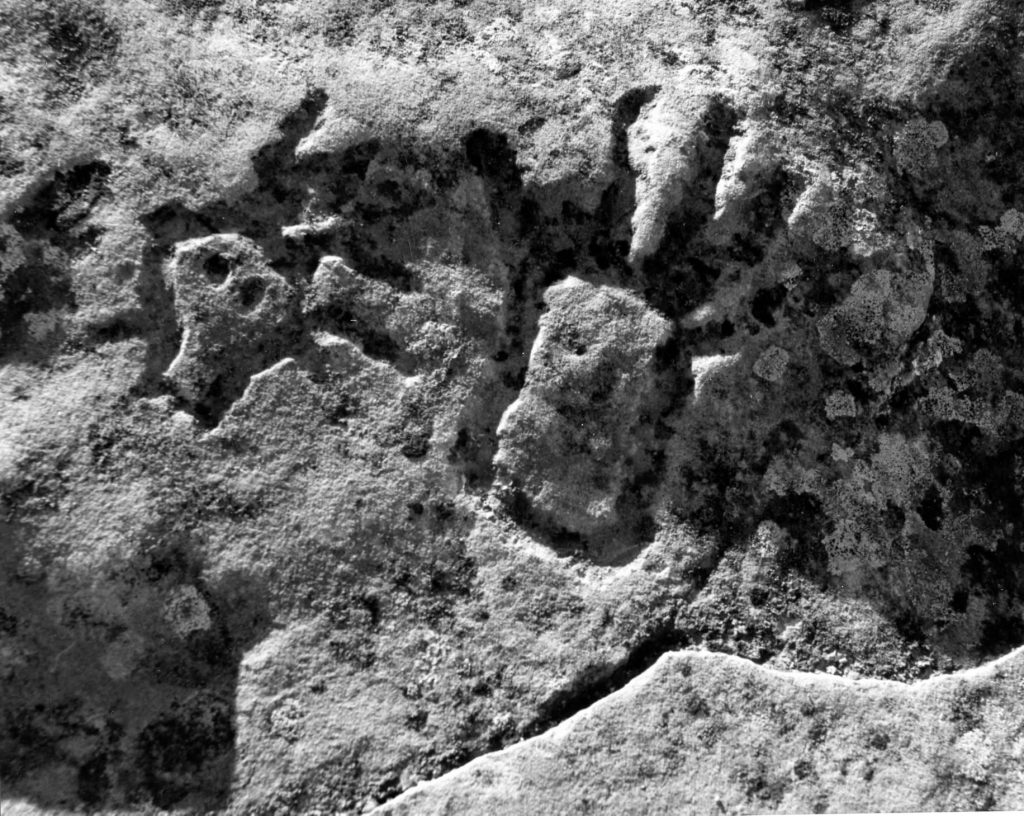
Munro and the Friends of the St. Victor Petroglyphs Cooperative Ltd started an interpretive centre in St. Victor over 30 years ago. For decades, Munro has been providing guided tours of the site – sharing knowledge on petroglyphs which depict artistic designs of faces, skulls, animals, human hands, feet, and a complete person.

Carvings found at the St. Victor Petroglyphs.
Carvings found at the St. Victor Petroglyphs. (Image Credit: Submitted/Friends of the St. Victor Petroglyphs)

But Munro said the site is slowly deteriorating. As sandstone is highly porous, moisture or a hard frost can cause fracturing of the rock. Additionally, Munro said lichens have embedded their root system into the sandstone, which also causes it to break down.

He said it’s a slow deterioration – it has survived for 1,500-2,000 years already, but nothing is currently being done to help preserve the site.

Click here to read the rest of this story by EFN Media (formerly Eagle Feather News).

View Comments