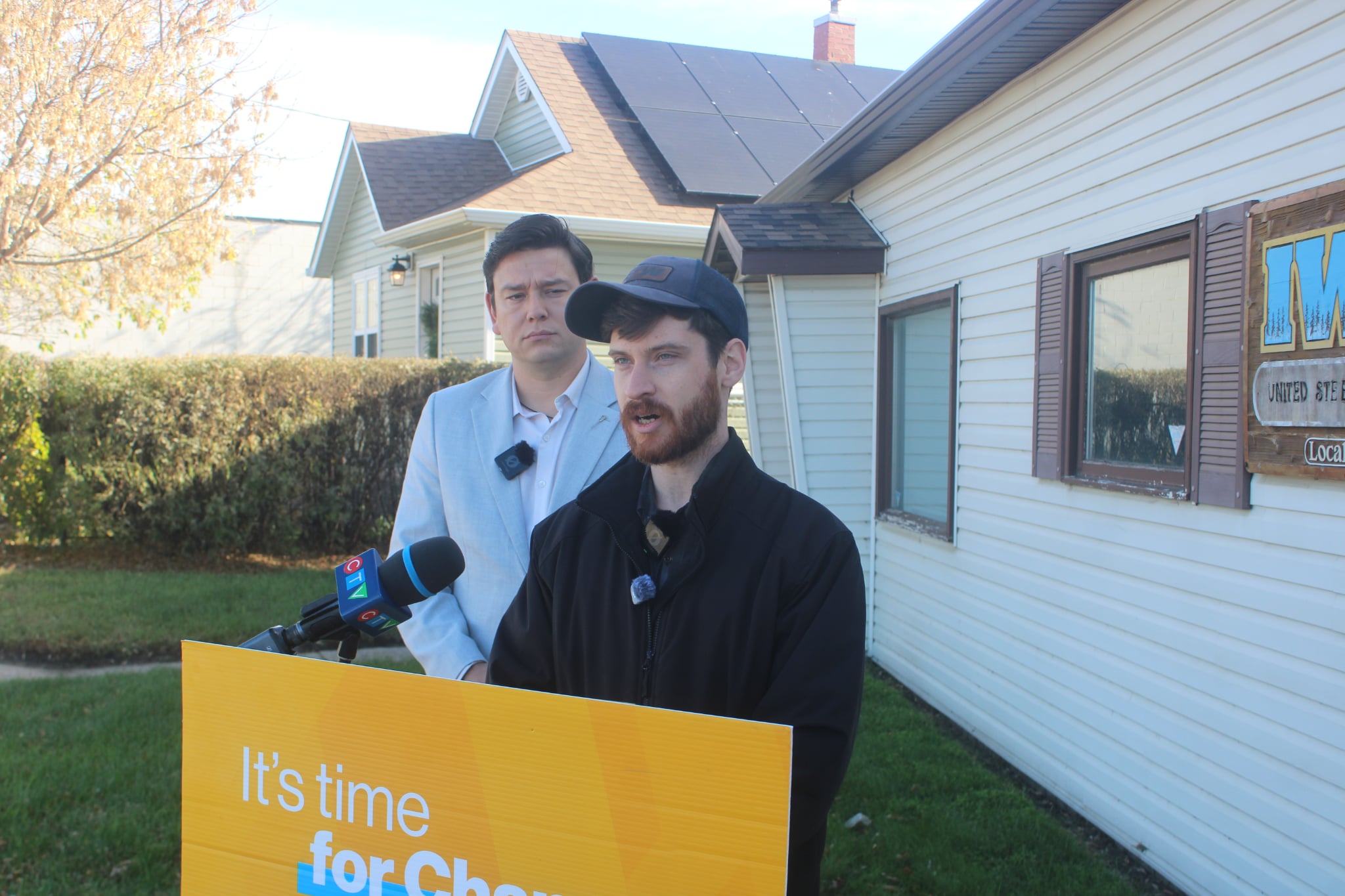
Brandon Nicholson, a third-generation forestry worker and member of United Steelworkers Local 1-184 representing workers at the Big River saw mill, said some employees are already finding work elsewhere. (Image Credit: Nigel Maxwell/paNOW)
Forestry layoffs

NDP calls for action on Big River mill layoffs; province points to worker support

Oct 16, 2026 | 4:33 PM

Layoffs at the Big River sawmill are prompting calls for provincial action from Saskatchewan’s Opposition NDP and a union representative, while the government said it has repeatedly deployed support teams to help affected workers.

Speaking at a press conference in Prince Albert Friday, NDP Northern Affairs Shadow Minister Jordan McPhail accused the provincial government of failing to protect forestry jobs as layoffs begin at Carrier Forest Products.

Brandon Nicholson, a third-generation forestry worker and member of United Steelworkers Local 1-184 representing workers at the mill, said some employees are already finding work elsewhere.

“A lot of people are already looking for other work or taking other work,” Nicholson said.

He said the uncertainty reaches beyond mill employees to families, local businesses and services that depend on the community’s economic stability.

“I’ve had members from the community that don’t even work at the mill reaching out to me personally and expressing their concern about what’s going to happen to their community,” he said.

Residents are worried about more than paying their mortgages, Nicholson added. They are questioning what the job losses could mean for schools, home care and the viability of the grocery store.

McPhail said the first round of layoffs began this week, with further layoffs expected next month and in January.

“These are good-paying jobs that support families and keep northern communities going,” he said. “When these jobs disappear, the impact reaches far beyond the mill.”

McPhail questioned the government’s progress on promises to expand Saskatchewan’s forestry sector and accused it of having no plan to protect workers.

In a written response, the Government of Saskatchewan said Canada-Saskatchewan Rapid Response Teams have been deployed to Carrier Forest Products in Big River five times since the company announced its intended layoffs.

The teams provide services tailored to the needs of affected employers and workers.

“Since those sessions we have facilitated individual follow up appointments and referrals to training for those workers who requested additional assistance,” the statement said.

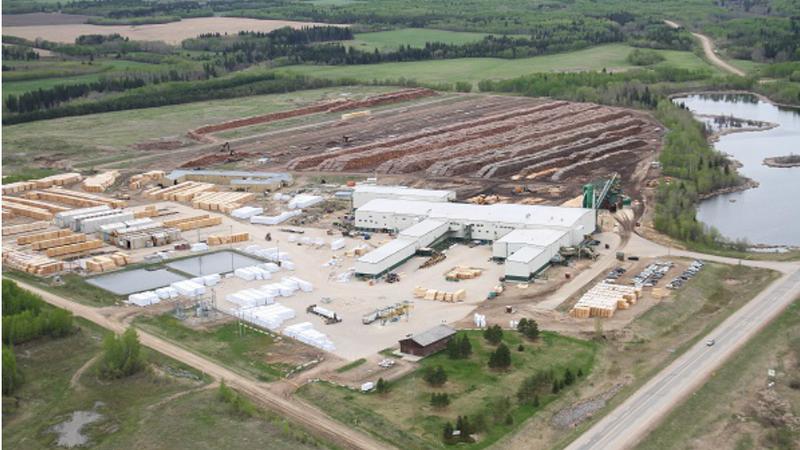
Production at Carrier Forest Products' Big River facility were expected to start winding down today, Oct. 16, 2026.
Production at Carrier Forest Products’ Big River facility were expected to start winding down today, Oct. 16, 2026. (Image Credit: File photo/paNOW)

The province said it continues to work with people affected by the mill layoffs.

It also pointed to the Canada-Saskatchewan Workforce Tariff Response, a three-year, $15.6-million initiative supporting workers and employers in sectors affected by global tariffs.

As of Sept. 30, more than $791,000 had been invested through the initiative to support approximately 133 forestry workers at eight employers in five communities. That included support for Carrier Forest Products in Big River before its layoff announcement, although the government did not provide a breakdown of funding for the company.

The province said the funding has supported employee training and retraining, along with wage subsidies intended to help employers retain workers amid tariff-related market pressures.

Across all sectors supported by the initiative, more than $1.36 million had been provided to support approximately 239 workers at 14 employers in eight communities, the government said.

Nicholson said the forestry industry needs help improving access to timber and building domestic demand for its products.

“Biggest thing is we got to get trees,” he said. “We all know that the top end of the province is filled with them, but they need to be accessible.”

He said rising transportation costs are adding pressure and suggested Saskatchewan could use more locally produced wood in prefabricated housing.

“We’ve got operations that build prefabricated homes right in our own local, and we could be using our goods in those operations to build the future of affordable housing in the province,” Nicholson said.

McPhail pointed to efforts by the British Columbia government to work with industry to protect forestry jobs. While acknowledging the circumstances differ between the provinces, he argued Saskatchewan should be doing more.

“It’s time for Scott Moe to explain where his plan is, where his ministers have been, and what he’s prepared to do, and why northern Saskatchewan workers are being left behind,” he said.

Nicholson said the consequences of the curtailment are felt throughout Big River.

“My heart goes out to everybody at Big River, not just the members that I represent, but their families, their neighbours, and the community as a whole.”

—

panews@pattisonmedia.com

View Comments