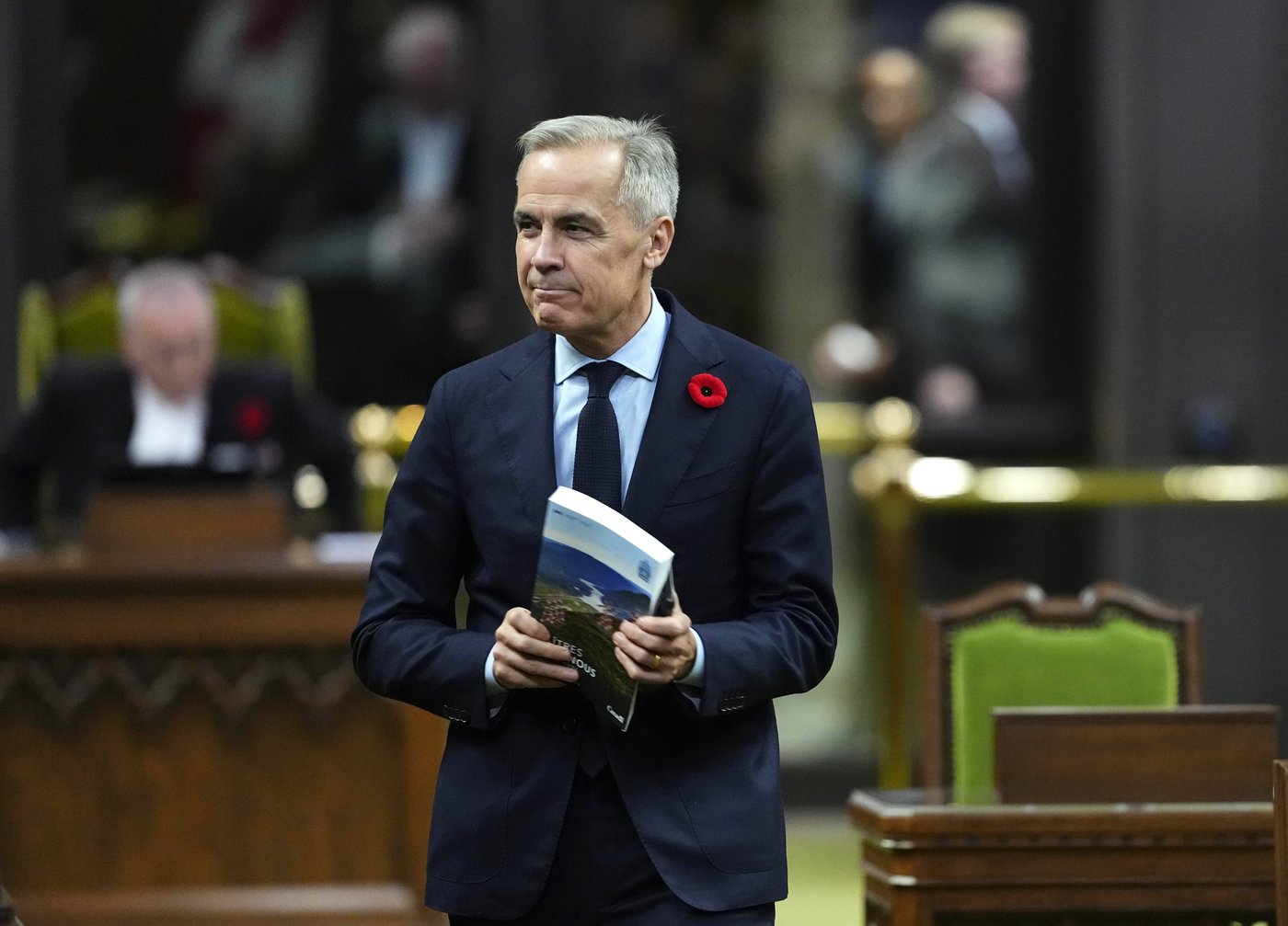
Prime Minister Mark Carney arrives in the House of Commons on Parliament Hill before the tabling of the federal budget in Ottawa, on Thursday, Nov. 5, 2026. THE CANADIAN PRESS/Justin Tang

Carney heads to Winnipeg to tout budget plan to end homelessness in 10 years

Nov 6, 2026 | 4:00 AM

Prime Minister Mark Carney is expected in Winnipeg today to highlight new measures in the federal budget aimed at eliminating homelessness within 10 years.

It’s a goal some support workers are applauding, while cautioning that solutions must involve more than four walls and a roof.

Sara Goldvine is the chief operating officer at Coast Mental Health in Vancouver and says “significant progress” can be made toward the budget’s goal, but it will need the right supports.

She says housing and mental health often need holistic support and she’s pleased the government is investing in both.

Carney is to be joined by Manitoba Premier Wab Kinew as well as the mayors of Winnipeg and Montreal.

The Liberal government’s 2026 budget, released on Thursday, lays out an ambitious housing agenda that includes more homes on federally owned land and ending homelessness within the next decade.

It includes a pitch to establish an Integrated Supports Fund to set up transitional housing with mental health, addictions and social supports for homeless people.

The federal government also plans to put billions of dollars into the Canada Housing Benefit over the next decade to help low-income Canadians cover rent.

The budget says the plan to end homelessness will require collaboration with provinces, territories and municipalities.

Nick Wells, with the Union Gospel Mission that has been operating in Vancouver’s Downtown Eastside for more than 80 years, calls the pledge ambitious and says leadership from the highest level of government will help provinces, municipalities, and philanthropy groups co-ordinate what’s needed.

He says supportive or transitional housing is often an excellent first step for people experiencing chronic homelessness coupled with severe mental illness or addiction.

Wells says the issue is complex and simply giving someone a home after years of homelessness can be a challenging experience without supports in place.

“Long-term housing is the goal, but it’s important to have those kind of wraparound supports in place for those looking to exit homelessness,” he says.

Coast Mental Health is in the early stages of a proposed project to build 360 housing units with health-care services on the same campus to help those in the building and the broader community.

Goldvine says she is hopeful that the government’s promise will have an impact.

“We know what works. There’s been research that shows what works and it is housing that is affordable combined with the supports that people need.”

The budget, which estimates there are 65,000 homeless Canadians, says the plan to end homelessness will require collaboration with provinces, territories and municipalities.

This report by The Canadian Press was first published Nov. 6, 2026.

Ashley Joannou, The Canadian Press