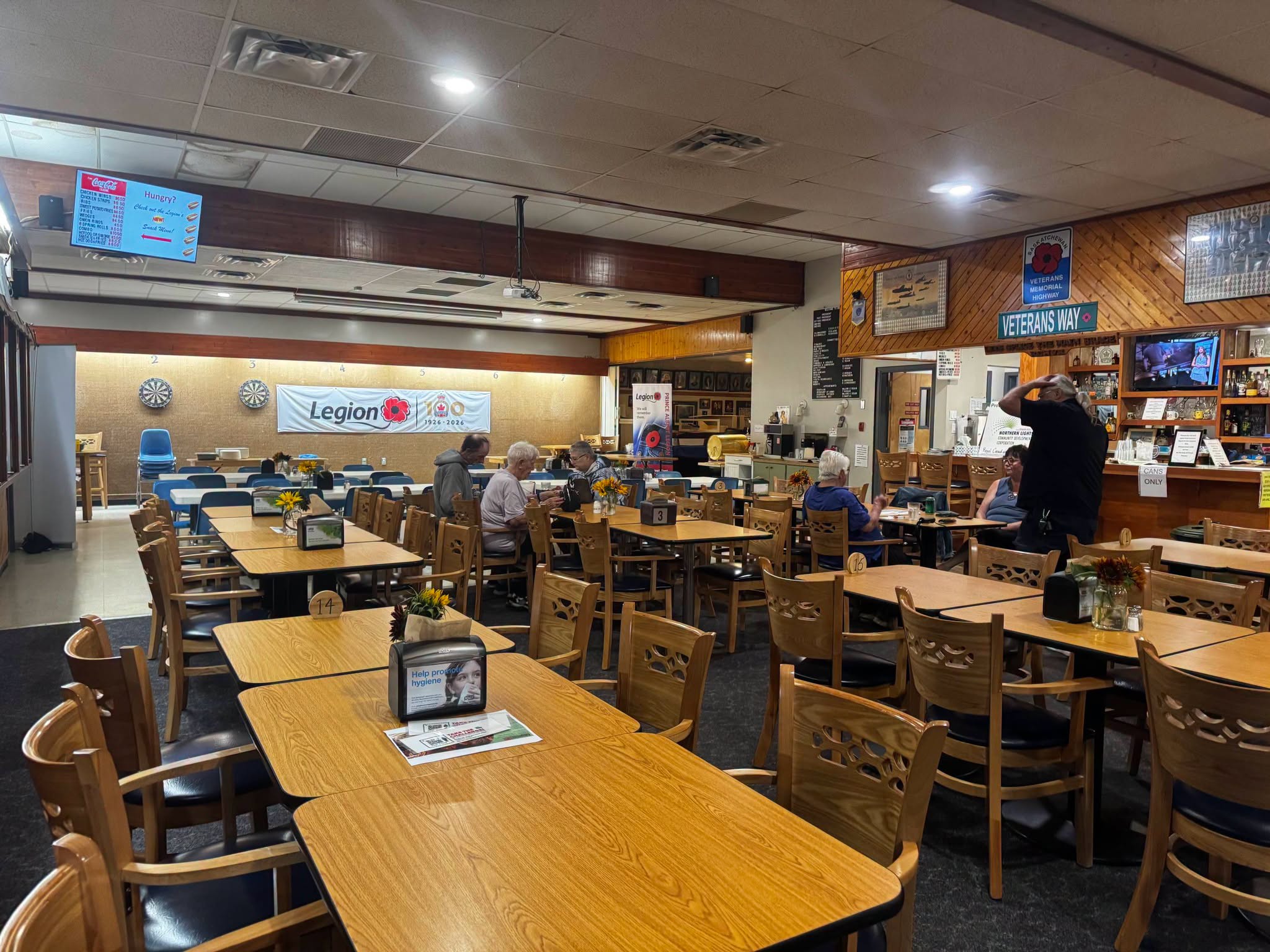
A quiet moment inside Prince Albert’s Legion hall. This Remembrance Day, the Legion has no surviving Second World War veteran members to share their stories firsthand. (Image Credit: Royal Canadian Legion #2/Facebook)
Remembrance Day

Prince Albert Legion no longer has Second World War veterans among its members

Nov 10, 2026 | 6:00 AM

Rick Hodgson remembers when the Prince Albert Legion was full of older veterans, talking and laughing.

“Now, it’s pretty quiet,” he said.

As the branch prepares for Remembrance Day on Wednesday, Hodgson, president of Royal Canadian Legion Branch No. 2, said none of its current members served in the Second World War.

“They’re all gone, and the history is just the history now, and to keep it going we need to keep the kids educated in it.”

Current veteran members of the local legion include one from the Navy who served in Japan and an Air Force veteran who trained in Canada. He said some of the younger veterans in the area seem to have their own group.

Hodgson said there could still be some Second World War veterans in the city who have never been involved with the branch, but for the most part, the chance to sit across a table from a Second World War veteran and hear their stories firsthand is slipping away.

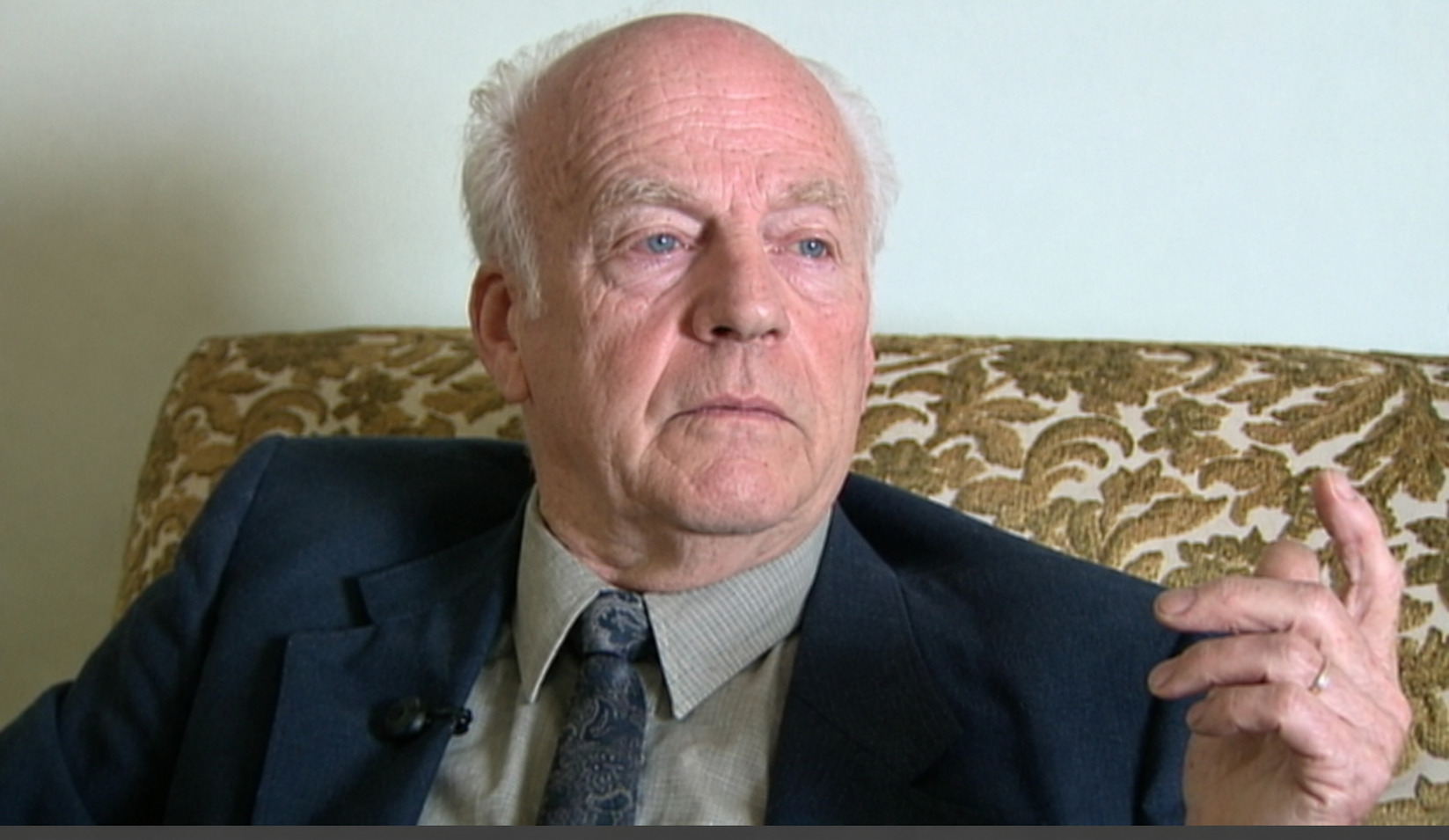
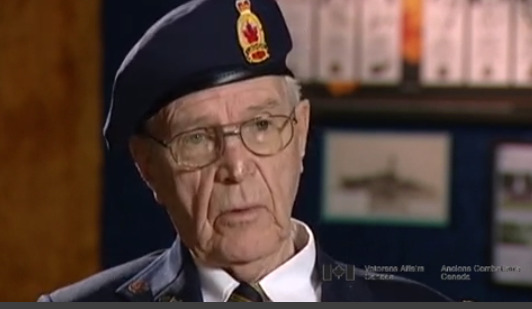
There are, however, several video interviews preserved by Veterans Affairs Canada in which some of the men who lived through the war share their experiences in their own words. Three of them are veterans who called Prince Albert home.

John Hall

Before there was a park named for him on Barton Drive in Prince Albert, John Hall was a radio operator with the Regina Rifles who landed on Juno Beach on D-Day.

“When we went through Caen it was just a pile of rubble,” Hall recalled in his taped interview.

A park on Barton Drive is named after Second World War veteran John Hall.
A park on Barton Drive is named after Second World War veteran John Hall. (Image Credit: Screenshot/Veterans Affairs Canada)

He remembered tanks fitted with bulldozer blades clearing a path wide enough for soldiers to walk through. On the other side of the city, they were told to dig trenches, but the chalky ground was too hard.

Hall’s company took shelter behind a high wall at Cardonville Farm. That night, German tanks reached the wall and began breaking through it. Hall’s commander told him to radio headquarters for artillery fire. The radio wouldn’t work.

“And I worked and I worked, and I kept at it, and I got through,” Hall said.

The first barrage fell short. The second hit some of the tanks, and the Germans pulled back.

“And the company commander said had I have been ten minutes later, we’d all have been gone because they were coming through the walls.”

George McLean

George Henry Foster McLean was born in Prince Albert and joined the Royal Canadian Navy just after his 16th birthday. He was 17 when German aircraft struck a tank landing craft moored beside his ship in a Tunisian port.

George McLean enlisted in the Royal Canadian Navy just after his 16th birthday.
George McLean enlisted in the Royal Canadian Navy just after his 16th birthday. (Image Credit: Screenshot/Veterans Affairs Canada)

“They hit the tank landing craft dead on, and it killed twenty-eight guys,” McLean recalled in an interview with Veterans Affairs Canada.

His ship was on duty that night. McLean, by then a leading hand, remembered what his skipper told him. “Take four guys on a work party, and you go over there and help bring out those bodies.”

“And that was the worst thing I had to do,” McLean said. “By this time I’m seventeen and, you know, it’s still pretty gory and the smell just, you know, just knocks you over.”

As McLean worked to recover the remains, he remembered the ship’s cook calling down from above and making a joke about what he was trying to bring aboard.

“We had a salty old cook from Scotland…an old, really a character,” he said. “There was this piece floating, and I’m trying to get a hold of it, and of course it was somebody. It was just a chest of somebody, and then Scotty the old cook yells down, “Hey, Shorty,” he says, “that looks like a fine piece of meat, wheel that one aboard.” I couldn’t eat for three days after that. But that’s the way some of the guys were…they were battle-hardened, some of them…but we were kids, see.”

McLean went on to take part in the D-Day landings at Omaha Beach.

Donald Wickens

Before serving on Prince Albert city council between 1982 and 1986, Donald Wickens flew 37 missions as a Royal Canadian Air Force navigator.

He remembered the feeling of a bomber lifting off with thousands of pounds of explosives, then sinking before it had enough power to climb.

“I’ll tell you I was scared to death. Every time you took off it wasn’t funny,” Wickens said.

He remembered crews whose planes went down before they could climb. Coming back had its own dangers. German fighters could follow bombers as they came in to land, and in the dark, crews could collide with aircraft they couldn’t see.

Over enemy territory, a sudden dive would send the papers and pencils on his table flying. As the pilot pulled out of the dive, the force pinned Wickens against the table. When shells exploded nearby, he could smell the cordite. On one occasion, shrapnel wounded a gunner aboard his aircraft.

If two searchlights caught a bomber, German gunners could work out how high it was. “If you didn’t get out of there you didn’t come home,” he said.

One of Wickens’ clearest memories from the air was of a midnight training flight over the Irish Sea. Looking north from 20,000 feet, he saw something that reminded him of home.

“Well, in southern Saskatchewan in the daytime you’d look for miles and you’d see the grain elevator in the distance,” he said. From the aircraft, “the clouds looked like … just like a prairie scene … only it was clouds.”

“Just beautiful. Never saw anything so awe inspiring in your life,” Wickens said. “So those things were nice things to look back on. But what was happening behind you and underneath you was terrible.”

When he did leave the war, some of his friends back home had died. Others had gone elsewhere or had yet to return.

“Home was not home at all anymore,” Hall recalled.

He missed the men he’d spent years with. They had gone to war as strangers, he said, and ended up saving one another’s lives. “And I missed that comradeship.”

Years later, Hall visited schools to talk about the war. He recalled one fall when nine speakers reached 33 schools. He wanted children to understand what veterans had fought for and to protect the freedom they had.

“And that war is terrible, of course,” he said.

Remembrance Day in Prince Albert

Wednesday’s events begin with breakfast from 8 to 9:45 a.m. at the Legion, 133 8th St. E. The Legion’s schedule asks people to be seated at the Prince Albert Armoury by 10:20 a.m. The parade will march in at 10:40 a.m., followed by two minutes of silence at 11 a.m.

Wreaths are scheduled to be laid at noon at the Court of King’s Bench cenotaph and at 12:15 p.m. at the Memorial Square Cenotaph outside city hall. Lunch by donation follows at the Legion at 12:30 p.m.

—

panews@pattisonmedia.com

View Comments