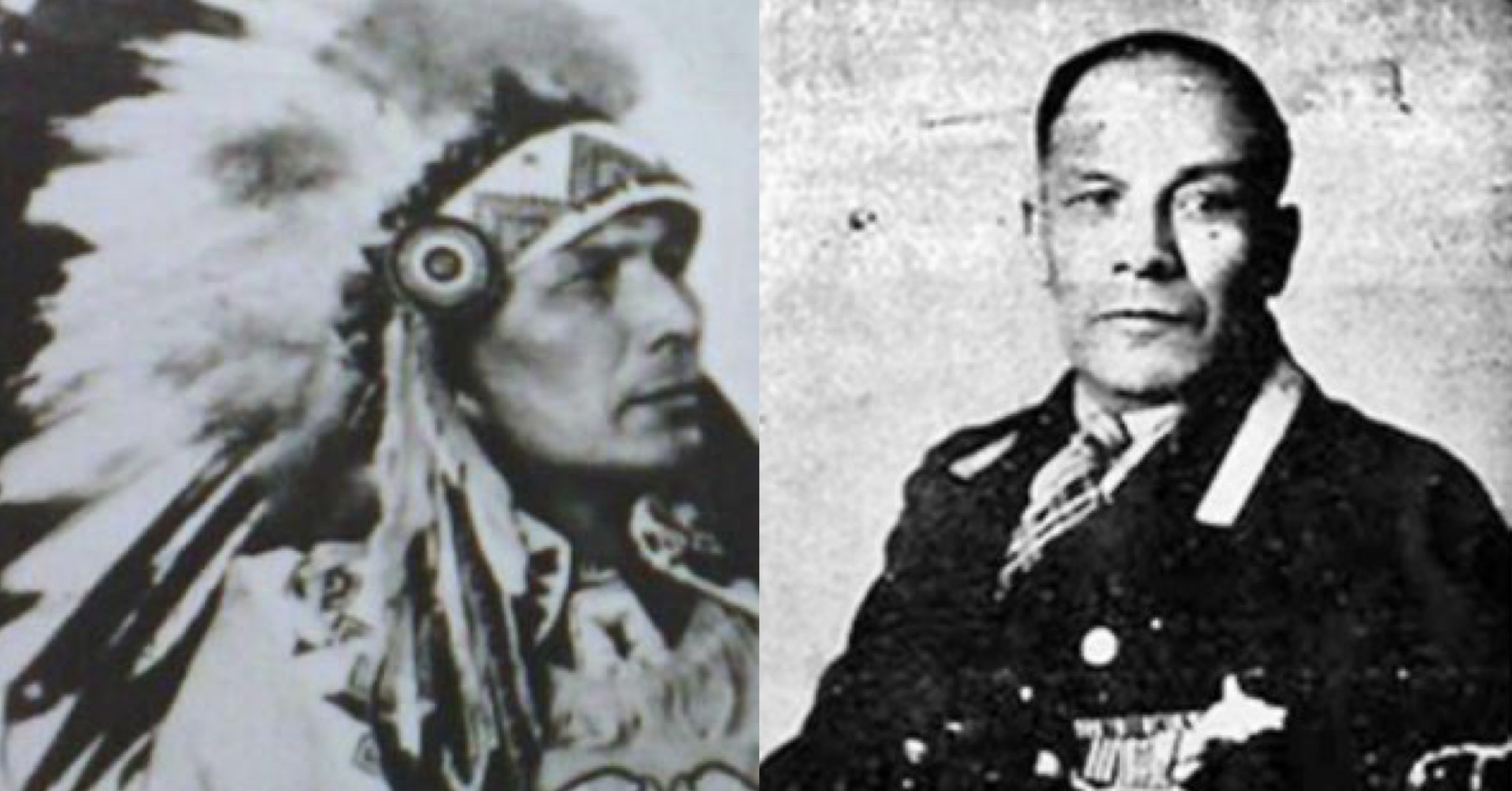
(Image Credit: Veterans Affairs Canada)
Veteran of WWI and WWII

Remembering Chief Joseph Dreaver of Mistawasis Nêhiyawak First Nation

Nov 10, 2026 | 5:32 PM

For Anthony Dreaver Johnston, some of the most meaningful lessons from his grandfather didn’t come from stories of war. They came over a meal, when the late Chief Joseph Dreaver sat him down to talk about how to treat people.

A veteran of both World Wars and longtime leader of Mistawasis Nêhiyawak, Dreaver left a legacy his grandson remembers through both his public service and those quiet moments together.


Johnston was a teenager living in Prince Albert when he was tasked with bringing his grandfather a meal. On the first visit, he dropped it off and quickly left.


“The second time when I put his meal down, he grabbed my arm, sat me down, and said, ‘I have things to tell you’.”

What followed wasn’t an account of battles or his years as chief.

“The stories he told me were stories about how to behave, how to be a human being, and how to conduct yourself properly, especially in public. So the stories he shared with me were more personal stories simply about how to be a person, how to be a human being.”

Born in June 1891, Dreaver would serve around 40 years as chief of Mistawasis, and help found the organization that became the Federation of Saskatchewan Indigenous Nations (FSIN).

He was also the First Nation’s last hereditary chief. According to Johnston, his grandfather helped introduce elections for its leadership.

“I believe it was in the 1950s, he stepped down to allow for the Indian Act election of chief and council. I believe he was elected the first time, but then he was aging and then he let others continue.”

Johnston was 22 when “Grandpa Joe” died in 1978. His grandfather rarely spoke about the wars, leaving him to learn much of that history through his own reading.

Military service and leadership were closely connected in the Dreaver family. Joseph was the grandson of Chief Mistawasis, who signed Treaty 6 on behalf of the First Nation.

“Based on some of what I’ve heard, it can go back to Treaty 6 in which we agreed to align with the Crown. For us as Indigenous people, we fight with our brothers and sisters. So because of the relationship we’ve had with the Crown, when war started, they enlisted. And I think, especially maybe in the First World War, that sense of adventure, that sense of doing more.”

Dreaver served in the First World War alongside his brothers Frank and William. Frank was killed at Vimy Ridge in 1917, while William was wounded in Belgium and died after returning to Canada.

Dreaver served primarily as a sapper, building trenches, roads and bridges with the 107th Pioneer Battalion. Known as the Timber Wolf Battalion, the unit included nearly 500 Indigenous soldiers, almost half its members, and trained at Camp Hughes, Man.

The battalion left Canada in September 1916 and served along the Western Front, including at Vimy Ridge.

Dreaver was promoted to corporal in July 1917 and served with the 3rd Canadian Engineering Battalion in 1918. His duties included coordinating message carriers across the battlefield under fire, alongside his engineering work.

He received the Military Medal for bravery, although the precise circumstances remain unclear. Veterans Affairs Canada identifies Passchendaele in 1917 and Canal du Nord in 1918 as possible battles where he earned the honour.

“From what I’ve read, it’s quite unusual for an individual to receive a Military Medal. Quite often it’s the leader of a unit or the whole unit itself, and when attached to an individual, it’s often when they perform their duties under fire. So I’m not too sure if he was preparing roads, building bridges, doing that groundwork, or as a runner or a person who ran messages back and forth and was under fire during one of his duties.”

His military years also brought a lasting friendship with future prime minister John Diefenbaker, whom he met while training in England.

“John Diefenbaker had been injured and had trouble with his leg, so he couldn’t go into battle, so he became a trainer. From that meeting of John Diefenbaker, my grandpa Joe and Diefenbaker were friends for life after that and they had regular contact until the last days.”

Dreaver returned home in April 1919 and became chief of Mistawasis in the years that followed.

When the Second World War began in 1939, the 48-year-old drove 17 other members of Mistawasis to Saskatoon to enlist, including two of his daughters and two of his sons.

Too old for overseas service, he joined the Veterans Guard and spent four years guarding prisoners of war in Medicine Hat. One of his sons served as chief while he was away.

Another son, Harvey, landed at Juno Beach on D-Day and was killed in action in Belgium three months later.

After the wars, Dreaver challenged discrimination against Indigenous veterans, including restrictions he faced himself.

Johnston recalled an occasion when an RCMP officer stopped his grandfather while he was travelling from Mistawasis to Sturgeon Lake for a gathering. Indigenous people faced restrictions on leaving their reserves, but Dreaver pointed out that he hadn’t needed permission to enlist and serve overseas. He continued on to the gathering.

His grandson said Dreaver faced similar treatment when trying to get service in a bar.

“There were newspaper articles of the 1960s, First Nation people being denied access to beverage halls or beer halls, and there’s articles about my Grandpa Joe, again, similar to this event and being stopped, where he was denied service in a bar. And again, he said, ‘I served overseas, I drank beers in Europe and France with my comrades in arms. There was no problem then. Why is there a problem now?’”

In 1969, Dreaver was named an honorary chief of the FSIN after serving on the organization’s first senate.

Chief Joseph Dreaver died on Feb. 10, 1978, at the age of 86, and is buried in Mistawasis.

For Johnston, sharing his history helps preserve both his grandfather’s service and the personal lessons he left behind.

“Thank you for finding my grandpa.”

—

nick.nielsen@pattisonmedia.com

View Comments