(Photo courtesy/Ashley Hobbins, Facebook)
Fletcher's Neuro Journey

Wadena Wildcats raise over $25k for Hearts for Hobbins

Mar 31, 2023 | 3:55 PM

The Wadena Wildcats senior hockey team recently raised over $25,000 for one of their own.

Tyson Hobbins is a former Nipawin Hawks player and coach, who’s now suited up for the Wildcats for the past three years.

His son Fletcher had brain surgery earlier this month in Toronto, as he was approved for deep brain stimulation (DBS).

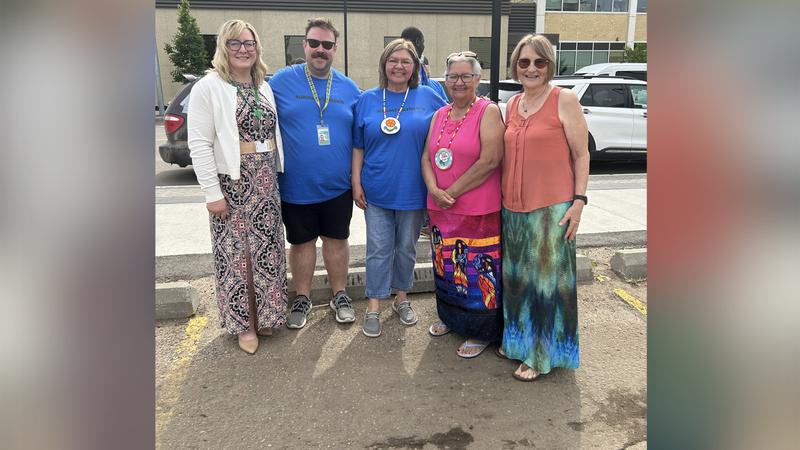
Anna Lazar is one of the board members of the team, who set up the fundraiser with the help of community member Lynn Brownley.

“We just wanted to raise the money for the family to help with travel costs and just costs in general, so that the family can be together,” said Lazar. “Even though he’s not originally from Wadena, he’s a Wildcat now and part of the Wildcat family, so we just wanted to make sure we could do what we could do to help them out.”

Just five-and-a-half months into his life, Fletcher was diagnosed with Periventricular Leukomalacia. That is a brain injury due to a lack of blood and oxygen, while he was still in utero.

A few months later, Fletcher had genetic testing, which confirmed he has genetic mutations. Doctors have now also classified him as having dyskinetic quadriplegic cerebral palsy.

According to the Fletcher’s Neuro Journey Facebook page, one of his biggest barriers to a better quality of life is his muscle tightness and dystonia.

He and his family are still in Toronto following his brain surgery, staying at the Ronald McDonald House.

His deep brain stimulation is a neurosurgery where holes are drilled into the skull and electrodes are inserted deep into the area of the brain that controls movement. A battery pack was also placed in his chest to power the electrodes.

They send tiny impulses to the brain, and this can help control the random movements that come with disorders like Parkinson’s and dystonia.

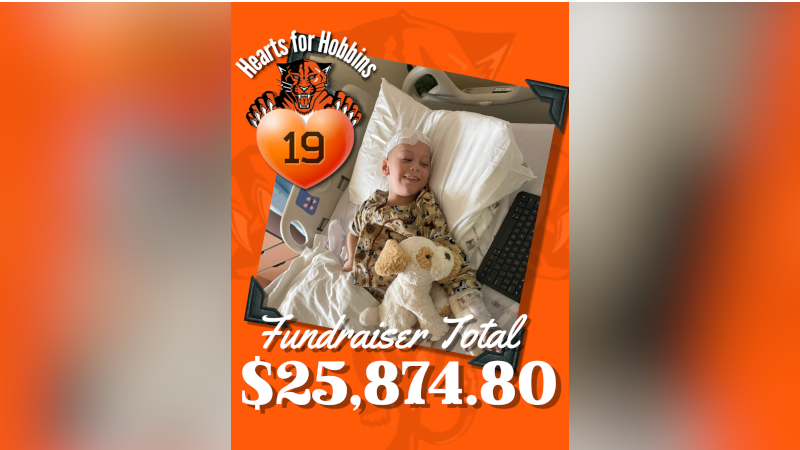
As for the fundraiser, $25,874.80 was the exact amount raised, as they held a silent auction, a raffle table, and accepted donations.

“The donations just started pouring in and the response was awesome community-wide,” Lazar added.

The Hobbins family has yet to see any results from the DBS device, however, this is normal, as it can sometimes take years to find the right setting for a person.

They start the stimulation extremely low to give your brain a chance to get used to it and slowly work up to higher levels every couple of weeks or so.

“There are so many different variations from the place the stimulation is administered to the frequency, so finding the settings that work best for Fletcher will take time,” stated Ashley Hobbins (Fletcher’s mom) in a Facebook post. “The doctors are extremely optimistic as he has been tolerating the test phases really well and we still have tons of room to go up on his settings.”

news@northeastnow.com

On Twitter @BenTompkins_8

View Comments