(File photo/paNOW Staff)
On thin ice

Venturing on to the ice? Follow these safety tips

Jan 4, 2024 | 4:00 PM

It’s been an unusually warm winter in central Saskatchewan which has created questionable ice conditions on lakes and waterways in the Prince Albert area.

As people partake in activities such as ice fishing, Alex Paul from the Prince Albert Fire Department is emphasizing safety and caution.

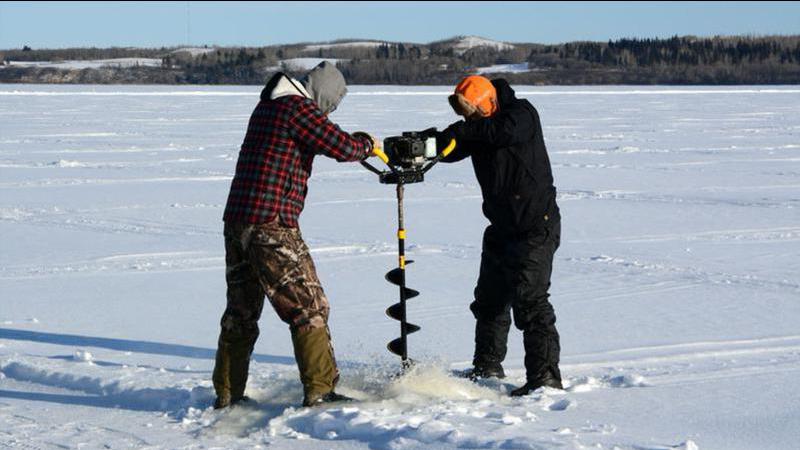
“The most reliable method of knowing how thick the ice is is to actually drill a test hole and measure how much ice is there,” he said.

“To safely walk on, we want to see a minimum of 10 centimetres or four inches of ice. For a snowmobile we want to see 12 centimetres or five inches and then for a car or truck ideally we want to see 30-38 centimetres of ice, that’s 12-15 inches for a passenger vehicle.”

Paul added that people should always stay off the North Saskatchewan River, as that ice is never safe given the water movement and currents underneath.

As for lakes, Paul said this winter’s lack of snow is actually good for helping develop thicker ice.

“Although we’ve seen quite a mild winter, we don’t have the snow cover on the ice and that actually aids in building the ice thickness because the snow acts as an insulation,” he said. “So when we do get the cold weather with no snow on the ice, it’s building the ice thickness quicker than if we had a blanket of snow over top of it.”

Christian Olson grew up in the Reindeer Lake area and has been ice fishing in multiple locations this winter, including Anglin Lake, Pear Lake, Christopher Lake, and Montreal Lake.

He said he’ll drill a test hole when he has heavier gear and heavier vehicles.

“If I ever bring the truck or the ski doo or all the gear on the truck then I would be doing test holes as I go along,” Olson said. “But right now I’m not trusting it so I’m just bringing the sled and whatever gear on the sleigh so it’s not as heavy.”

Olson also touched on the concept of white ice versus blue ice.

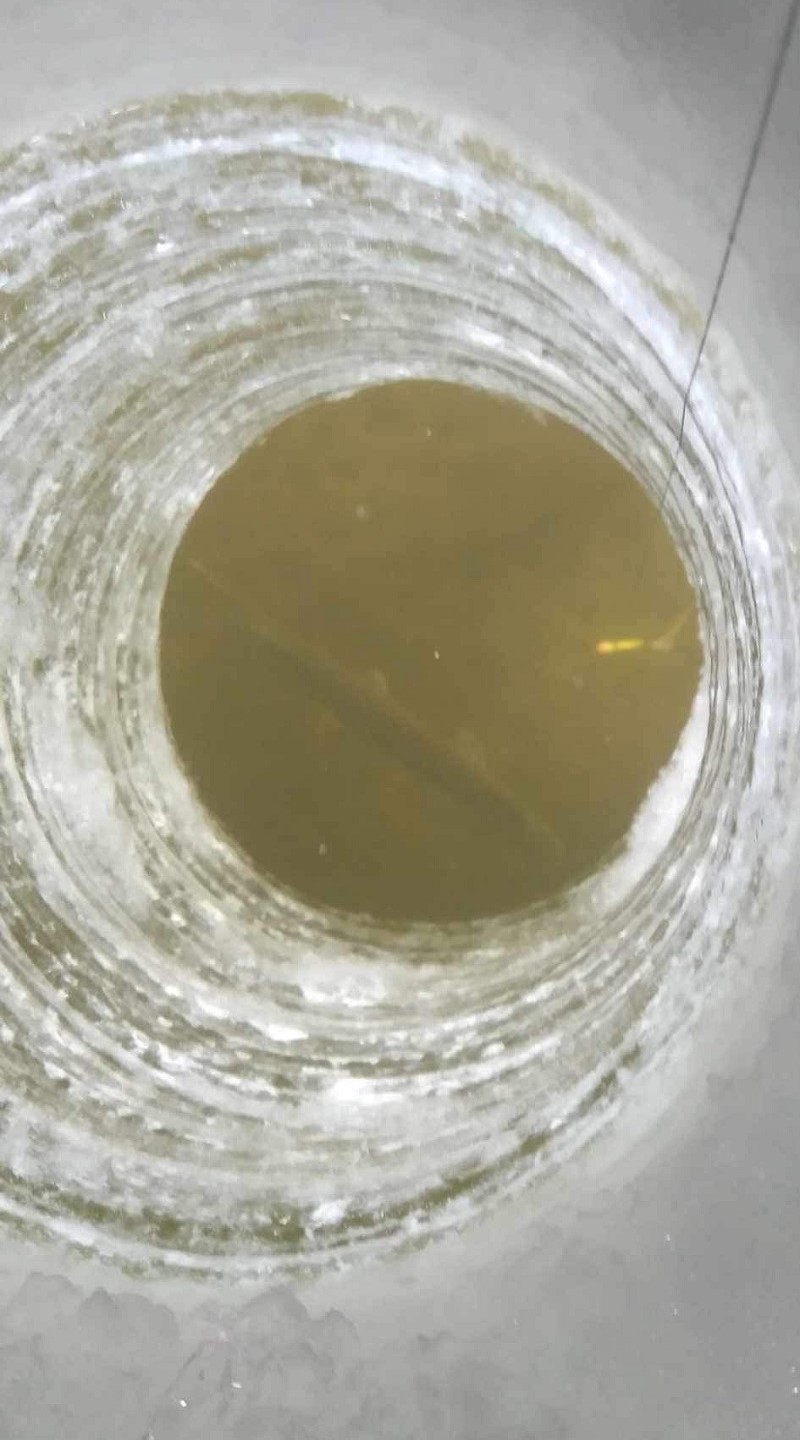
“Right now I know that with the temperatures it’s not as strong as blue ice like we had last year. So it’s all pretty much white ice and it’s got lots of air pockets, air bubbles, and it’s rated half of what blue ice is rated for,” he said.

“So when there’s 15 inches I wouldn’t trust it to be 15 inches…I would trust it to be seven or eight (inches) because it’s got all the air in it. When we’re out ice fishing, it’s constantly popping and cracking.”

“Blue ice is what we want to run out the heavy machinery, heavy sleighs, heavy ice shacks because it’s been frozen completely with no air pockets,” he continued. “Right now with the white ice, it slowly freezes in layers and then it’s got trapped air.”

Olson said the conditions this year have been very good for ice fishing, and he’s been catching a lot of fish so far.

“Every time that I’ve been going out, I’ve just been hammering them,” he said.

An example of white ice in an ice fishing hole. (Submitted photo/Christian Olson)

nolan.kowal@pattisonmedia.com

View Comments