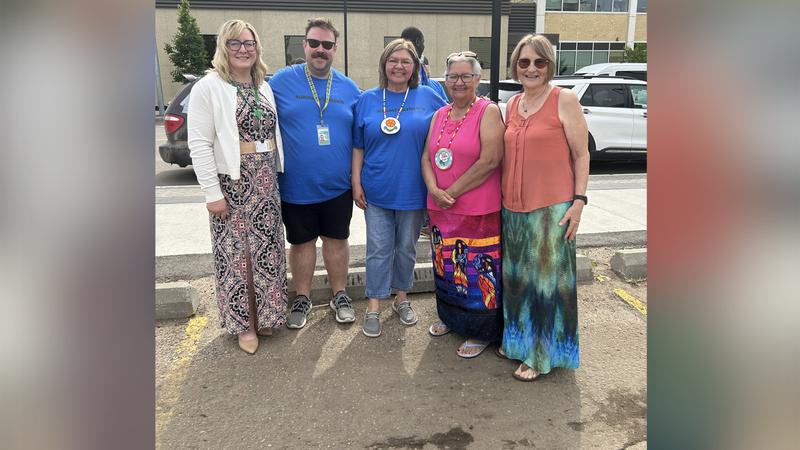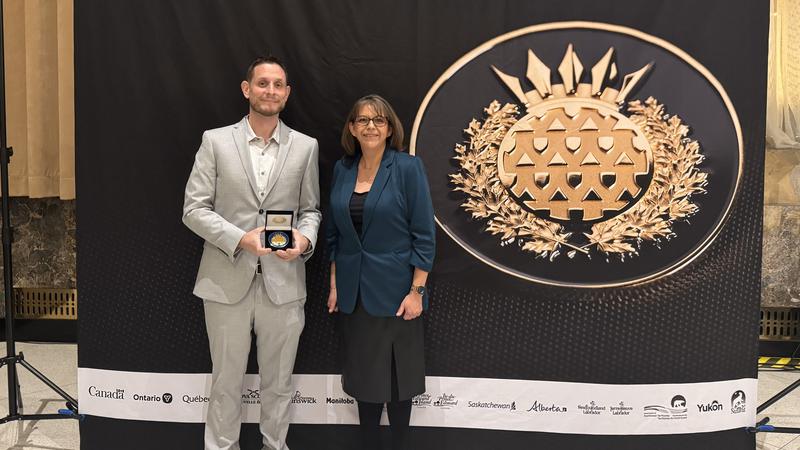
Daryl Wright and Yolanda Ducharme of MLTC Environmental Health celebrate Wright's win. (Submitted Photo)
Daryl's Award

Cochin man recognized with national emergency management award

Feb 28, 2025 | 12:59 PM

Six years ago, when Daryl Wright began with Meadow Lake Tribal Council Emergency Management, they weren’t involved in much.

“Basically, the province would evacuate people, and the Red Cross would take care of them,” he said.

“MLTC and First Nations role was very limited.”

Now, nearly five years after first helping with the COVID-19 pandemic response, the Cochin resident been recognized with the Emergency Management Exemplary Service Award for outstanding contribution.

Speaking to a desire in which First Nations said they wanted to be in control of the emergency response, be involved and feel like they had a voice, Wright said that was when a framework with an Indigenous focus came into view.

“We started developing a system where we could – where we would take over basically – the evacuation,” he said.

“The province would let us know when there’s a threat and then when the community needs to evacuate, we take care of them.”

That role would include providing food, hotels, organizing events, daycare and all the services the MLTC offers, including bringing in mental health workers.

“Over the last four years, we’ve kind of been developing and working on that system and I’d say now we’re a model for what is possible when Indigenous communities take the lead.”

According to the government website, the award “is a partnership between federal, provincial, and territorial governments” and is given recipients in the five categories: resilient communities, search and rescue volunteers, search and rescue employees, youth and outstanding contribution to emergency management.

When they first began, Wright said the work they were doing highlighted some shortfall and gaps in traditional emergency management.

“Over COVID, then we decided ‘Hey, you know I think there’s an opportunity for us to bring communities together and develop a system that better supports their own people,’” he said.

Since they began, the team has also helped during full community evacuations, wash outs, significant floods and plow winds.

To ensure communities are always prepared, the management team holds training sessions, tabletop meetings to practice the plan and ensure everyone is up to date and prepared.

“Then the MLTC backfills that with saying ‘We can bring in full-time staff, logistic contracts to make sure we’ve got all the supports in place to help that community organize and then deliver services to support people,’” he said.

As part of the efforts, the team has also developed communications tools to register people so they can reach out for help.

“We don’t have to wait until the hotel or someone else finds out about it,” he said.

“Now they can let us know if they’ve got some issues – we can get some help to them.”

Wright said he’s hoping the success of this development will set the stage for other communities across the country to do the same.

“This is a model that works, and I think there’s a lot of value to other people adopting it,” he said, noting it’s the Indigenous communities that are often evacuated first.

“They live in the bush, they’re remote and I think about the other provinces and if they’re having those feelings of not feeling like they have a voice and not being involved there’s just such a big opportunity.”

julia.lovettsquires@pattisonmedia.com

On BlueSky: juleslovett.bsky.social

View Comments