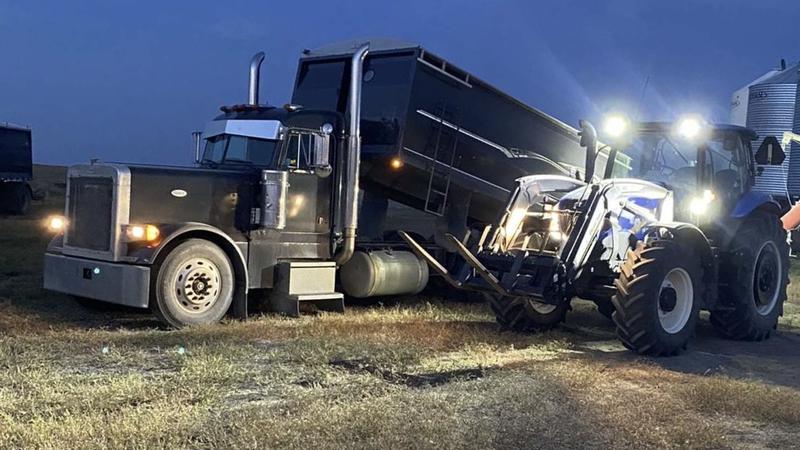
The slow start to harvest has farmers working late to catch up (Submitted/Wyatt Fuchs)
Harvest 2025

Rain, wildfires cause slow beginning to harvest 2025

Sep 2, 2025 | 3:05 PM

It is likely to be a long autumn for Saskatchewan farmers, as harvest is off to a sluggish start. This year’s harvest is progressing slower than both the five and ten-year averages for the province.

According to the province’s weekly crop report, only 12 per cent of crops in Saskatchewan have been harvested as of right now which is a significant drop from 29 per cent at this time last year.

That’s the situation Riley Wallace is facing. He farms near Unity.

“About 25 per cent harvested on the total farm, whereas last year we would have probably been maybe 35, 40 per cent harvested. So, we’re a little bit behind last year.”

Weather has played the biggest role in delaying harvest, but Wallace said there were some benefits to a cooler July.

“That was a good thing too because our crops don’t do too well in the heat of July if it’s hot for too long. So, it was good for the growing season, it just made it a little longer.”

On the opposite side of things, Environment Canada issued a frost warning Tuesday for the northeastern grainbelt. The weather service advised temperatures are expected to approach zero degrees Celcius and that could lead to some damage of crops in frost-prone areas.

It’s not just natural weather conditions that have affected harvest. Biggar area farmer Colin De Moisaac said that the smoky conditions have had an adverse effect on his harvest progress.

“The smoke hasn’t been helping lately and rain. Mostly you just can’t get in the field yet. It’s not ready yet… The sun can’t get through, so it takes a long time for lentils to dry up in the morning before we can combine.”

Another stress on the minds of Canadian farmers during harvest has been China’s 75.8 per cent tariffs on canola. Saskatchewan Premier Scott Moe is heading to China in a bid to provide relief against the tariffs. Wallace said he hopes to see results from the trade mission and action from the federal government.

“Well, we’d like to see some give-and-take to come back from our federal government. The EV tariff is why China is responding on canola. I think both sides need to provide something to offer. We just need better market access and more markets for our products. So, if he can resolve the China issue, then that would be a real boost for marketing our canola.”

Farmers experiencing additional stress brought on by the harvest season can call the Farm Stress Line, which provides toll free support at 1-800-667-4442.

lane.hoffart@pattisonmedia.com

View Comments