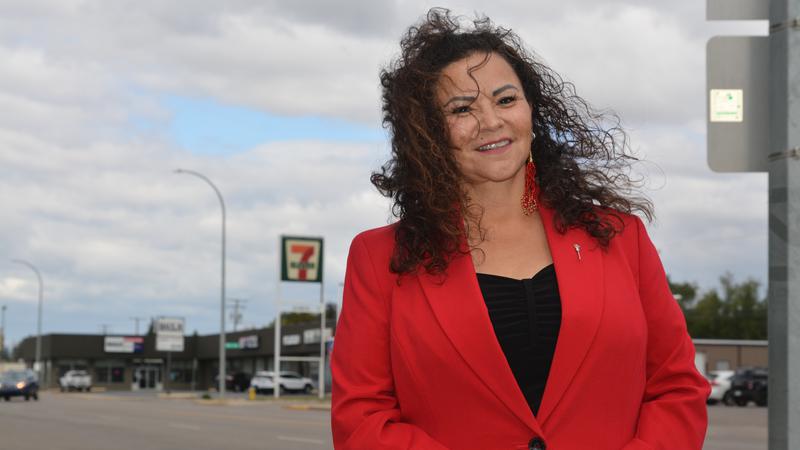
Saskatchewan NDP mental health and addictions critic Betty Nippi-Albright speaks in the Battlefords on Thursday, Sept. 4, 2025. (Kenneth Cheung/battlefordsNOW)
DRUG CRSIS

Communities ‘can’t keep up with the grieving,’ Sask. NDP says, as province notes drug deaths declining

Sep 4, 2025 | 5:04 PM

The province’s drug crisis is claiming lives at an alarming rate, and the government has failed to respond with the urgency the situation demands, Saskatchewan’s NDP critic for mental health and addictions says.

Speaking during a visit to the Battlefords on Thursday, Betty Nippi-Albright — who is also the MLA for Saskatoon Centre — said communities are overwhelmed by overdose deaths, long treatment wait times, and a lack of support for mental health and addictions.

“This drug crisis is also a human emergency,” she said.

“People that are being impacted by substance use harms… they’re our neighbors, they’re our friends, and they’re our families. Because there’s so many people that are dying, communities can’t keep up with the grieving.”


Nippi-Albright pointed to overdose figures in Saskatoon, where she said there were 210 deaths in seven months — nearly one a day — and added that many deaths in smaller communities are not reported.

She said the Saskatchewan Party government is cutting support and failing to provide transparent reporting.

“We need the Sask. Party to be transparent in their data. We also need them to be accountable,” she said.

In an email sent to battlefordsNOW, the Ministry of Health confirmed and suspected overdose deaths are already posted monthly by the Saskatchewan Coroner’s Service, and noted that deaths declined in 2024 as that trend “appears to be continuing into 2025.”

The ministry also said it is investing a record $624 million in mental health and addictions services in 2025–26, and pointed to its Action Plan for Mental Health and Addictions that includes 500 additional treatment spaces to the 700 already publicly-funded across the province.

Nippi-Albright raised Willowview Recovery Centre near Lumsden as an example, saying the government promised 60 inpatient beds but only 20 are filled in person, with the rest counted as virtual programs.

“And there’s no quarterly reports being sent. There’s no accountability,” she said.

The ministry disputed that, saying Willowview currently offers 60 inpatient spaces. It added that all publicly funded facilities, whether non-profit or private, must follow provincial regulations and are required to report on their operations.

Nippi-Albright also criticized the province’s reliance on virtual treatment, calling it inadequate for people in acute withdrawal.

“A Zoom call is not going to help somebody that’s withdrawing from an opiate withdrawal … when they need someone to walk them through that experience,” she said.

The government countered that virtual treatment is one option among many, and said it can be helpful for residents who want to keep working, studying or caring for family while receiving support.

“This can be an appealing choice for those who need help battling addiction, but are reluctant or unable to take time away from critical daily activities,” it stated.

She also said families are desperate to find help for loved ones battling addiction but face months-long waits for detox and inpatient treatment.

“They’re begging us to see if there’s a way to get their loved one into inpatient treatment. I hear every single day somebody that died from a drug overdose or a suspected drug overdose,” she said.

On wait times, the ministry said access varies widely across the province — from same-day admission in some centres to six or more weeks in others

“Social detox and brief detox along with youth withdrawal management and inpatient services typically have the shortest wait times, while adult inpatient services can have longer wait times depending on location,” it stated.

The Opposition critic has called for the province to declare a state of emergency on drug deaths, publish transparent overdose data, and put more resources into frontline and provincially funded centres instead of for-profit providers.

The ministry noted that “every loss of life due to an overdose is a tragedy,” and its goal “remains to see more people get the help and support they need to live healthy, safe lives in recovery.”

Kenneth.Cheung@pattisonmedia.com

View Comments