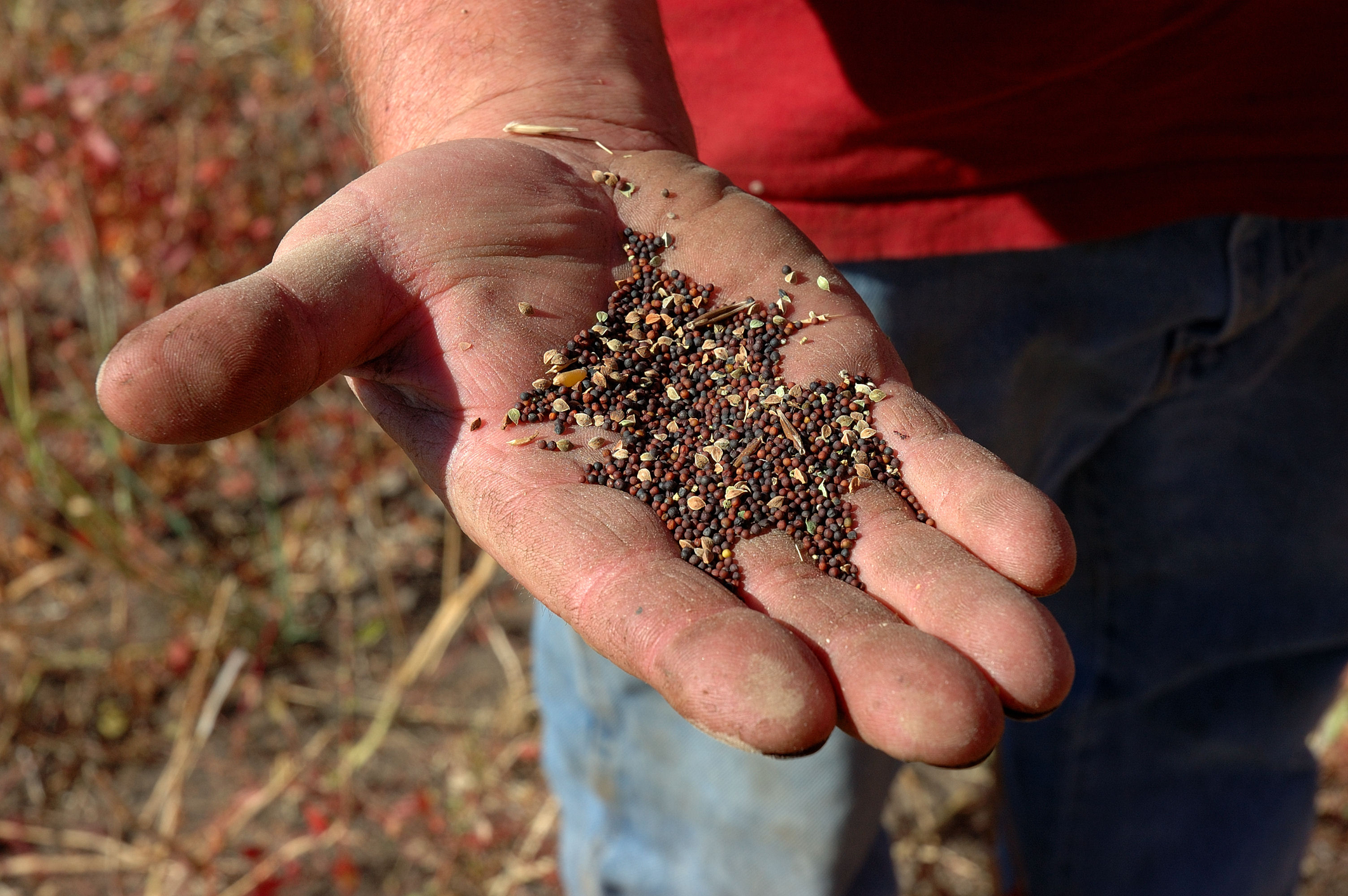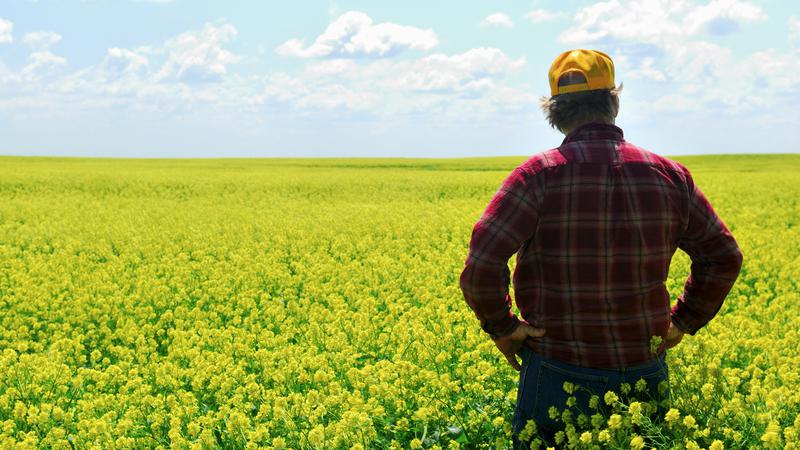
If China's tariffs on Canadian canola lingers, it may alter what some producers plan to seed next spring. (ID 5723538 © Lorraine Swanson | Dreamstime.com)
'Wait and See'

Sask. farmers brace for tough decisions amid canola trade dispute

Sep 17, 2025 | 4:13 PM

Codie Nagy isn’t quite finished this year’s harvest, but the uncertainty in the markets fueled by Chinese tariffs on Canadian canola already has him contemplating next year’s crop rotation.

“If this lingers on and canola is essentially at a break-even point come mid-April or March, when we’ve got to finalize seeding plans, we might shift into something else if possible. So, it might alter our canola acres for next year, but this year, being that we’re at harvest, we’re essentially going to get what we have, and there’s nothing we can really do.”

Nagy, who farms near Ogema in southern Saskatchewan, was pleased to hear Premier Scott Moe say his trade mission to China was more positive than he expected.

“I think it will be helpful in the long run. I’d be more concerned if stuff like that wasn’t happening,” he said.

Codie Nagy, who farms near Ogema, Sask. said the canola tariffs will affect his community that depends on agriculture to drive the local economy. (submitted photo)

Right now, the nearly 76 per cent Chinese tariff on Canadian canola won’t affect Nagy too badly because he forward priced his inventory, meaning he ‘locked in’ a price to reduce the risk of market declines before harvest. But, the remaining inventory he’ll carry into winter is ‘definitely worth less’ than he’d like it to be.

Nagy is from a community where agriculture is the main driver of the local economy. He said the tariffs will end up hurting more than just farmers.

“It’s everybody that relies on farmers for their small business…like the local Co-op is affected, the local mechanics, grocery stores…everything.”

Tracy Broughton, executive director of Sask Oilseeds said a lot of Saskatchewan farmers have depended on the profitability of canola over the last several years to help weather the storms of other commodity price declines.

“This year is different because we don’t have a lot of confidence in the canola market with the tariffs on China and just general global uncertainty. You know our federal government is also trying to sort out the United States, which is the other large market for canola,” Broughton said.

“The way I look at it, canola was kind of the crop that changed everything for farm businesses, and so when we see this general instability for our canola market, it’s just putting our farmers in a very uneasy position, especially this time of year.”

Saskatchewan producers are facing a 76 per cent Chinese tariff on Canadian canola. (ID 1205644 © Lorraine Swanson | Dreamstime.com)

Ed Schafer is a farmer in Makwa, west of Meadow Lake. Canola is a big part of his crop rotation every year. He said if the canola tariffs continue, it could have a big impact on his operation.

“Absolutely. Canola is a huge part of Western Canada’s grain farming industry and we want to see a healthy industry for better prices.”

He said many producers may decide to sit on their crop and hope for better prices. Some will take advantage of the Advanced Payments Program for which the government increased the interest-free portion of earlier this year. But for the most part, the tariff situation leaves producers in a state of ‘wait and see.’

“I don’t know right now. It looks like tough times for grain farmers. It looks like the commodity prices…we’re in for a couple of tough years and there’s not a lot of other options for growers in northern Saskatchewan to seed things other than canola and wheat and barley,” Schafer said.

He hasn’t decided yet whether he’ll plant less canola next year or not.

Prime Minister Mark Carney met Premier Moe and canola industry leaders in Ottawa on Tuesday afternoon. Moe said a clear message was sent that Saskatchewan producers need stability, access to markets, and strong federal support to resolve trade challenges.

Like Nagy, Schafer is happy the premier and federal representatives went to China to lay the groundwork for future negotiations that the prime minister would need to finalize any trade disputes. Ultimately, he said farmers just want a tariff-free trade environment where the market reflects what they get for prices, and government politics don’t get involved.

teena.monteleone@pattisonmedia.com

View Comments