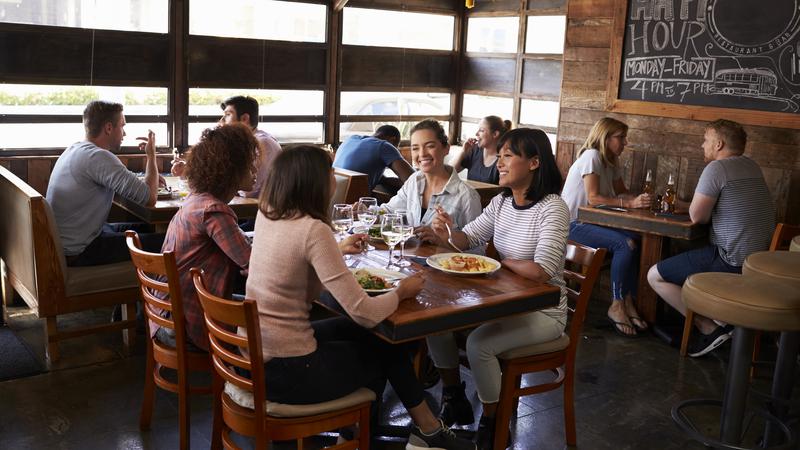
A Foodservice Facts Report from Restaurants Canada said restaurant spending has slowed compared with pre-pandemic levels. (ID 85187126 © Monkey Business Images | Dreamstime.com)
Foodservice Facts Report

Wildfires may have helped northern restaurants buck national trend of fewer people dining out

Sep 22, 2025 | 12:03 PM

Three in four Canadians are eating out less often due to the rising cost of living, according to Restaurants Canada’s 2025 Foodservice Facts report. That share rises to 81 per cent for those aged 18 to 34. But in Saskatchewan, a hospitality industry advocacy group said restaurants here are reporting a strong summer of business.

“I think that had a lot to do with the vacations that people had; a lot less people were travelling south of the border and were staying within our own province, which is always good,” said Jim Bence, president and CEO of Hospitality Saskatchewan.

The operator of a Grainfields restaurant in Prince Albert told paNOW he saw an increase in business this summer – likely do to an influx of short-term residents because of wildfires. Bence agreed, evacuees likely had an impact on restaurants and hotels in north-central Saskatchewan.

“So, I think all of those things combined really allowed Saskatchewan, I think, to have a strong summer. But, certainly there is amongst our restaurateurs, there’s concern about the price of product going up and people really starting to keep their wallets in their pants as opposed to going out as much,” he said.

“Although we had a strong summer, we’re kind of anxious about what might come in the third and fourth quarter of this year.”

The Restaurants Canada report released Monday echoed Bence’s thoughts. It said the 2025 outlook for foodservice businesses is mixed. An increase in domestic tourism is driving more sales, but Canadians are spending less per capita and opting to eat at home more than they were pre-pandemic.

“While conditions have improved somewhat over the past year, this is still a very challenging market, as Canadians continue to face an affordability crisis and rising operational costs are squeezing operators’ margins,” said Kelly Higginson, president and CEO of Restaurants Canada. “To stay competitive and optimize limited revenues, restaurant operators need to understand current Canadian dining trends.”

The report found lunchtime traffic at quick-service restaurants increased by 7.6 per cent, surpassing pre-pandemic levels, reflecting return-to-office mandates and affordability concerns. About 65 per cent of Canadians are replacing a traditional meal with a snack at least once a month, and 41 per cent of Canadians report that their alcohol consumption has decreased over the past year.

As consumers pull back on spending, businesses are dealing with rising operational expenses. The report noted the cost of food, labour, insurance, and utilities, among other expenses, have grown by double digits between 2023 and 2025 and 41 per cent of businesses were operating at a loss or breaking even as of June 2025.

As a result, Bence said a lot of the measures that the industry had to go through during the pandemic are back on the table for the balance of 2025.

“With so much uncertainty, owners and operators will really start to watch their expenses and that is everything from the price of a head of lettuce to staffing and menu choices – those kinds of things…when there is menu engineering going on, what are the types of products that they can offer where they can still actually see some reasonable margin.”

Bence said it may result in reduced hours of operation or less staff in some cases, but it’s really a ‘wait and see’ situation.

What may help Saskatchewan’s hospitality industry he said is the province’s strong sense of buying and supporting local business, something that was amplified during the pandemic.

teena.monteleone@pattisonmedia.com

View Comments