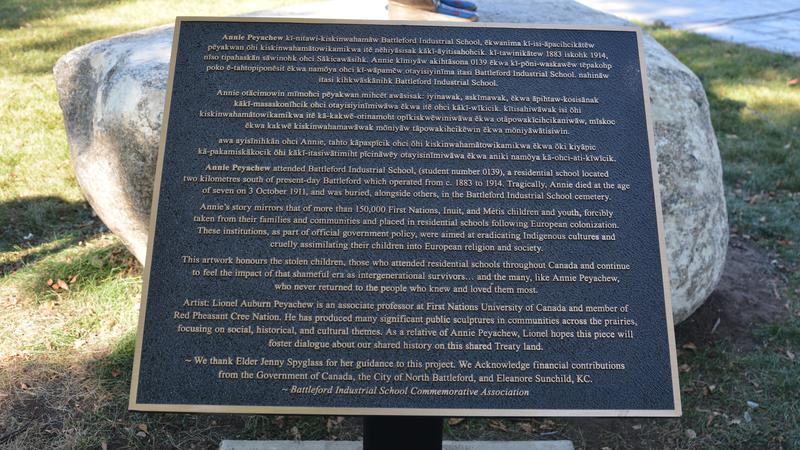
The plaque tells the story of 7-year-old Annie Peyachew, who died at Battlefords Industrial School in 1911 (Lane Hoffart/battlefordsNOW Staff)
New Plaque

Plaque unveiled next to Annie Peyachew statue in Central Park

Sep 22, 2025 | 5:20 PM

The story of a young girl who died in a residential school over 110 years ago will now be displayed next to the statue that was erected in her honour last year.

A dedication ceremony was held in Central Park to commemorate the plaque that will complement the figure of 7-year old Annie Peyachew, who died in 1911 while at Battleford Industrial School.

Peyachew’s story feels familiar to many Indigenous people who experienced the horrors of residential schools. The plaque and statue tell a story of pain and loss, but also the resilience of Indigenous people.
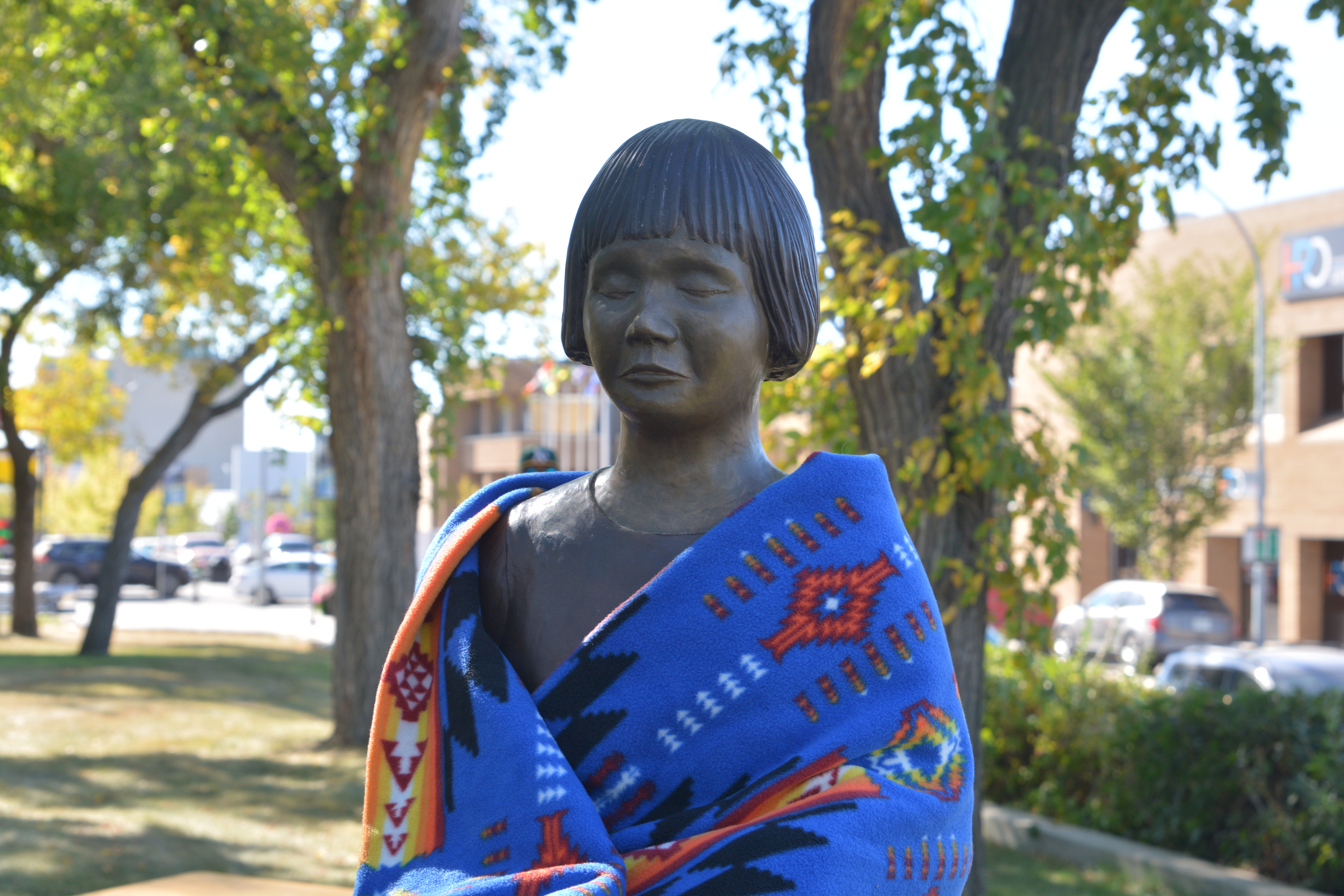
A statue honouring Annie Peyachew was erected in Central Park last year (Lane Hoffart/battlefordsNOW Staff
“In spite of what we went through, we still have our languages, we still have our culture, we still have our identity,” said Jason Chamakese, who emceed the event. “And for this to be here, it’s a great reminder. It’s a great educator.”

Lionel Peyachew, the sculptor of the Annie Peyachew statue and a relative of the subject, said that memorials like the one in Central Park will ensure that future generations understand the impact residential schools had.

“We have school just a block away from here…kids come here to play. They will read the plaque. They will continue to understand what really did happen here in the past. The new visitors, they will be able to get informed of what really happened here. This kind of memorial should be placed in every city and town.”

During her land acknowledgment, Sherron Burns talked about seeing community members stop at the park to pay their respects to the statue.

“My husband and I, we walk through this park regularly and over this past year, since we put up the statue of Annie, we witness often that there are gifts left here for her. There’s food, toys, blankets, offerings. In the winter snow, we walked past and we saw somebody had placed a knitted toque and a warm scarf over her shoulders to cover her and protect her.”

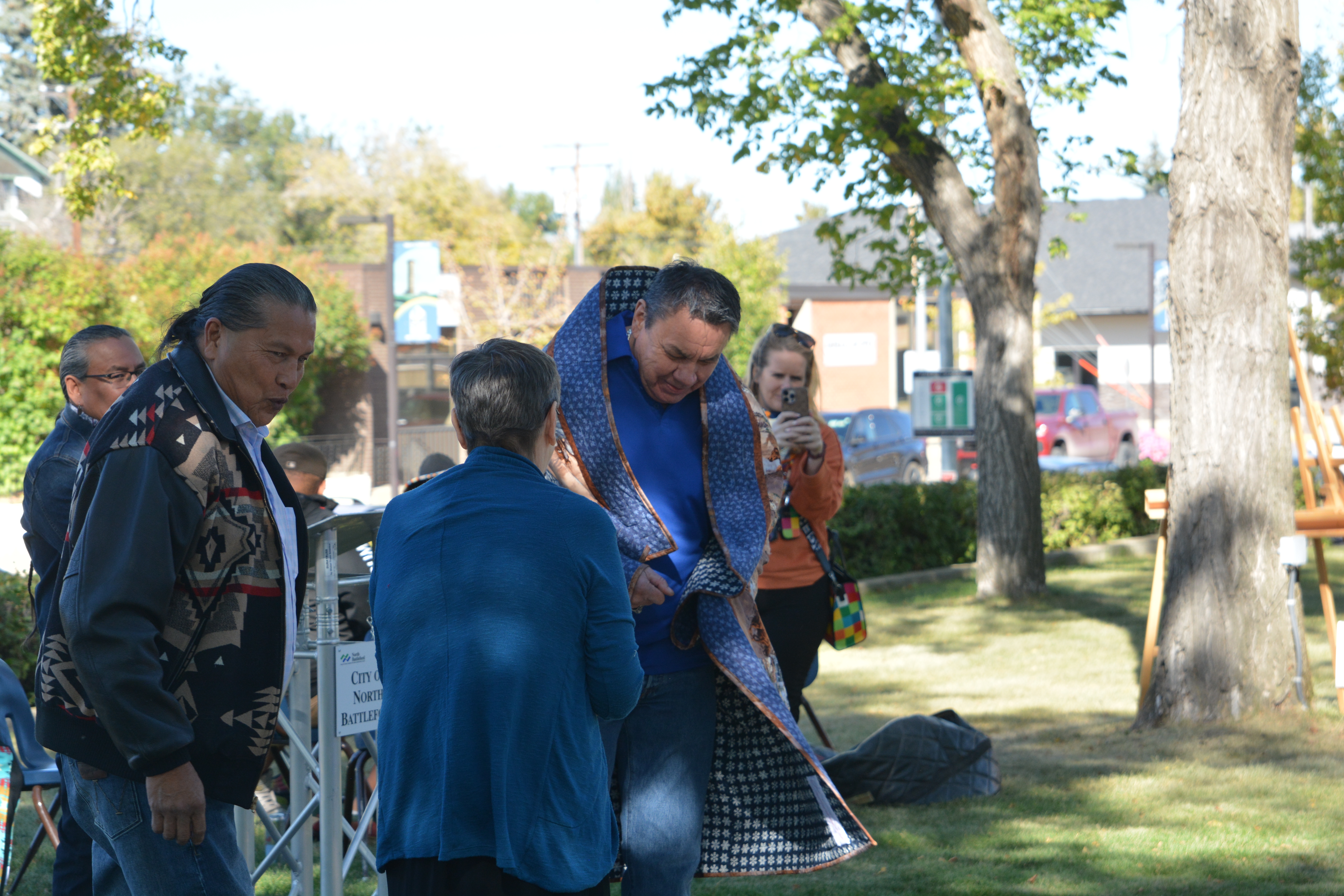
Along with the plaque unveiling, quilts were given to residential school survivors at the ceremony. The quilts were knitted by artist Heather Hochbaum as part of Quilts for Survivors.

Heather Hochbaum and Alvin Baptiste gift a quilt to Lionel Peyachew, who sculpted the Annie Peyachew statue. (Lane Hoffart/battlefordsNOW Staff)

“It’s a non-profit organization,” said Hochbaum. “And they give quilts to survivors of residential, day school, and Sixties Scoop survivors to remind them that they are not forgotten and to help with their healing journey. This organization has given, to date, over 2,000 quilts to survivors all over Canada and some into the United States.”

“If you know someone who is a survivor, you can nominate them by going onto their webpage, and then they will give them a quilt.”

The plaque and quilts are part of the healing process for Indigenous people in the Battlefords. The ceremony came just over a week before National Day for Truth and Reconciliation, which will take place on Sept. 30.

lane.hoffart@pattisonmedia.com

View Comments