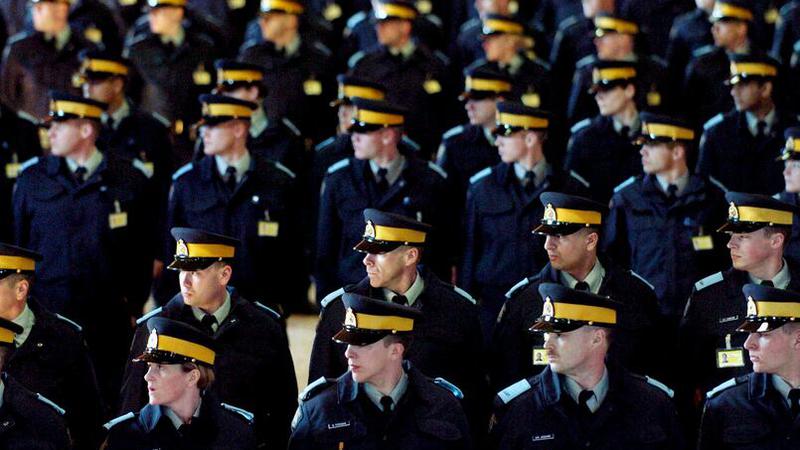
RCMP cadets attend a daily march at the Drill Hall at the RCMP depot in Regina. (File photo: Troy Fleece/The Canadian Press)
PUBLIC SAFETY

Province, RCMP respond after MLTC raises alarm over police shortages in northern Sask. First Nations

Nov 20, 2025 | 12:59 PM

The Saskatchewan government and RCMP are responding to public-safety concerns raised Wednesday by the Meadow Lake Tribal Council (MLTC), which warned that chronic police shortages and long waits for officers are putting northern First Nations in danger.

Tribal Chief Jeremy Norman said some communities expected to have up to five officers are at times “lucky to have one,” and that emergency callers can wait close to an hour for help. He also pointed to a recent fatal dog mauling in Ministikwan Lake Cree Nation, saying officer response was faced a delay of more than 50 minutes.

In the midst of the public-safety concerns discussion, the RCMP issued a somewhat unprecedented statement Thursday to the general public to stand in solidarity with its officers.

“There has been some public dialogue about the RCMP’s service in Saskatchewan recently. It’s something I need to address,” said A/Commr. Robin McNeil, commanding officer of the Saskatchewan RCMP.

“I could not let this conversation about public safety continue without expressing the utmost pride and confidence I have in Saskatchewan RCMP’s police officers and staff. They are undoubtedly maintaining the safety of Saskatchewan communities.”

He said frontline police officers work ‘tirelessly, proactively reducing crime and responding to calls for service.’ He explained response times vary widely across the province depending on geography, weather, call severity and the volume of simultaneous emergencies.

“In many of our remote, rural and northern communities, police officers aren’t just solving crime – they also may respond to fires, to medical emergencies, and to mental health crises, among others,” he added.

According to its annual statistics, the RCMP’s Operational Communications Centre now handles an average of 349,000 calls a year, an increase of about 45 per cent over the last decade.

McNeil noted that the RCMP has been transparent about crime trends and publishes provincial data regularly, but emphasized the limits of policing alone, saying “police are only ONE part of the solution.”

“Social issues are complex and require a coordinated, multi-agency response to address them. We already – and will continue to – engage with our partners at the local, provincial and national level, and welcome any and all opportunities to discuss public safety with them.”

During the MLTC press conference Wednesday, Vice-Chief Richard Derocher said MLTC is looking for an immediate solution and sees the Saskatchewan Marshals Service (SMS) as “an opportunity.” “We are looking for a fix today, we are not looking for a fix in 10 years,” he said.

The province

In a separate statement in response to MLTC’s concerns, the province said many Saskatchewan communities are facing rising pressure on police services and the effects of addictions.

It said it continues to work closely with First Nations and federal partners while “advocating for additional RCMP resources across the province, and advancing First Nations and Inuit policing to ensure policing remains responsive and effective.”

The government highlighted a $3-million tiered policing pilot that places Community Safety Officers on 10 First Nations, including Flying Dust, Waterhen Lake and English River — three MLTC nations. While early signs show improved safety, the province added that Community Safety Officers “are not a standalone solution.”

Saskatchewan also cited its investment in the SMS, calling the agency a support that “complement existing policing services” rather than replace the RCMP. It said “community safety remains shared responsibility,” and added that it will continue working with MLTC, Public Safety Canada and the RCMP “to find the best path forward.”

The province also pointed to new addictions-treatment efforts, including 281 of 500 promised new treatment spaces now operating in locations such as Poundmaker’s Lodge in North Battleford, Onion Lake Cree Nation and Muskwa Lake Wellness Camp near Pinehouse. It said it is adding a Virtual Access to Addictions Medicine program and supports the Opioid Agonist Therapy program.

MLTC said it will continue discussions with the province.

Kenneth.Cheung@pattisonmedia.com

View Comments