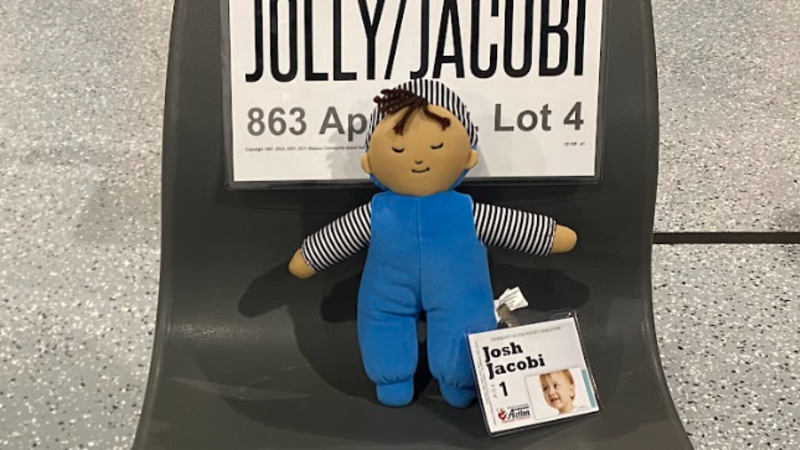
The Poverty Simulation Exercise in North Battleford. (no additional photos are presented for privacy) (Alyssa Rudolph/ battlefordsNOW)
simulation exercise

Facing reality: inside North Battleford’s Poverty Simulation Exercise

Jan 21, 2026 | 5:42 PM

BattlefordsNOW reporter Alyssa Rudolph was invited to participate in The Poverty Simulation Exercise hosted in North Battleford on Jan. 21. The simulation is an interactive learning experience designed to build understanding for the realities faced by individuals living with low income. The following article is an account of her firsthand experience.

For two hours, I had the opportunity to step into Joyce Jacobi’s life – a fictional character designed to mirror the hardships faced each day by those with little income.

Some participants in the simulator were placed in households alone or with multiple family members. My experience was meant to be that of a 19-year-old mother who dropped out of high school and now relies on food stamps and her boyfriend’s income to survive.

Throughout the day, my boyfriend went to work while I rushed from place to place, attempting to pay bills and earn what little money I could. At one point, I was offered a job that only paid $25 per week, which became pointless when I realized childcare alone would cost $100 per week. Without any other options, I was left to remain a stay-at-home mother.

Feeling discouraged, I tried to regain control by budgeting more carefully. With only a few dollars left, I decided to visit a pawn shop. The only item they would buy was my $100 microwave, and in return I received just $30. I had no choice but to accept the offer; it was already week three, and we still had not purchased groceries.

By the end of the simulation, my fictional family had almost no money left. We were unable to pay rent or utilities, and because I could not secure employment, my food stamps would not continue into the following month.

As the simulation progressed, my partner and I became increasingly overwhelmed. We were not alone; many other participants expressed similar feelings of anxiety and stress during the reflection portion of the event.

“I was in school, my brother was not, and then I was kicked out of school. Since we weren’t able or old enough to do anything and I wasn’t able to go to school, quite often we found ourselves in jail or in bad situations because of being associated with bad people,” one participant said.

Another expressed frustration after discovering some barriers to services offered.

“There were some people that weren’t very cooperative. It looked like it was intentional, but that’s kind of the real world as well. I expected everyone to help me in this situation because that’s what you’re paid to do or support me and lead me in any way that you can, but that wasn’t the case for every single spot,” they noted.

Another participant said their character had a son who stole everything from them. They picked a wild car during the experiment and were robbed again.

“I lost my ID. I lost everything. Realistically, that’s real life.”

Dallas Odgers, a health educator with the Saskatchewan Health Authority, helped lead The Poverty Simulation Exercise through the Roots of Hope program. He said participants were often surprised by bottlenecks in accessing services.

“I think it is a good reflection for anyone who provides services that help people in these situations. ‘How can you make it efficient? How can you give them all the details they need?’.”

“We know that not only here, it’s across Canada, that all the rates of food insecurity and poverty and all the cost of living keeps escalating. People are going to struggle with finances, and we need collective action to make sure that everyone can support those in need,” he said.

When the exercise ended, I could leave and return to my daily life as a reporter in the Battlefords. For others in the community, the stress and uncertainty I experienced during the simulation does not end after two hours. While the role I played was fictional, the situations it represented are very real for many local families.

Anyone wanting to participate in a similar, smaller scale simulation can visit the Make the Month website.

Alyssa.rudolph@pattisonmedia.com

View Comments