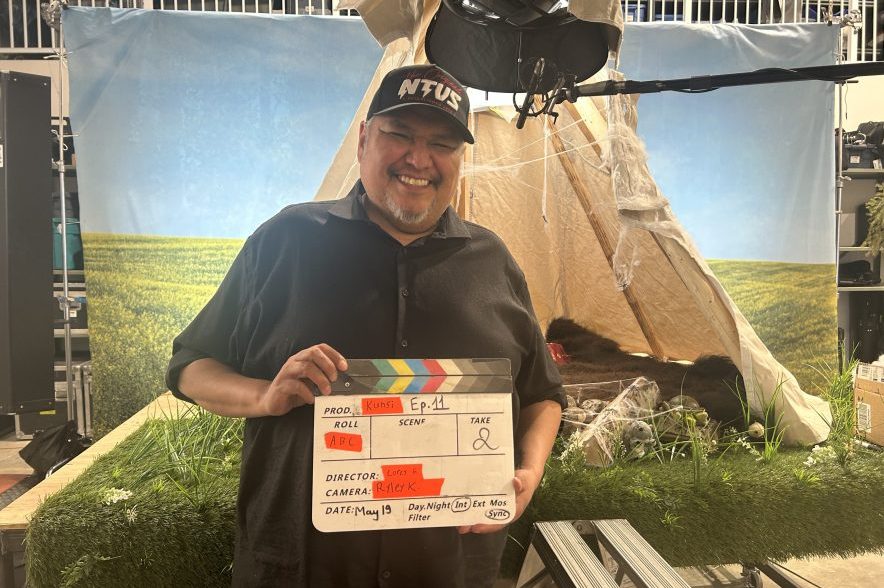
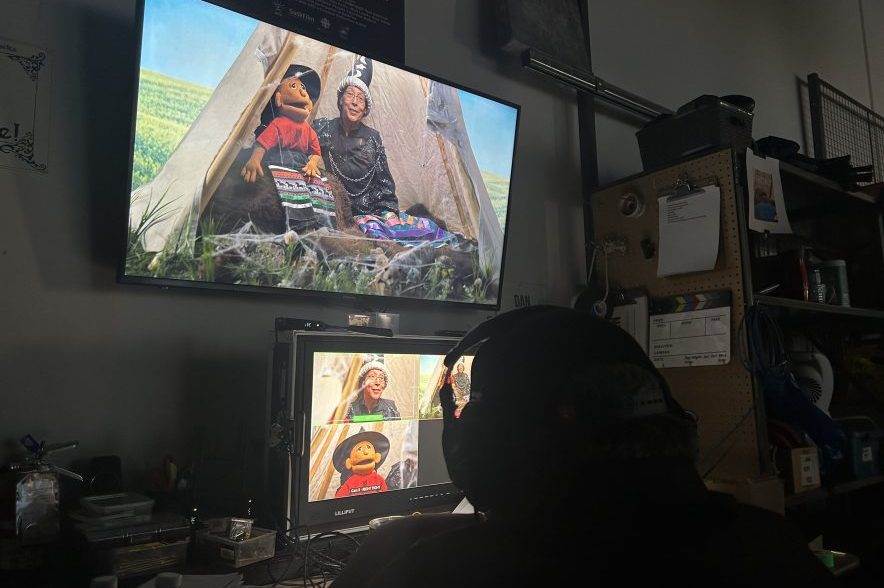
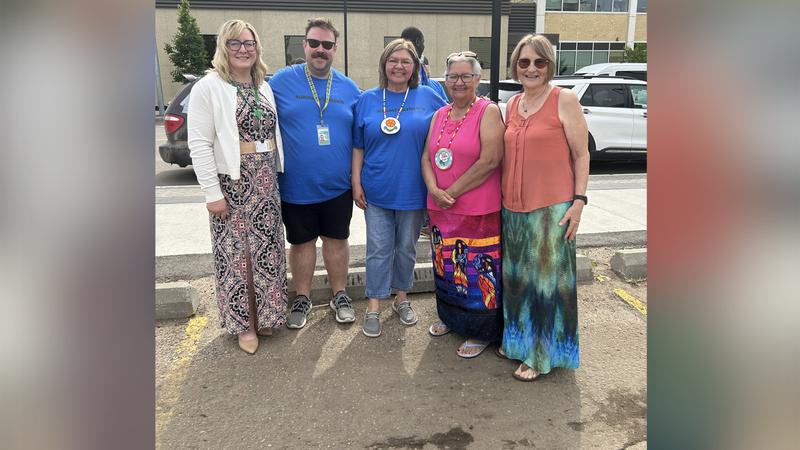
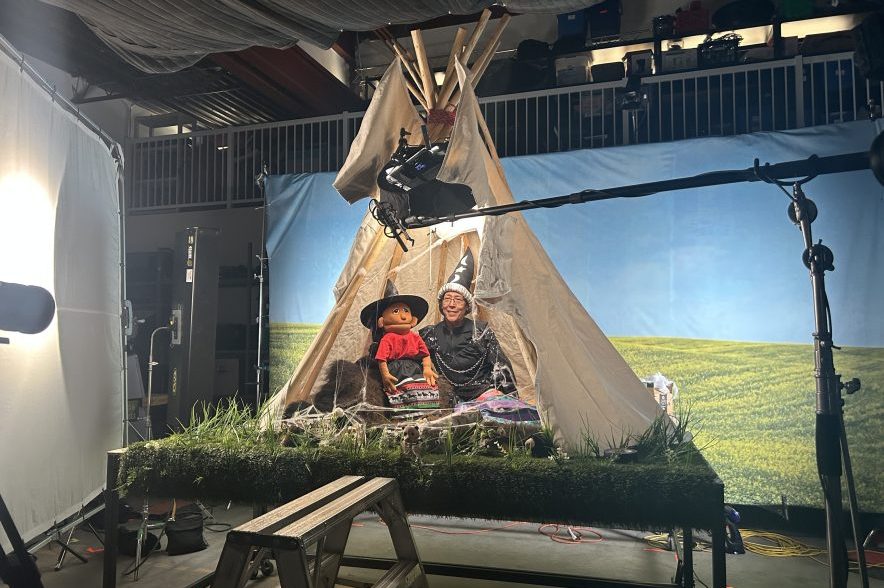
Theresa O’Watch is one of fewer than 100 Nakoda speakers in Canada. With the help of a puppet named Kunsi, she is passing the language down to the next generation. (Image Credit: Brittany Caffet/CKOM)
13-episode series

Nakon’i’a with Kunsi: How a puppet is reviving the Nakoda language

Jun 11, 2026 | 9:58 AM

When Theresa O’Watch was a little girl growing up on Carry the Kettle First Nation, language lived all around her.

It wasn’t something written in books or taught from a curriculum. It was something that moved through kitchens and hallways, across the voices of grandparents, aunties, uncles.

Nakoda was simply there.

But as the years passed, the voices that once filled rooms grew quieter. Grandparents became memories. Aunts and uncles became stories from the past. The language that once lived everywhere began to thin out, until it became something she had to search for.

“Today, I’m the only one in my family that speaks the Nakoda language,” O’Watch reflected. “We have less than 100 speakers in Canada, so that makes us an endangered language.”

She made a decision that she would not be the one to sit back and let the tongue disappear completely.

O’Watch became a teacher, bringing Nakoda into classrooms. But something was missing. The attention of the children didn’t always hold. The words didn’t always land the way she hoped they would. It was as if the language needed another doorway in.

Then, Kunsi arrived.

The show will include themed holiday episodes. In the Halloween episode, children will learn Nakoda words commonly associated with the holiday.
The show will include themed holiday episodes. In the Halloween episode, children will learn Nakoda words commonly associated with the holiday. (Image Credit: Brittany Caffet/CKOM)

Kunsi is a puppet. Bright, expressive, and alive in a way that made children lean forward without even realizing they were learning.

Suddenly, the room changed. Eyes lifted. Attention gathered. And in that space, Nakoda began to move differently through the children.

“You put a puppet in there, and those kids, their eyes light up,” O’Watch said with a smile. “They would rather interact with a puppet than me! She’s a really, really unique learning accessory that allows me to go way beyond my scope of imagination.”

And so Nakon’i’a with Kunsi was born: a 13-episode children’s series airing later this year on APTN. In each episode, O’Watch and Kunsi guide young viewers through different words and phrases in the Nakoda language.

Director Cory Generoux doesn’t speak about it like just another production. For him, it is something closer to a turning point.

“Nothing has ever been done to this extent and to this size for the Nakoda language,” he said. “So to put something like this together is actually very, very special. It’s history, right?”

Cory Generoux is the director of Nakon’i’a with Kunsi. He is part Nakoda and grew up speaking the language.
Cory Generoux is the director of Nakon’i’a with Kunsi. He is part Nakoda and grew up speaking the language. (Image Credit: Brittany Caffet/CKOM)

For Generoux, the work is personal. He is part Nakoda himself, raised within the language through family on his mother’s side.

“Language is the foundation of what identity is,” he insisted. “What is the Nakoda identity? It’s language, it’s culture, it’s food, it’s the land… language is the foundation of all of that.”

The show is not just something made for children. It is something made from memory, from kinship and from the understanding that a culture does not survive in abstraction. It survives in speech and stories passed down in the language they were intended to be heard.

“I want the show to feel like a big, warm Nakoda hug,” Generoux said.

The 13-episode series will air later this year on APTN.
The 13-episode series will air later this year on APTN. (Image Credit: Brittany Caffet/CKOM)

Back in Carry the Kettle, O’Watch said she will occasionally hear students in the halls speaking to one another in Nakoda.

“It makes my heart happy, because the language is growing,” she said. “The more we speak every day, the more we learn, the more we get it out there. Our language is going to grow.”

And now, with Nakon’i’a with Kunsi, that sound will find its way into even more classrooms, homes and living rooms, where children will laugh at a puppet and repeat unfamiliar words without realizing they’re becoming a part of something that almost disappeared.

A language once fading is being spoken again. And this time, it is being heard.

View Comments