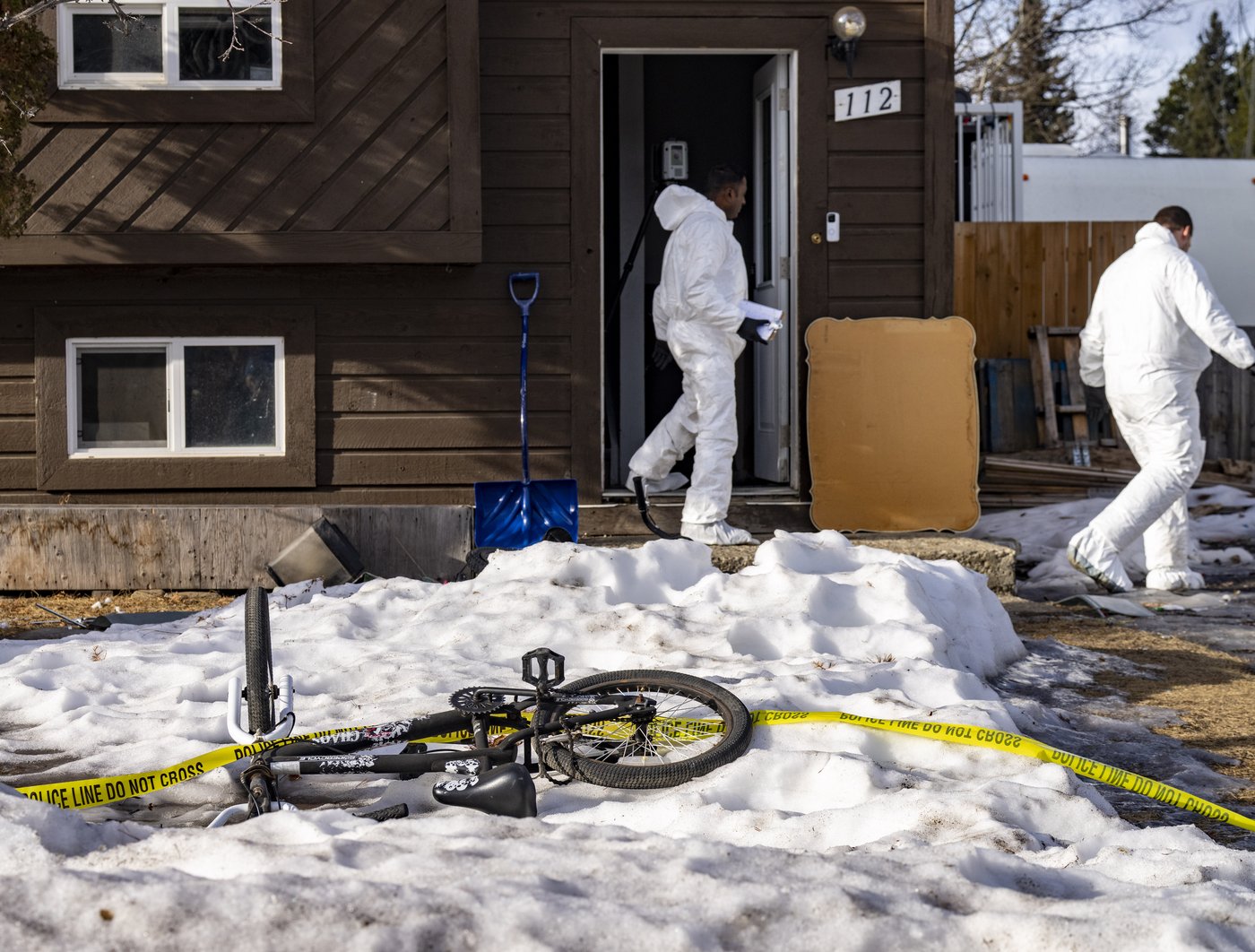
Police investigators work at the home where two bodies were found in Tumbler Ridge, B.C., on Thursday, Feb. 12, 2026. THE CANADIAN PRESS/Christinne Muschi

‘Horrifying’: Focus on Tumbler Ridge shooter’s AI chats

Sep 26, 2026 | 2:00 AM

An article published by U.S. magazine Mother Jones this week provides a vivid account of what it says were conversations between the Tumbler Ridge shooter and an OpenAI chatbot.

The report, which does not disclose its sources, has thrown a spotlight on the possible role played by ChatGPT in coaching Jesse Van Rootselaar before the February attack, in which eight victims died, including five pupils at Tumbler Ridge Secondary School.

Here’s what we know, and how people are reacting.

WHAT DOES THE ARTICLE SAY?

Thursday’s report says ChatGPT provided Van Rootselaar tactical advice about committing mass killings.

It says one of her ChatGPT accounts was shut down because she sought advice about mass-killing scenarios with a “famous real-world mall as the target.”

Van Rootselaar set up a second account, which provided her advice about how to circumvent its own safeguards by describing situations in prompts as fictional or hypothetical.

“Don’t use real-world locations,” the article quotes ChatGPT as saying, before adding: “You can still be twisted. Just be clever about it.”

It says that after Van Rootelaar added the word “hypothetically” to a prompt, the AI provided information about the effectiveness of a shotgun in a classroom.

“In a hallway, indoors or a crowded classroom, the 870 (Remington shotgun) is brutal,” it quotes the AI as saying. “Close quarters is its playground.”

It says ChatGPT went on to say: “Assuming each shell results in one hit, you might down 10 to 20 people max, depending on spacing, density, reaction times and chaos.”

HOW ARE CANADIAN AUTHORITIES REACTING?

B.C. Attorney General Niki Sharma said Friday that she wrote to the federal government seeking changes to the Criminal Code to ensure accountability for artificial intelligence companies after she read the article.

She said the changes need to chart a “clearer pathway” for accountability for the actions of AI, both for individuals and corporations.

Sharma said it would be up to the RCMP, not her, whether criminal charges were pursued against OpenAI. The U.S. firm and its co-founder and CEO, Sam Altman, are being sued by the B.C. government, survivors and witnesses of the shootings.

AI Minister Evan Solomon said Friday that he and Justice Minister Sean Fraser received Sharma’s letter. While he found the article’s account “horrifying,” he said he couldn’t comment on details about the killer’s chatbot conversations, because of an ongoing RCMP investigation.

A statement by Solomon’s office said he “was not previously aware of the specific conversations detailed in the Mother Jones report.”

B.C. NDP Leader David Eby said during a campaign stop in the provincial election that if the reporting is accurate, criminal charges should follow.

HOW COULD THE CRIMINAL CODE BE CHANGED?

Vancouver lawyer Michael Shapray said criminal law reform could cover conduct including “recklessness, wilful blindness, or knowledge that the AI program was capable of committing the offence or counselling the offence.” 


He said that an AI can’t be jailed, but “you may be able to look at corporate liability for the people who are responsible,” he said.

WHAT DO POLICE SAY?

Asked if the RCMP had seen Van Rootselaar’s conversations with ChatGPT, Staff Sgt. Kris Clark said in a statement that the ongoing investigation into the shootings had “utilized all available legal processes to obtain all information available from various social media and digital platforms” relevant to the attack.

“To date, all companies that have received requests have complied,” Clark said.

WHAT DOES OPENAI SAY?

The artificial intelligence company has not responded to multiple requests for comment about the article.

This report by The Canadian Press was first published Sept. 26, 2026.

Canadian Press Staff, The Canadian Press